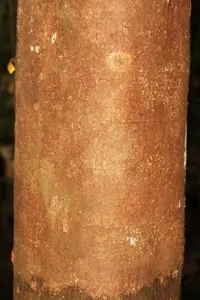
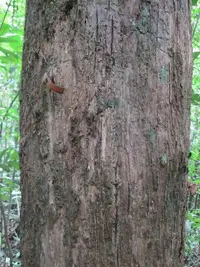
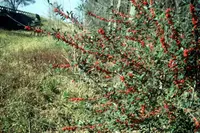
Freeman maple Care (Acer × freemanii)

Freeman maple

About Freeman maple

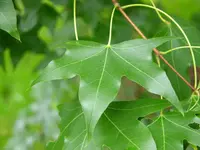
Freeman maple, Acer × freemanii, is a medium to large deciduous tree bred from crossing red maple and silver maple. It is valued for its strong structure and reliable fall color. The tree typically develops an upright, oval to rounded crown with good branch attachment, making it suitable for streets and larger gardens.

This hybrid is native to cultivation rather than wild habitats but is widely planted across North America. It is generally considered easier to manage than its parent silver maple, with fewer weak branches and a more controlled root system, which simplifies how to care for Freeman maple.

It usually prefers full sun, evenly moist but well-drained soil, and benefits from growing in locations with room for its mature height and spread.

Main Plant Requirements

Care Difficulty

Easy Care

Light Preference

Full Sun

Water Requirements

Moderate Water

Temperature Preference

Cold Hardy

Hardiness Zone

3–8

Soil Texture

Loamy, Sandy, Clay

Soil pH

Acidic (5.5–6.5), Slightly acidic (6.5–7.0)

Soil Drainage

Moist but well-drained

Fertilization

Minimal (feed rarely)

Get Personalized Care Plan

Scan your plant to receive care tips personalized for your specific plant

Available on iOS and Android

How to Care for the Freeman maple

This hybrid maple prefers full sun but accepts light shade, especially in warmer regions.

  • Provide 6–8 hours of direct sun daily, ideally with morning sun and light afternoon shade in hotter climates to limit leaf scorch.
  • In cooler regions, full sun all day supports strong growth and the best fall color for Freeman maple foliage.
  • Young trees benefit from some dappled or filtered light in the first 2–3 years; avoid deep shade, which causes weak, sparse branching.

This tree prefers evenly moist, well-drained soil and reacts poorly to both drought and waterlogging.

  • Allow the top 3–5 cm of soil to dry slightly between deep soakings, aiming for slow watering that penetrates 20–30 cm into the root zone.
  • During the first 2–3 growing seasons, monitor soil weekly; increase watering in hot, windy periods and reduce it during cool, rainy stretches.
  • Watch for stress signs: yellowing leaves and soft new growth can indicate overwatering, while browning edges and premature leaf drop suggest drought in Acer × freemanii.

This hardy shade tree tolerates a wide temperature range but grows best in moderate conditions.

  • Active growth is strongest around 60–80°F (16–27°C), typical of spring and early summer in many temperate regions.
  • Mature trees often survive down to about -20°F (-29°C), but young plants need protection from late spring frosts that can damage tender new leaves.
  • In heat above 90°F (32°C), expect some leaf edge browning, especially under drought or reflected heat; mulch the root zone to moderate soil temperatures and moisture.

Humidity is not a major limiting factor for Acer × freemanii when grown outdoors in typical garden conditions.

Acer × freemanii prefers evenly moist, well-structured mineral soil that holds water yet drains freely.

  • Use a deep loam with a mix of mineral particles and 20–30% organic matter from compost or leaf mold to support root development.
  • Ensure drainage is moderate to strong; avoid compacted or heavy clay that stays saturated after rain by incorporating coarse sand or fine gravel.
  • Aim for slightly acidic to neutral pH (6.0–7.0); avoid highly alkaline fill, which can reduce nutrient availability and cause leaf chlorosis.
  • Improve aeration in dense sites by broadforking or deeply loosening the planting zone before adding organic matter rather than relying only on surface mulches.

This hybrid maple is only moderately suitable for container growing and works best in large, stable outdoor tubs for the medium term.

  • Choose a very large, heavy container (e.g., thick-walled clay or concrete) to counteract wind leverage from the tall canopy and reduce tipping risk.
  • Select a pot deeper than it is wide to give anchoring space for the taproot-like main roots and to limit circling along the wall.
  • Use a high-mineral, bark-light mix that drains quickly yet holds some moisture, preventing both waterlogging and chronic drought in exposed positions.

This hybrid shade tree benefits from light, targeted feeding on poor or very sandy soils.

  • Apply a balanced slow-release granular fertilizer (around 10-10-10) once in early spring, before leaf-out.
  • Skip feeding on fertile lawns or where growth is already strong to avoid weak, storm-prone wood in Freeman maple.
  • Use a thin layer of compost over the root zone instead of heavy fertilization to support soil life.
  • Avoid late-summer fertilizer; high nitrogen then can delay dormancy and increase winter damage risk.

Careful pruning keeps Acer × freemanii structurally sound and reduces storm damage risk.

  • Schedule main pruning in late winter to very early spring, before buds break.
  • Remove dead, diseased, crossing, or rubbing branches first to improve airflow and reduce infection points.
  • Thin crowded interior branches to strengthen the main framework and encourage balanced crown shape.
  • Use clean, sharp bypass pruners or a pruning saw, making small, angled cuts just outside the branch collar.

This tree is usually grown in the ground; focus on correct transplanting of young specimens rather than long-term container culture.

  • Transplant in early spring or early fall when temperatures are mild and soil is workable.
  • Look for roots circling the nursery container; tease them loose gently to encourage outward growth.
  • Plant at the same soil level as in the pot, spreading roots horizontally in a wide, prepared planting hole.
  • Water deeply after planting and keep soil evenly moist for the first season to reduce transplant shock.

Acer × freemanii is mainly produced in nurseries by grafting and is not typically propagated at home.

This maple is cold hardy in much of the US and normally needs minimal winter attention once established.

  • Apply 5–8 cm of mulch over the root zone in late fall, keeping it slightly back from the trunk.
  • Water thoroughly before the ground freezes during dry autumn periods, especially for young trees.
  • For container-grown specimens, overwinter in an unheated but sheltered space or heel pots into the ground.

Care Tips

Establish central leader

In the first 3–5 years, select a single strong vertical stem and remove or shorten competing uprights in late winter to build a stable central leader that resists storm and snow damage later.

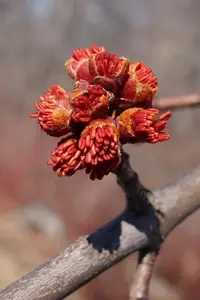
Manage co-dominant stems

Inspect annually for narrow V-shaped branch unions with included bark and either reduce one of the stems or remove it while still small to prevent future splitting under wind or ice loads.

Protect from lawn damage

Maintain a wide, mulched ring extending 60–90 cm from the trunk and keep string trimmers and mowers away from the bark, since repeated mechanical injury at the base is a common cause of decline in Freeman maple hybrids.

Monitor graft union

If the tree is grafted, keep the graft union visible above soil and mulch, remove any shoots emerging from below it, and watch for cracks or swelling that indicate structural weakness that may need arborist evaluation.

Plan for mature size

Before planting, map overhead wires and nearby structures and give at least 6–8 m of horizontal clearance so the canopy can develop naturally, which reduces the need for severe corrective pruning when growing Freeman maple.

Common Pests and Diseases

Verticillium wilt

This disease causes sudden wilting, yellowing, and branch dieback, often on one side of the tree, due to a soilborne fungus blocking water flow in the xylem tissue.

Solution

Remove and destroy severely affected branches, avoid wounding roots and trunk, and do not replant maples or other Verticillium‑susceptible species in the same spot; maintain good Acer × freemanii care with proper watering and mulching to reduce stress and improve the tree’s ability to compartmentalize the infection.

Tar spot

This disease produces yellow spots on leaves that develop into raised, black, tar-like patches later in the season, primarily affecting the appearance but not usually the long-term health of the tree.

Solution

Rake and remove fallen leaves in autumn to reduce overwintering spores and, in high-value landscape situations, consider applying a labeled fungicide in spring when leaves are emerging if the problem has been severe in previous years.

Maple anthracnose

This disease causes irregular brown or tan blotches along veins and margins of leaves, sometimes leading to early leaf drop in cool, wet springs.

Solution

Prune out dead or crossing branches to improve airflow, remove and dispose of heavily infected fallen leaves, and water at the soil level rather than overhead; in repeatedly severe cases, a preventive fungicide at bud break may be used according to label directions.

Gall mites

These insects induce small raised blisters or wart-like galls on leaves, which can distort foliage but usually do not threaten tree survival.

Solution

Manage by tolerating minor damage, removing and discarding heavily infested leaves early in the season, and encouraging natural predators; chemical control is rarely needed and should only be considered for repeated, heavy infestations using a product specifically labeled for eriophyid mites on maples.

Scale insects

These insects appear as small, fixed bumps on twigs or branches and feed on sap, leading to branch weakening, yellowing, and sometimes honeydew and sooty mold on lower foliage or surfaces.

Solution

Prune out heavily infested twigs, gently scrub accessible branches with a soft brush and soapy water, and apply horticultural oil during the dormant season or at crawler stage according to label directions to reduce populations while minimizing harm to beneficial insects.

Interesting Facts

Hybrid origin story

This tree is a naturally occurring hybrid between the red maple (Acer rubrum) and silver maple (Acer saccharinum), first noticed where the two parent species grow together in eastern North America and later intentionally selected and propagated by horticulturists.

Improved branch strength

Compared with its silver maple parent, this hybrid typically has stronger branch structure and better resistance to limb breakage, which makes it more suitable as a street and lawn tree in areas with snow or wind.

Autumn color reliability

Many named cultivars of this hybrid, such as 'Autumn Blaze' and 'Jeffersred', were selected specifically for consistent, vivid red to orange fall color that tends to be more reliable and longer lasting than in silver maple and more heat-tolerant than in some red maples.

Botan icon

Did you know?

Some cultivars of this hybrid, such as 'Autumn Blaze', have become among the most widely planted landscape maples in North America, to the point that they are now a common replacement for ashes lost to emerald ash borer in many urban planting programs.

FAQs about Freeman maple

This hybrid is generally fast-growing, often adding 30–60 cm of height per year once established. Growth is quicker in deep, moist, well-drained soil and full sun, and slower in compacted, dry, or nutrient-poor sites.

Grow Healthy Plants with Botan Care

Keep your plants happy and healthy with plant identification, disease detection, and easy care guidance.

Botan plant care app — identify plants on mobile

Explore More Plants