bamboo-leaf oak Care (Quercus myrsinifolia)

Also known as: Chinese evergreen oak, Small-leaved Oak, Bamboo-leaved Oak
bamboo-leaf oak

About bamboo-leaf oak

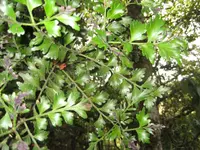
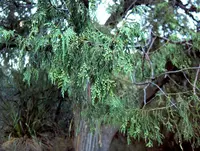
Bamboo-leaf oak, Quercus myrsinifolia, is an evergreen oak tree valued for its narrow, bamboo-like leaves and neat, upright crown. It keeps its foliage year-round, giving steady structure and color. Native to eastern Asia, it is often used in mild-climate gardens, parks, and larger landscapes where space allows a medium to large tree. Growth is generally steady rather than fast, and the plant forms a dense, well-branched habit.

This species is considered relatively easy to grow where winters are not too harsh and soils drain well. It prefers consistent moisture, full sun to light shade, and benefits from sheltered sites. Once established, learning how to care for bamboo-leaf oak mainly involves providing suitable soil and enough light rather than intensive maintenance.

Main Plant Requirements

Care Difficulty

Moderate Care

Light Preference

Full Sun

Water Requirements

Moderate Water

Temperature Preference

Cold Hardy

Hardiness Zone

7–9

Soil Texture

Sandy, Loamy, Clay

Soil pH

Acidic (5.5–6.5), Slightly acidic (6.5–7.0)

Soil Drainage

Moist but well-drained

Fertilization

Minimal (feed rarely)

Get Personalized Care Plan

Scan your plant to receive care tips personalized for your specific plant

Available on iOS and Android

How to Care for the bamboo-leaf oak

This evergreen oak prefers steady light conditions that mimic bright woodland edges.

  • Provide 4–6 hours of direct morning sun with light afternoon shade; in hotter regions, protect from intense sun after 2–3 p.m. to prevent leaf scorch.
  • Tolerates partial shade, but dense shade reduces growth and foliage density; aim for dappled or filtered light under high, open canopies.
  • Young bamboo-leaf oak trees benefit from temporary shade cloth during their first 1–2 summers, especially on exposed, south- or west-facing sites.

This species prefers evenly moist, well-drained soil rather than frequent, shallow watering.

  • In the first 2–3 years after planting, water when the top 5–8 cm of soil feels dry, applying a deep soak that moistens the root zone 20–30 cm down.
  • Established Quercus myrsinifolia in the ground usually needs supplemental water only during prolonged dry periods; drooping, dull leaves signal thirst, while yellowing leaves and soft new growth suggest overwatering.
  • Use soil that drains freely; avoid standing water around the root flare, and add 5–8 cm of mulch (kept 5–10 cm from the trunk) to moderate evaporation and moisture swings.

This oak is moderately cold hardy and performs best in mild to warm climates.

  • Optimal growth occurs around 60–80°F (16–27°C); consistent temperatures within this range support steady leaf and shoot development.
  • Mature trees tolerate brief drops to about 5–10°F (-15 to -12°C), but young plants are more vulnerable and benefit from wind protection and mulch over the root zone in winter.
  • Handles summer heat up to about 90–95°F (32–35°C) if soil moisture is maintained; extended heat above this range combined with drought can cause marginal leaf scorch and stress.

This species handles a wide humidity range but benefits from moderately moist air when young or grown in sheltered sites.

  • Target 40–60% humidity for container or sheltered specimens, especially in hot, dry climates.
  • It tolerates occasional dry air but prolonged levels below 30% can cause leaf-edge browning and premature leaf drop.
  • Increase humidity locally with grouped plantings, a mulched soil surface, or a nearby water feature rather than misting foliage.

This oak prefers deep, moderately moist, well-aerated soil with steady drainage.

  • Use a loamy structure with roughly 50% garden loam, 30–40% composted organic matter, and 10–20% mineral grit such as sharp sand or fine bark for structure.
  • Aim for slightly acidic to neutral pH around 5.5–7.0, avoiding strongly alkaline fill or fresh lime that can induce nutrient lockout and chlorosis (yellowing leaves).
  • Improve drainage and aeration by incorporating coarse sand, fine gravel, or pine bark into heavy clay, and avoid compacting the root zone with frequent foot traffic or machinery.
  • Avoid waterlogged sites, sealed subsoils, or spots where runoff collects, since chronic saturation greatly increases root rot risk for Quercus myrsinifolia.

This species can be grown in containers for many years, especially as a patio or courtyard specimen.

  • Choose a tall, heavy container that is wider than the root ball to provide lateral root space and resist wind rock of the woody canopy.
  • Ensure large, unobstructed drainage holes and keep the container on feet or spacers so water clears quickly from the base after irrigation or rain.
  • Use a mineral-rich, slightly loamy mix that is heavier than typical potting soil to stabilize the root ball and reduce tipping as the trunk thickens when you grow Quercus myrsinifolia.

Quercus myrsinifolia grows well in average soil and usually needs only modest feeding in managed landscapes.

  • Apply a light layer of compost or well-rotted manure over the root zone in early spring to support steady growth.
  • On poorer soils, use a balanced slow-release NPK fertilizer (such as 10-10-10) at half label rate once in spring.
  • Avoid fertilizing in late summer or fall to prevent soft growth that is vulnerable to winter damage.
  • For bamboo-leaf oak in containers, use a diluted balanced liquid feed (1/2 strength) every 4–6 weeks during active growth.

Pruning Quercus myrsinifolia is mainly structural and corrective, not intensive.

  • Carry out light pruning in late winter or very early spring before new growth begins.
  • Remove dead, damaged, crossing, or inward-growing branches first to maintain a stable framework.
  • Thin congested interior branches selectively to improve light and air movement through the canopy.
  • Use clean, sharp bypass pruners or a pruning saw and make cuts just outside the branch collar to promote proper healing.

Bamboo-leaf oak is usually grown in the ground, with transplanting focused on young trees before roots spread widely.

  • Transplant in late fall or early spring when the tree is dormant to reduce stress and water loss.
  • Look for signs such as circling roots in containers, poor vigor, or becoming top-heavy as cues to move or up-pot.
  • Shift container plants only every 2–3 years, stepping up 1 pot size and using a well-drained, slightly acidic mix.
  • Water deeply before and after moving, keep the root ball intact, and mulch 5–8 cm around but not against the trunk to support recovery.

Propagation of Quercus myrsinifolia is most reliable from seed and is usually done by nurseries rather than home gardeners.

  • Collect fresh acorns in fall, discarding any with holes or obvious damage.
  • Sow acorns promptly in deep pots or nursery beds, covering with 2–3 cm of well-drained, slightly acidic substrate.
  • Keep the medium evenly moist and cool over winter; natural cold stratification aids germination in spring.
  • Provide bright light and protect young seedlings from intense heat, drought, and root disturbance during the first 1–2 years.

Quercus myrsinifolia is generally cold hardy in mild to moderate climates and needs limited winter care once established.

  • Apply 5–8 cm of organic mulch over the root zone in late fall, keeping it clear of the trunk flare.
  • Young or newly planted trees benefit from windbreaks or burlap wraps around stakes in exposed sites.
  • Move container-grown plants to a sheltered, unheated space where temperatures stay above about 20°F and soil does not freeze solid.

Care Tips

Early leader training

In the first 3–5 years, select a single strong central leader and remove competing upright shoots in late winter to build a stable tree structure that resists storm damage later.

Wind acclimation

If moving a young tree from a sheltered spot or container, gradually expose it to stronger wind over 2–3 weeks so stems and roots can strengthen without wind-rock that disturbs new root growth.

Root flare check

At planting and every few years, ensure the root flare sits level with or slightly above the surrounding soil, gently uncovering it if buried to reduce risk of trunk rot and girdling roots.

Mulch management

Maintain a 5–8 cm deep mulch ring that extends at least to the drip line, but keep mulch pulled back 5–8 cm from the trunk to discourage pests and fungal problems while conserving soil moisture.

Winter foliage protection

In colder regions at the edge of its hardiness, use a temporary windbreak fabric on the prevailing-wind side during the first 2–3 winters to limit leaf scorch and make caring for bamboo-leaf oak more predictable.

Common Pests and Diseases

Oak lace bug

This pest feeds on the undersides of leaves, causing pale stippling, bronzing, and eventual leaf drop in heavy infestations.

Solution

Inspect the undersides of leaves in spring and summer and hose them off with a strong stream of water to remove nymphs and adults; if populations remain high, use horticultural oil or insecticidal soap directed to the leaf undersides and reduce plant stress through regular watering during dry periods.

Scale insects

These insects attach to twigs and leaves, sucking sap and causing yellowing foliage, reduced vigor, and sticky honeydew that may lead to sooty mold.

Solution

Prune out heavily infested small branches and wipe or gently scrub accessible scales with a soft brush and soapy water; for larger trees, consider a targeted horticultural oil spray during the dormant or early growing season and encourage natural predators such as lady beetles by avoiding broad-spectrum insecticides.

Powdery mildew

This disease produces white, powdery patches on young leaves and shoots, which can distort new growth and reduce photosynthesis under prolonged infection.

Solution

Thin crowded branches to improve air movement, avoid overhead irrigation, and promptly remove and discard heavily infected leaves; if needed, apply a labeled fungicide such as a sulfur or potassium bicarbonate product at the first sign of symptoms, repeating according to label directions during humid periods.

Anthracnose

This disease causes irregular tan to brown leaf spots, blotches along veins, and premature leaf drop, especially in cool, wet spring weather.

Solution

Rake and dispose of fallen leaves to reduce inoculum, water at soil level to keep foliage dry, and avoid high-nitrogen fertilization that promotes very soft new growth; in landscapes with repeated severe outbreaks, a preventive fungicide at bud break may be considered under guidance from a local arborist familiar with Quercus myrsinifolia care.

Interesting Facts

Naturally narrow leaves

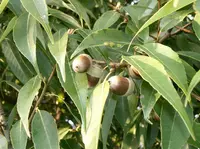
This oak has unusually slender, bamboo-like leaves with entire or finely toothed margins, an adaptation that reduces water loss compared with the broad, deeply lobed leaves of many temperate oaks.

True evergreen oak

Unlike most North American oaks, it keeps its foliage year-round, gradually replacing old leaves as new ones emerge rather than dropping all leaves in a single autumn event.

East Asian forest specialist

It is native to warm-temperate and subtropical forests of China, Japan, Korea, and Taiwan, where it often forms part of mixed broadleaf evergreen woodlands on well-drained mountain slopes.

Botan icon

Did you know?

In parts of Japan, this species is managed as a traditional coppice tree, periodically cut back to stimulate many straight new shoots that are then harvested for fuelwood and small-diameter timber, a practice that can be sustained over many decades from the same root system.

FAQs about bamboo-leaf oak

This species is evergreen in mild climates, holding its narrow leaves year-round. In colder regions it may behave semi-evergreen, with partial leaf drop after hard freezes but typically refoliates in spring from healthy buds.

Grow Healthy Plants with Botan Care

Keep your plants happy and healthy with plant identification, disease detection, and easy care guidance.

Botan plant care app — identify plants on mobile

Explore More Plants