Windfirm training
In the first 3–5 years, stake young trees on the windward side and remove or shorten competing leaders to encourage one strong central stem that will better withstand exposed, windy sites.

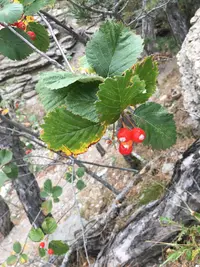
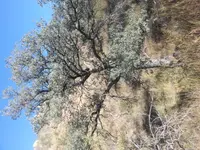
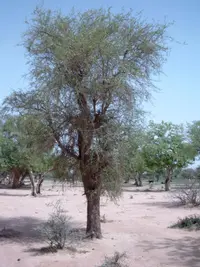
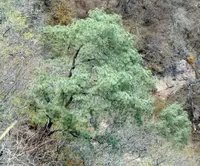
Grecian whitebeam, Aria graeca, is a small to medium deciduous tree from rocky hillsides and mountain slopes in southeastern Europe and parts of the eastern Mediterranean. It is usually found in dry, sunny habitats and often grows in mixed woodland or on limestone outcrops.
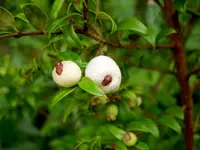
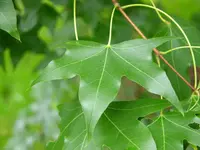
The tree has broad, oval leaves that are dark green above and densely white-felted underneath, giving a pale, silvery look when the wind moves the canopy. Clusters of white spring flowers are followed by small, apple-like red fruits that attract wildlife.
This species is generally robust, wind-tolerant, and cold-hardy, which makes it moderately easy to grow in suitable climates. Those who want to learn how to care for Grecian Whitebeam should note its preference for full sun, well-drained soil, and moderate moisture.

Care Difficulty
Easy Care

Light Preference
Full Sun

Water Requirements
Low Water

Temperature Preference
Cold Hardy

Hardiness Zone
5–8

Soil Texture
Sandy, Loamy, Rocky

Soil pH
Slightly acidic (6.5–7.0), Neutral (7.0)

Soil Drainage
Well-drained

Fertilization
Minimal (feed rarely)
Scan your plant to receive care tips personalized for your specific plant
Available on iOS and Android
This sun-loving small tree performs best in open, bright sites with some protection from extreme afternoon heat.
This drought-tolerant tree prefers deep, infrequent watering once established rather than constant moisture.
This hardy tree is well suited to temperate climates with cold winters and warm summers.
This species is tolerant of relatively dry air and usually does not need special humidity management outdoors.
Aria graeca prefers free-draining, moderately fertile mineral soils that avoid prolonged saturation.
This tree is generally not ideal for long-term container growing, but short-term container culture of young plants is possible.
This hardy tree typically needs minimal feeding in garden soil, as it is adapted to lean, well-drained sites.
Aria graeca benefits from light, purposeful pruning to maintain a stable crown and remove problem wood.
This species is mainly grown in the ground, so focus on correct transplanting of young trees rather than frequent repotting.
Aria graeca is usually raised from seed, which can be slow due to natural dormancy mechanisms.
Established Aria graeca trees are generally cold hardy in suitable climates and need little structured winter care.

Plant Health Check
Not sure what's wrong with your plant? Check your plant's health inside the app.
Aria graeca is a naturally occurring hybrid whitebeam, thought to have arisen from crosses between Sorbus aria and closely related taxa in southeastern Europe and the eastern Mediterranean, giving it intermediate features in leaf shape and fruit.
Its leaves have a strongly contrasting white to greyish felted underside with a sharply serrated margin, a feature that helps distinguish it from other whitebeams in its native Balkan and Aegean range.
This species commonly grows on dry, rocky limestone slopes, cliffs, and scrub, where it tolerates thin soils and high light, contributing to stabilizing fragile mountain habitats.
This species grows at a moderate rate, typically adding 20–30 cm of height per year once established. Growth is slower in poor, dry soils and faster in deep, well-drained, reasonably moist ground with adequate space.
Keep your plants happy and healthy with plant identification, disease detection, and easy care guidance.