Train Young Stems
While stems are still flexible, loosely tie them to wires or trellis arms with soft garden ties, since early directional training makes later reshaping much easier when caring for Winter jasmine.

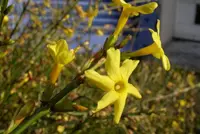
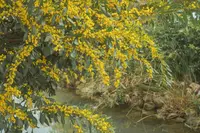
Winter jasmine, Jasminum nudiflorum, is a deciduous shrub known for its bright yellow flowers that appear on bare stems in late winter. It provides welcome color when many other plants are still dormant.
The plant has long, arching, often sprawling branches that can be trained on supports or left to cascade over walls and slopes. Small, simple leaves appear after flowering, giving it a neat, fine-textured look in the growing season.
It is native to China and is valued in gardens for its cold tolerance and reliable flowering. Its toughness and adaptability make it relatively easy to care for Winter jasmine in a wide range of temperate climates.
This shrub prefers sun to light shade, moderately moist but well-drained soil, and benefits from some space to spread naturally.

Care Difficulty
Easy Care

Light Preference
Full Sun

Water Requirements
Moderate Water

Temperature Preference
Cold Hardy

Hardiness Zone
6–10

Soil Texture
Sandy, Loamy, Clay

Soil pH
Acidic (5.5–6.5), Slightly acidic (6.5–7.0)

Soil Drainage
Well-drained

Fertilization
Minimal (feed rarely)
Scan your plant to receive care tips personalized for your specific plant
Available on iOS and Android
This deciduous shrub flowers best with strong light and open exposure.
This shrub prefers steady moisture in well-drained soil rather than extremes of wet or dry.
This hardy shrub tolerates a wide temperature range but flowers best in cool to mild conditions.
This species tolerates a wide humidity range and usually does not need special humidity management indoors or outdoors.
This shrub prefers well-structured, free-draining soil that still retains moderate moisture.
This species adapts well to container growing when given a stable, well-drained setup.
This shrub benefits from light, steady feeding rather than heavy fertilization.
Thoughtful pruning keeps Jasminum nudiflorum flowering well and prevents it from becoming tangled.
This species is usually grown in the ground, so care focuses on transplanting rather than frequent repotting.
There are several straightforward ways to increase plants of Jasminum nudiflorum for the garden.
This shrub is notably cold hardy and usually needs minimal winter attention in most temperate climates.

Plant Health Check
Not sure what's wrong with your plant? Check your plant's health inside the app.
This species flowers on bare, leafless stems in mid to late winter, allowing its bright yellow blooms to attract the few available pollinators when other nectar sources are scarce.
Unlike many jasmine species known for strong perfume, its flowers are typically unscented or only very faintly scented, which makes it unusual within the genus.
The long, green, square-cross-section stems can arch and root where they touch soil, allowing the plant to slowly spread and stabilize banks or walls in cultivated settings.

Winter jasmine was introduced to European horticulture in the 19th century from China and became valued in cool-temperate gardens for bringing reliable color to otherwise dormant winter landscapes, long before many modern winter-flowering ornamentals were bred.
Lack of flowers usually comes from insufficient light, heavy pruning at the wrong time, or excess nitrogen fertilizer. This species forms flower buds on older wood, so pruning is best done right after flowering to protect next season’s display.
Keep your plants happy and healthy with plant identification, disease detection, and easy care guidance.