Mountain araucaria Care (Araucaria montana)

Mountain araucaria

About Mountain araucaria

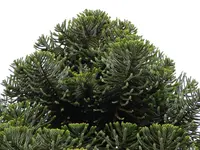
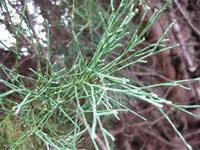
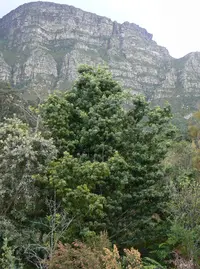
Mountain araucaria (Araucaria montana) is an evergreen conifer from New Caledonia, where it grows on exposed, rocky slopes and ridges. It forms a narrow, upright tree with symmetrical, tiered branches and dense, sharply pointed foliage. The leaves are small, tough, and overlapping, giving the branches a clean, architectural look. Growth is moderate and long-lived, which suits patient growers. This species prefers bright light, good air circulation, and well-drained, slightly acidic soil, and it resents waterlogged conditions. These traits mean it can be somewhat demanding in containers, so learning how to care for Mountain araucaria helps avoid root and foliage problems.

Main Plant Requirements

Care Difficulty

Hard Care

Light Preference

Full Sun

Water Requirements

Moderate Water

Temperature Preference

Warm Climate

Hardiness Zone

10–11

Soil Texture

Sandy, Loamy, Rocky

Soil pH

Strongly acidic (4.5–5.5), Acidic (5.5–6.5)

Soil Drainage

Well-drained

Fertilization

Minimal (feed rarely)

Get Personalized Care Plan

Scan your plant to receive care tips personalized for your specific plant

Available on iOS and Android

How to Care for the Mountain araucaria

This species prefers bright, cool conditions with protection from harsh midday sun.

  • Provide 4–6 hours of direct morning sun with light shade or filtered light after midday, especially in hotter regions.
  • Tolerates light to partial shade, but Mountain araucaria develops denser, more balanced growth with at least bright, open shade all day.
  • Watch for yellowing or browning on sun-exposed needles as a sign of excessive sun, and for sparse, elongated shoots as a sign of insufficient light, especially in winter.

Watering should keep the root zone evenly moist but never waterlogged.

  • Allow the top 3–5 cm of soil to dry before watering again, then water slowly so moisture reaches the deeper roots without pooling.
  • In cool seasons, reduce frequency as evaporation slows; in warm, windy weather, check soil more often and use well-drained, slightly acidic soil to prevent saturation.
  • Signs of overwatering include soft, darkening roots and musty odor, while dry, browning needle tips and dull foliage suggest Araucaria montana is staying too dry.

This conifer prefers mild, frost-free conditions with limited temperature extremes.

  • Ideal growth occurs around 55–75°F (13–24°C), with steady, moderate temperatures supporting dense, balanced foliage.
  • It tolerates brief drops to about 25°F (-4°C) once established but young plants are more vulnerable and benefit from protection during hard frosts.
  • In hot climates, prolonged exposure above 90°F (32°C) can stress the plant, so provide afternoon shade and mulch to keep roots cooler in summer.

This species prefers moderately moist air but usually adapts to typical indoor humidity.

  • Aim for 40–60% humidity; brief dips lower are tolerated if soil moisture is steady.
  • Dry air stress shows as browning or crisping at needle tips, especially on newer growth.
  • Increase humidity with a nearby tray of wet pebbles or grouping plants, rather than misting frequently.

This conifer needs sharply drained but moisture-retentive soil to avoid root problems.

  • Use a sandy loam with 30–50% mineral grit such as coarse sand or fine gravel to keep structure open.
  • Blend in pine bark fines or composted bark to add organic matter without making the mix heavy or waterlogged.
  • Target a slightly acidic to neutral pH around 5.5–7.0 for reliable nutrient availability for Araucaria montana.
  • Avoid heavy clay, peat-only mixes, or any soil that stays wet for more than 2–3 days after watering.

This species can be grown in containers if the pot provides depth, stability, and rapid drainage.

  • Choose a tall, relatively heavy pot so the columnar, woody top growth does not tip the container in wind.
  • Leave a clear drainage layer only via the soil mix and ensure water can exit freely from wide, unobstructed holes.
  • Select thick-walled terracotta or concrete if outdoor, as these materials add weight and reduce overheating of roots.

This species grows slowly and needs only light nutrition when cultivated in containers or poor soil.

  • Use a balanced, slow-release fertilizer (for example 10-10-10) at half strength at the start of spring.
  • In active growth, feed Mountain araucaria every 6–8 weeks, avoiding mid-summer over-application.
  • Stop feeding in late summer so new growth hardens before winter dormancy.
  • On established in-ground trees, rely mainly on organic mulch or compost instead of frequent fertilizer applications.

Pruning Araucaria montana is usually minimal and aims to maintain safety and a natural form.

  • Best timing is late winter to early spring, before active growth begins.
  • Remove only dead, diseased, or storm-damaged branches using clean, sharp bypass pruners or a pruning saw.
  • Avoid cutting the central leader, since this distorts the characteristic conical shape.
  • Limit live-wood removal to small side branches to reduce stress and prevent large, slow-healing wounds.

Container-grown or young landscape plants tolerate only infrequent root disturbance, so planning is important.

  • Check for roots circling the pot, emerging from drainage holes, or noticeably slowed growth as signs repotting is needed.
  • Transplant or shift to a slightly larger container in late winter or early spring, about every 3–4 years for potted specimens.
  • Handle the root ball gently, loosening only the outermost circling roots to reduce shock.
  • Water thoroughly after planting, then keep soil evenly moist and shaded from harsh sun for 1–2 weeks while roots re-establish.

Practical propagation of Araucaria montana for home growers is limited and often challenging.

  • Seed propagation is standard but slow; sow fresh seed in late winter to spring in a free-draining, slightly acidic mix.
  • Provide bright, indirect light, 65–75°F temperatures, and consistent but not waterlogged moisture for germination.
  • Semi-hardwood cuttings rarely root well and generally need controlled environments with bottom heat and mist.
  • For most gardeners, purchasing nursery-grown plants is more reliable than home propagation attempts.

This species prefers mild, frost-limited climates and needs thoughtful winter management outside such areas.

  • Expect injury below roughly 25°F; young plants are more frost-sensitive than mature trees.
  • Apply a 5–8 cm mulch layer around the root zone, keeping it slightly back from the trunk to insulate soil.
  • In colder regions, grow Araucaria montana in large containers that can be moved into a bright, cool, frost-free space.
  • For small outdoor specimens, wrap the pot and lower stem with breathable frost cloth during short cold spells.

Care Tips

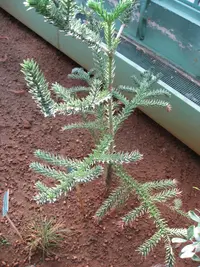
Stake Young Leaders

Install a sturdy, vertical stake next to young plants and loosely tie the central leader with soft, UV-stable ties to keep the trunk straight and prevent wind rock while roots establish.

Wind-Side Shelter

In exposed sites, use windbreak mesh or plant on the lee side of a structure so the tree keeps its natural pyramidal form and does not develop one-sided or bent growth from prevailing winds.

Low-Competition Root Zone

Maintain a wide, grass-free mulch ring around the base so surface feeder roots do not compete with turf for moisture and nutrients, and renew mulch yearly while keeping it off the trunk.

Branch Damage Management

When a lower branch is storm-damaged, cut it back cleanly to the branch collar rather than leaving a stub, and avoid removing many green branches in a single season to reduce stress.

Container Transition Planning

If growing Mountain araucaria in a container for several years, plan a staged transition to the ground by gradually increasing pot size, orienting the same side to the sun, and planting out in mild weather so roots are not shocked.

Common Pests and Diseases

Armillaria root rot

This disease affects stressed trees in poorly drained or previously forested soils and leads to progressive decline, yellowing, and dieback of branches. Symptoms include resin bleeding at the base, white fungal fans under the bark, and eventual death of the tree.

Solution

Remove and destroy severely affected trees and as much of the infected root system as possible, since the fungus persists in woody debris. Avoid replanting another Araucaria in the same spot, improve drainage, and reduce stress through correct watering and mulching to support healthier surrounding trees.

Seiridium canker

This disease causes sunken, resin-oozing cankers on stems and branches, often leading to yellowing and death of affected shoots. Symptoms include scattered dead branch tips that give the crown a thin, irregular appearance.

Solution

Prune out infected branches well below visible cankers during dry weather and disinfect tools between cuts with alcohol or a 10% bleach solution. Improve plant vigor through adequate water and balanced nutrients, avoid mechanical injuries to bark, and increase spacing or airflow to keep foliage drier.

scale insects

These insects attach to needles and stems, feeding on sap and causing yellowing, needle drop, and general weakening of the tree. This pest may also produce sticky honeydew that can lead to sooty mold on foliage and nearby surfaces.

Solution

Inspect branches and needle bases regularly and physically remove small infestations by gently scraping or wiping with a cloth dipped in insecticidal soap or alcohol solution. For larger trees or heavy infestations, apply a horticultural oil spray at labeled rates during mild weather, ensuring thorough coverage of stems and undersides of branchlets.

spider mites

These pests thrive on stressed trees in hot, dry conditions and cause fine stippling, bronzing, and eventual browning of needles. Symptoms include fine webbing between needle clusters and a dull, dusty look to the foliage.

Solution

Increase humidity around smaller specimens, hose down foliage regularly to dislodge mites, and avoid allowing the root zone to dry excessively. If needed, apply insecticidal soap or a horticultural oil labeled for mites, targeting the undersides of foliage and repeating as directed to break the life cycle.

needle blight

This disease results in browning and premature shedding of older needles, often starting on lower or inner branches. Symptoms include distinct bands or spots on needles and a thin, patchy crown when damage is advanced.

Solution

Prune out and dispose of heavily affected branches and fallen needles to reduce fungal spore levels, and avoid overhead watering that keeps foliage wet. Improve spacing and airflow around the plant, and in severe, recurring cases consult a local arborist about timed fungicide applications as part of broader Araucaria montana care instructions.

Interesting Facts

Ultramafic soil specialist

This species is naturally restricted to nickel-rich ultramafic soils of southern New Caledonia, a harsh substrate that excludes many other trees but supports a unique flora adapted to high metal content and low nutrients.

Cloud-forest conifer

Araucaria montana typically grows in humid montane forests and shrublands between roughly 400–1,000 m elevation, where frequent clouds and mist shape its growth and community structure.

Highly fragmented range

Populations are broken into many small, isolated subpopulations across New Caledonia, largely confined to ridges and plateaus, which makes the species particularly vulnerable to habitat disturbance and fire.
Botan icon

Did you know?

The species is assessed as Vulnerable on the IUCN Red List due to its restricted, fragmented distribution in New Caledonia and ongoing threats from mining activities, fire, and habitat degradation, making its long-term conservation status a concern for botanists and land managers.

FAQs about Mountain araucaria

Growth is generally slow to moderate. Young trees may add about 15–30 cm in height per year, with slightly faster growth in mild, humid climates and rich, well-structured soil. Container specimens usually grow more slowly.

Grow Healthy Plants with Botan Care

Keep your plants happy and healthy with plant identification, disease detection, and easy care guidance.

Botan plant care app — identify plants on mobile

Explore More Plants