Early form training
In the first 2–3 years, lightly tip-prune new shoots after flowering to encourage a dense, wind-stable framework rather than allowing one tall, weak leader to dominate.

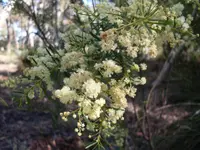
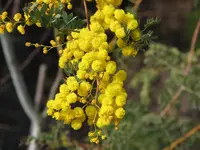
Flax-leaved wattle (Acacia linifolia) is an evergreen shrub or small tree from eastern Australia, valued for its fine, narrow foliage and soft texture. It typically forms a rounded, bushy shape with slender branches and pale green, flax-like leaves. In season it produces small, pale to creamy yellow flower clusters that add a light, delicate display rather than heavy color. This species comes from well-drained, often sandy or rocky habitats and usually prefers full sun and low to moderate moisture. Its drought tolerance and relatively low maintenance needs make it suitable for gardeners looking to care for Flax-leaved Wattle in mild, low-frost climates.

Care Difficulty
Moderate Care

Light Preference
Full Sun

Water Requirements
Low Water

Temperature Preference
Warm Climate

Hardiness Zone
9–11

Soil Texture
Sandy, Loamy, Rocky

Soil pH
Acidic (5.5–6.5), Slightly acidic (6.5–7.0)

Soil Drainage
Well-drained

Fertilization
Minimal (feed rarely)
Scan your plant to receive care tips personalized for your specific plant
Available on iOS and Android
This species prefers bright, open conditions similar to its native woodland edges.
This shrub is drought-tolerant once established and prefers infrequent, deep watering.
This plant is adapted to mild, temperate to warm climates with low frost stress.
This species handles a wide humidity range and usually does not need special humidity management.
Acacia linifolia prefers very free-draining, low-organic, sandy soil that prevents waterlogging.
This species can be grown in containers if the pot and mix strongly favor drainage and root stability.
This nutrient-efficient Australian shrub needs only light feeding in most garden soils.
Acacia linifolia responds well to light, timed pruning that maintains shape and flowering wood.
This species is usually grown in the ground, so focus on careful transplanting rather than frequent repotting.
New plants are most often raised from seed, with some scope for cuttings in suitable conditions.
This shrub is moderately frost tolerant in mild climates but benefits from some winter protection in colder areas.

Plant Health Check
Not sure what's wrong with your plant? Check your plant's health inside the app.
This species is naturally restricted to nutrient-poor sandstone soils of eastern New South Wales, where its fine, fibrous roots efficiently exploit shallow, low-phosphorus substrates.
Like many wattles, it forms symbioses with root nodule bacteria that fix atmospheric nitrogen, enriching the surrounding soil and supporting other native plants in dry sclerophyll forests.
Its very narrow, linear phyllodes resemble flax leaves, reducing surface area and water loss, which is an adaptation to the often dry, exposed conditions of its native ridges and slopes.

Acacia linifolia has been documented as a common early-successional shrub after fire in parts of the Sydney Basin, regenerating from seed stored in the soil seed bank and helping stabilize and re-vegetate burned sandstone slopes.
This species is generally fast-growing, often adding 30–60 cm of height per year once established. Growth is quicker in well-drained, low-phosphorus soil with full sun and adequate moisture, especially during the first 2–3 years.
Keep your plants happy and healthy with plant identification, disease detection, and easy care guidance.