Snow load management
In regions with wet, heavy snowfall, gently knock accumulated snow off young branches with a broom to prevent splitting or permanent bending of the flexible limbs.

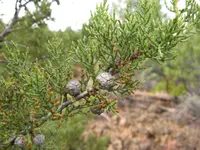
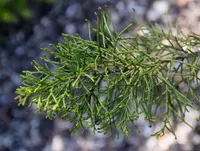
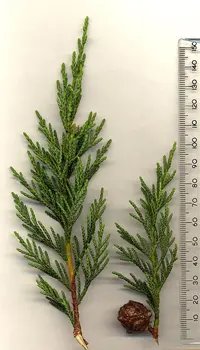
Baker cypress, Hesperocyparis bakeri, is a rare, small to medium conifer native to limited mountain regions of northern California and southwestern Oregon. It forms a narrow, upright tree with flaky bark and fine, scale-like blue-green foliage.
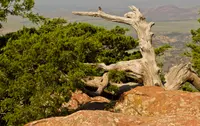
This species typically grows in dry, rocky, often volcanic soils and is adapted to harsh, exposed conditions. It is relatively slow-growing and long-lived, which can make it stable but not fast to establish.
In cultivation, it prefers full sun, well-drained soil, and low to moderate moisture once established. Understanding how to care for Baker cypress starts with respecting its need for drainage and avoiding consistently wet sites.

Care Difficulty
Moderate Care

Light Preference
Full Sun

Water Requirements
Low Water

Temperature Preference
Cold Hardy

Hardiness Zone
5–8

Soil Texture
Sandy, Loamy, Rocky

Soil pH
Slightly acidic (6.5–7.0), Neutral (7.0)

Soil Drainage
Well-drained

Fertilization
Minimal (feed rarely)
Scan your plant to receive care tips personalized for your specific plant
Available on iOS and Android
This species prefers strong, direct light to develop dense, healthy foliage in open landscapes.
This conifer is naturally drought-tolerant once established and prefers infrequent, deeper watering.
This hardy conifer thrives in regions with cold winters and moderate, dry summers.
This species handles low humidity well and rarely needs special humidity management.
Hesperocyparis bakeri prefers sharply drained, mineral-based soil that mimics its native, rocky mountain habitat.
This species can be grown in containers for several years if the pot and setup support its deep, woody root system.
This hardy conifer usually needs minimal feeding, especially when planted in lean, well-drained soil.
Pruning Hesperocyparis bakeri is mainly limited to health and light shaping rather than heavy cutting.
This species is usually grown in the ground, so focus on careful transplanting of young trees rather than frequent repotting.
Propagation of Hesperocyparis bakeri is possible from both seeds and semi-hardwood cuttings but requires patience and suitable conditions.
This hardy conifer tolerates substantial winter cold and usually needs little special care once established in the landscape.

Plant Health Check
Not sure what's wrong with your plant? Check your plant's health inside the app.
This species naturally grows on ultramafic and serpentine-derived soils that are high in heavy metals and low in essential nutrients, conditions that exclude many other tree species. Its presence often marks unique, botanically specialized habitats in northern California and southern Oregon.
Its cones are serotinous, meaning they stay closed on the tree for many years and open widely only after exposure to the heat of wildfire. This adaptation allows large numbers of seeds to be released onto freshly cleared, nutrient-available ground after a burn.
Wild populations occur in small, scattered stands rather than continuous forests, restricted mainly to higher elevations in the southern Cascades and nearby ranges. This fragmented distribution makes the species sensitive to changes in fire regimes and land use.

This cypress is recognized as one of the most cold-tolerant North American cypress species, naturally occurring at elevations up to roughly 2,400 m in the southern Cascade Range, where it endures snowy winters and short growing seasons.
This species grows slowly to moderately, often 15–30 cm per year under good conditions. Young trees may grow a bit faster, then slow with age. Growth is typically much slower in dry, exposed, or nutrient-poor sites.
Keep your plants happy and healthy with plant identification, disease detection, and easy care guidance.