mica cap Care (Coprinellus micaceus)

Also known as: glistening inkcap
mica cap

About mica cap

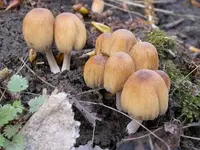
Mica cap, Coprinellus micaceus, is a small saprobic mushroom that feeds on decaying wood rather than living as a traditional green plant. It forms clustered groups of delicate, bell-shaped caps that are tan to honey-colored and often covered with tiny, mica-like particles when young.

This species appears naturally in temperate regions, especially in urban gardens, lawns, and wood chip beds where buried roots or stumps are present. It grows quickly after rain and also collapses and blackens just as fast, which can make it unpredictable to maintain.

Because it depends on decaying wood and stable moisture, it is not as simple to manage indoors, and attempts to care for mica cap usually focus on outdoor, wood-rich areas.

Main Plant Requirements

Care Difficulty

Moderate Care

Light Preference

Partial Shade

Water Requirements

Keep Soil Moist

Temperature Preference

Cool Climate

Hardiness Zone

Unknown

Soil Texture

Loamy, Organic-rich

Soil pH

Acidic (5.5–6.5), Slightly acidic (6.5–7.0)

Soil Drainage

Moist but well-drained

Fertilization

Minimal (feed rarely)

Get Personalized Care Plan

Scan your plant to receive care tips personalized for your specific plant

Available on iOS and Android

How to Care for the mica cap

This wood-rotting fungus prefers soft, indirect light typical of shaded woodland edges.

  • Aim for bright shade or dappled light with only 1–3 hours of gentle morning sun; avoid strong midday exposure that dries substrates quickly.
  • Mica cap tolerates deep shade but fruits best where it receives filtered light under trees, shrubs, or on the north or east side of structures.
  • In summer, protect colonies from prolonged full sun that overheats logs or mulch; in cooler seasons, slightly more open light can support larger flushes.

This fungus requires consistently moist but not waterlogged organic material to fruit well.

  • Check substrates such as buried wood, wood chips, or rich mulch; they should feel evenly damp 2–5 cm deep, never soggy or bone-dry.
  • Increase moisture during warm, dry weather with gentle soaking that wets the upper 5–10 cm, then allow excess water to drain to prevent sour, anaerobic conditions.
  • Reduce added moisture in cool, rainy periods; signs of excess include sour odor or standing water, while slow or absent fruiting can signal chronic dryness for Coprinellus micaceus.

This species fruits best in cool to mild conditions rather than temperature extremes.

  • Optimal fruiting typically occurs around 55–70°F (13–21°C), with steady moisture in the substrate and light air movement.
  • Growth usually slows below about 40°F (4°C); fruitbodies are very tender and collapse with hard frost, though the underlying mycelium can survive in the soil or wood.
  • In hot spells above 80–85°F (27–29°C), shade and higher substrate moisture help limit heat stress and drying that otherwise prevent mushroom formation.

This fungus fruits best in moist air and struggles in very dry conditions.

  • Aim for 60–80% humidity around fruiting logs, trays, or beds to support consistent cap development.
  • Dry air causes small, brittle caps that collapse quickly and can halt new clusters from forming.
  • Increase humidity by lightly misting the substrate surface, using a humidity tent or plastic cover with vents, and avoiding direct airflow from heaters or fans.

This saprophytic fungus grows in decaying wood-rich, loose substrates rather than typical garden soil.

  • Use a mix based on well-rotted hardwood chips, leaf mold, and coarse compost to mimic decomposing wood and retain steady moisture.
  • Ensure very free drainage so the substrate stays evenly moist but never waterlogged, which encourages anaerobic bacteria and rot.
  • A slightly acidic to neutral pH around 6.0–7.0 suits Coprinellus micaceus when the medium is rich in lignin-containing wood particles.
  • Improve aeration by blending in coarse bark fines or perlite and avoid dense clay, heavily compacted ground, or peat-only mixes.

This species can be grown in containers if the substrate and moisture are carefully managed.

  • Choose a deep, rigid container that holds a substantial volume of wood-based substrate so it does not dry out between waterings.
  • Elevate the pot on feet or slats so drainage holes stay clear and excess water leaves the container rapidly after soaking.
  • Use opaque, non-translucent containers to limit light on the colonized substrate surface, which helps maintain a cooler, more stable microclimate.

This saprophytic fungus typically needs no fertilization when growing on nutrient-rich wood or organic debris.

Pruning Coprinellus micaceus is not a standard practice, as mushroom clusters naturally appear and collapse in cycles.

Transplanting is rarely necessary, since this species naturally colonizes suitable decaying wood or mulch.

  • If fruiting clusters appear where unwanted, gently remove the substrate section rather than moving individual mushrooms.
  • Transplant only if a colonized log or woodchip patch must be relocated, keeping the mycelium-bearing material intact.
  • Move the material during mild, moist weather to reduce drying stress on the fungal network.
  • Reinstall into a similar shaded, organic-rich spot and water lightly to settle contact with the new site.

Propagation of Coprinellus micaceus is usually left to natural spore dispersal and mycelial spread in suitable habitats.

This species is cold hardy and usually needs no dedicated winter care in outdoor sites.

  • Mycelium in wood or mulch tolerates normal winter freezes and resumes fruiting in mild, wet periods.
  • Avoid disturbing colonized logs or beds during very wet, freezing conditions to limit physical damage.
  • Container experiments should keep the substrate moist but not waterlogged, stored in a sheltered, unheated area.

Care Tips

Use fresh substrate

For reliable fruiting, regularly introduce fresh, fully colonized hardwood chips or sawdust to the existing patch instead of relying on exhausted old wood that produces fewer and smaller mushrooms.

Maintain shaded moisture

To stabilize moisture around the mycelium, cover inoculated wood or buried chips with a thin layer of leaf litter or coarse mulch that shades the substrate but still allows air movement.

Avoid chemical disturbance

Do not apply lawn herbicides, fungicides, or high-salt de-icing products near the colony, since these can damage the mycelium and sharply reduce fruiting for several seasons.

Encourage natural spread

When clusters appear, leave some mature caps in place to drop spores onto adjacent damp wood or mulch, helping the colony slowly extend through the bed or along a rotting log.

Plan for short lifespan

Harvest caps promptly at first sign of expansion because this species autodigests within hours; planning early-morning checks is one of the most effective habits when caring for mica cap outdoors.

Common Pests and Diseases

Fungus gnat larvae

This pest lives in very wet substrates rich in decaying organic matter and can graze on developing mycelium and young pins. Symptoms include slow or uneven fruiting and visible tiny black flies hovering around trays or beds.

Solution

Reduce excess moisture between flushes, improve drainage, and avoid standing water around cultivation containers. Use yellow sticky traps for adult gnats and, if needed, apply a biological control such as Bacillus thuringiensis israelensis (Bti) to the substrate surface according to label directions.

Mite infestation

These insects, often called grain or soil mites, thrive in constantly damp, nutrient-rich substrates and can feed on mycelium and very small mushrooms. Symptoms include poor pin development, patchy growth, and moving white or tan specks on the substrate surface.

Solution

Lower humidity slightly, increase fresh air exchange, and avoid over-supplementing the substrate with nutrient-rich materials that favor mites. Remove and discard heavily infested blocks and, in repeated problems, heat-treat or replace substrate components and thoroughly clean all containers and tools before restarting.

Green mold (Trichoderma)

This disease appears as fast-spreading bright white mycelium that soon turns green and powdery on the surface of the substrate, outcompeting the mushroom mycelium. Symptoms include stalled or aborted pins and a patchy, off-color substrate.

Solution

Promptly cut out and discard contaminated sections, or if contamination is advanced, remove the entire substrate to avoid spore spread. Improve sterilization or pasteurization of substrates, tighten hygiene during inoculation, and slightly reduce overall substrate moisture to discourage recurrent outbreaks when growing mica cap indoors or in containers.

Bacterial blotch

This disease causes water-soaked, slimy, or brown spots on caps, especially in very humid, poorly ventilated conditions. Symptoms include distorted, sticky fruit bodies and an unpleasant odor in severe cases.

Solution

Increase fresh air exchange, avoid direct water droplets on caps, and keep humidity high but not saturated. Remove and discard affected mushrooms, clean nearby surfaces, and sanitize misting equipment or nozzles to reduce bacterial buildup.

Competing basidiomycete fungi

This disease involves colonization of the same substrate by other wood-decay mushrooms, which can form different-colored mycelium and fruit bodies that suppress or replace mica cap clusters. Symptoms include unexpected mushrooms with different size, color, or cap texture emerging from the same piece of wood or mulch.

Solution

Use fresh, relatively clean wood or mulch and avoid mixing sources already colonized by unknown wild fungi. If competing mushrooms become dominant, remove and discard the affected wood or mulch and reintroduce the desired species to a new, less-contaminated substrate while maintaining good sanitation of tools and storage areas.

Interesting Facts

Self-dissolving ink caps

The caps of this species undergo autodigestion, a process called deliquescence, where the gills and cap margins liquefy into a dark, inky fluid that helps disperse spores over a longer period.

Glittering cap surface

Fresh young fruiting bodies often show a distinct sparkling appearance because the cap is covered in tiny, mica-like granules that are remnants of the universal veil, especially visible in low-angle light or after rain.

Wood-decaying specialist

This fungus is a saprotroph that colonizes buried or decaying hardwood, including tree roots and stumps, and plays a key role in breaking down lignin-rich wood tissues in urban parks, gardens, and forest edges.

Botan icon

Did you know?

Genetic studies have shown that populations traditionally identified as this species actually form a complex of closely related lineages, which has led to taxonomic revisions and reassignment of some former Coprinus species into the genus Coprinellus.

FAQs about mica cap

This fungus grows very quickly. Small pins can appear within 12–24 hours after rain and reach mature size in another 12–24 hours, then begin to liquefy and disappear soon after spore release.

Grow Healthy Plants with Botan Care

Keep your plants happy and healthy with plant identification, disease detection, and easy care guidance.

Botan plant care app — identify plants on mobile

Explore More Plants