European False Blusher Care (Amanita excelsa)

European False Blusher

About European False Blusher

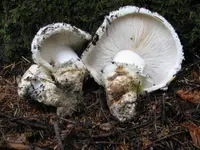
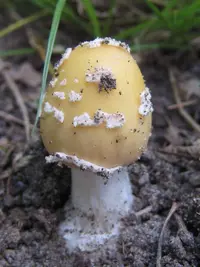
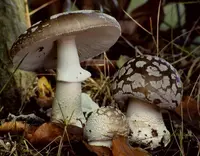
The European false blusher, Amanita excelsa, is a gilled mushroom rather than a leafy plant. It forms sturdy, pale to gray-brown caps with white gills and a thick stem, often with a ring and a swollen base.

This species typically appears in temperate woodlands, especially under conifers and broadleaf trees across Europe and parts of North America. It grows from soil rich in organic matter, forming a mycorrhizal partnership, which means it exchanges nutrients with nearby tree roots.

Because it relies on this underground tree association, it is not practical to grow Amanita excelsa indoors or in pots, and attempts to care for European False Blusher at home are rarely successful.

Main Plant Requirements

Care Difficulty

Hard Care

Light Preference

Partial Shade

Water Requirements

Regular Water

Temperature Preference

Cool Climate

Hardiness Zone

Unknown

Soil Texture

Loamy, Organic-rich

Soil pH

Acidic (5.5–6.5)

Soil Drainage

Moist but well-drained

Fertilization

Minimal (feed rarely)

Get Personalized Care Plan

Scan your plant to receive care tips personalized for your specific plant

Available on iOS and Android

How to Care for the European False Blusher

This woodland mushroom prefers cool, shaded conditions rather than direct, open sun.

  • Site Amanita excelsa under deciduous trees where it receives dappled or filtered light for 1–3 hours and shade the rest of the day, similar to a natural forest floor.
  • Protect from strong midday and afternoon sun, which can dry the upper soil layer and leaf litter, slowing mycelium growth and fruiting body development.
  • In summer, deeper shade is beneficial, while in spring and autumn slightly more open canopy light is acceptable as long as the ground does not fully dry out.

This species depends on consistently moist, not saturated, forest soil.

  • Aim for soil that feels evenly moist 2–5 cm below the surface, with a spongy litter layer that never turns dusty dry, to support its fine mycelial threads.
  • Ensure the site drains freely after rain; standing water or sour, rotten-smelling soil indicate overwatering conditions that can lead to mycelium decline.
  • Dry, cracked soil, slow or absent fruiting, and shrinking caps are signs of underwatering conditions in the habitat and signal a need for more reliable moisture input.

This fungus thrives in cool to mild conditions typical of temperate forests.

  • Optimal growth generally occurs around 50–68°F (10–20°C), with fruiting most reliable in cool, moist weather rather than during hot, dry spells.
  • The mycelium usually tolerates brief drops close to 32°F (0°C) in soil, but hard, prolonged frost can damage fruiting bodies at the surface.
  • Sustained heat above about 77–82°F (25–28°C), especially with low humidity, reduces fruiting; a shaded, mulched forest floor buffers against extreme temperature swings.

This ectomycorrhizal fungus prefers consistently moist, cool air but is not usually grown indoors or managed for humidity.

This species relies on a natural forest soil environment rather than prepared mixes, but understanding its preferences helps evaluate habitat suitability.

  • Amanita excelsa favors loose, humus-rich forest soil with a high content of decaying leaves and wood that maintains moisture yet stays aerated.
  • Soil should drain freely, resembling a light loam with fine organic particles rather than compact clay or dense, waterlogged ground.
  • A slightly acidic pH around 5.0–6.5 supports typical ectomycorrhizal tree partners and the associated fungal network.
  • Avoid disturbed, heavily fertilized, or chemically treated soils, which can disrupt the fine root-fungus relationships essential for fruiting body development.

This species is not suitable for container growing because it depends on complex root associations with mature trees in open soil.

This mycorrhizal fungus naturally partners with tree roots and normally receives enough nutrients from the host, so additional fertilization is not recommended for European False Blusher.

Pruning is not applicable to Amanita excelsa, as it is a mushroom-forming fungus rather than a woody or leafy plant.

Transplanting Amanita excelsa is generally unsuccessful because the fungus depends on a living host tree and a stable soil ecosystem.

  • Avoid attempting to move established colonies, as disturbing the soil breaks the fine mycelial network that supports fruiting.
  • If relocation is required for research or conservation, move intact soil cores with associated tree roots rather than loose soil.
  • Time any experimental moves during cool, moist conditions to reduce stress on both tree roots and fungal mycelium.
  • After disturbance, maintain even soil moisture and avoid heavy compaction so the symbiosis has a chance to re-establish.

Practical propagation of Amanita excelsa in home or garden conditions is not currently reliable, so it is rarely attempted outside research settings.

No special winter care is used for this hardy woodland fungus, which survives as underground mycelium while fruiting bodies disappear.

Care Tips

Host tree selection

Establish this ectomycorrhizal fungus near compatible host trees such as beech, spruce, or fir, as fruiting is far more likely when the mycelium can form stable root associations with suitable mature trees.

Minimal soil disturbance

Avoid digging, tilling, or heavy foot traffic over the colonized area so the underground mycelial network remains intact and can continue producing fruiting bodies over multiple seasons.

Organic mulch management

Apply a thin, loose layer of leaf litter or soft wood chips that mimic a natural forest floor, and refresh it lightly each year without compacting it to support steady mycelial growth and moisture retention.

Careful identification practice

Train yourself to distinguish this species from similar toxic Amanita species using several features at once (cap color, volva structure, ring, smell), and consult regional mycological keys or local experts before collecting specimens.

Seasonal monitoring routine

During the typical fruiting season in your region, check the site every few days after steady rain and mild temperatures, keeping notes on where and when mushrooms appear to refine your long-term approach to caring for European False Blusher in that location.

Common Pests and Diseases

Mycophagous springtails

These insects feed on fungal tissue, especially on young or damaged fruiting bodies, causing pitting and surface scarring. Symptoms include small irregular holes, roughened patches, and a slightly shredded cap or stem surface.

Solution

Limit excessive moisture around fruiting sites and improve drainage in cultivation substrates to reduce springtail density. Where needed, gently remove heavily infested mushrooms and adjust watering and ventilation, or use a targeted soil-drench biological control containing entomopathogenic fungi or beneficial nematodes that are labeled for springtails and safe for fungi-focused setups.

Fungus gnat larvae

This pest lives in moist organic substrates and can tunnel into developing fungal tissue, weakening stems and deforming caps. Symptoms include soft, water-soaked areas at the base of the stipe and small entry holes with internal tunneling.

Solution

Allow the substrate surface to dry slightly between waterings and reduce organic debris to make conditions less favorable for larvae. Sticky traps can help reduce adult numbers, while a biological control such as Bacillus thuringiensis israelensis (BTI) in the substrate targets larvae without disrupting most beneficial soil organisms important when attempting Amanita excelsa care outdoors or in semi-controlled environments.

Parasitic Hypomyces infection

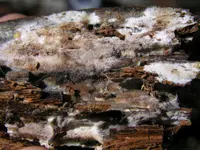
This disease is caused by parasitic fungi such as Hypomyces species that colonize the surface of Amanita fruiting bodies. Symptoms include a whitish to yellowish felt-like coating that may thicken, distort, and eventually cover the cap and gills, preventing normal spore production.

Solution

Promptly remove and discard infected fruiting bodies and any obviously colonized substrate nearby to limit spread. Avoid overhead watering that keeps caps wet, and maintain good air movement around fruiting areas so surfaces dry quickly, which makes infection less likely to establish or progress.

Slug and snail feeding

These pests are attracted to the moist, protein-rich tissue of mushrooms, often consuming large sections of the cap and stipe overnight. Symptoms include irregular, scalloped bite marks, slime trails, and sometimes near-complete loss of young fruiting bodies.

Solution

Hand-pick slugs and snails in the evening or early morning and use physical barriers such as copper tape or gritty rings around key fruiting zones. Where allowed, iron phosphate slug baits can be used sparingly around but not directly on mushrooms, combined with habitat management such as removing dense ground litter that shelters these mollusks.

Interesting Facts

Variable ring markings

The ring on the stem of this species often shows distinctive dark, zigzag or radial markings, which helps separate it from several similar brown Amanita species that have plain or uniformly colored rings.

Association with conifers

This mushroom commonly forms ectomycorrhizal partnerships with spruce and other conifers in Europe, exchanging mineral nutrients from the soil for sugars from the host tree.

Confusion with edible species

It can be mistaken in the field for some edible brown-capped mushrooms, which is why mycologists stress careful microscopic and macroscopic identification, including checking odor, cap texture, and ring pattern, before any field determinations.

FAQs about European False Blusher

This mushroom is considered inedible and potentially poisonous. Identification within the Amanita group is difficult, and confusion with deadly species is common. It should not be collected for food or tasting under any circumstances.

Grow Healthy Plants with Botan Care

Keep your plants happy and healthy with plant identification, disease detection, and easy care guidance.

Botan plant care app — identify plants on mobile

Explore More Plants