Great Funnel-Veil Amanita Care (Amanita velatipes)

Great Funnel-Veil Amanita

About Great Funnel-Veil Amanita

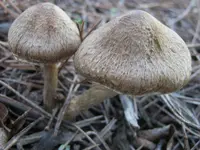
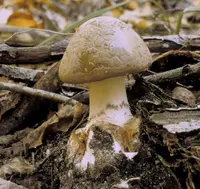
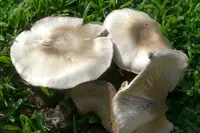
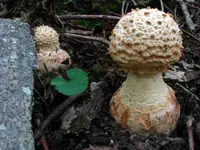
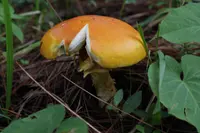
Amanita velatipes, commonly called the Great Funnel-Veil Amanita, is a woodland mushroom rather than a traditional garden plant. It forms sturdy, pale caps with a funnel-like shape and a distinct veil around the stem base.

This species typically appears in mixed or deciduous forests, often near oaks or other hardwoods, emerging from soil rich in leaf litter. It forms mycorrhizal associations, meaning it lives in close partnership with tree roots, which makes it unsuitable for container culture or typical home gardens.

Because of this specialized relationship, it is not practical to care for Great Funnel-Veil Amanita in a conventional way. It prefers undisturbed forest habitats with consistent moisture and well-drained, organic-rich soil.

Main Plant Requirements

Care Difficulty

Hard Care

Light Preference

Partial Shade

Water Requirements

Keep Soil Moist

Temperature Preference

Cool Climate

Hardiness Zone

Unknown

Soil Texture

Loamy, Silty, Organic-rich

Soil pH

Acidic (5.5–6.5), Slightly acidic (6.5–7.0)

Soil Drainage

Moist but well-drained

Fertilization

Minimal (feed rarely)

Get Personalized Care Plan

Scan your plant to receive care tips personalized for your specific plant

Available on iOS and Android

How to Care for the Great Funnel-Veil Amanita

This woodland mushroom prefers soft, filtered light rather than direct, open sun.

  • Provide dappled shade or high, broken canopy light, similar to a deciduous forest floor, with 1–3 hours of weak morning sun at most.
  • Avoid strong midday or afternoon sun, which can dry the substrate and damage developing caps of Great Funnel-Veil Amanita.
  • Choose sites with shifting shade through the day; in summer, deeper shade is safer, while low-angle autumn sun can be slightly stronger without harm.

This species relies on consistently moist, not waterlogged, soil around its tree partners.

  • Aim for soil that stays evenly damp 5–10 cm down; if the surface crusts and cracks, recent rainfall or irrigation is likely too low.
  • Favor loose, well-drained, organic-rich soil that holds moisture but does not stay saturated, since prolonged puddling often reduces Amanita velatipes fruiting.
  • Increase moisture during warm, dry spells and watch for shriveling caps as a sign of dryness; sour smell or slimy mycelium suggests chronic overwatering or poor drainage.

This fungus is adapted to temperate woodland climates with cool to mild conditions.

  • Optimal fruiting usually occurs around 55–70°F (13–21°C), with mycelium growth still active a bit above and below this range.
  • The organism typically tolerates down to about 32°F (0°C) in soil, but hard, prolonged frost can damage surface mycelium and reduce future fruiting.
  • Heat above 80–85°F (27–29°C), especially with dry soil, often suppresses fruiting; partial shade and stable forest litter help buffer these extremes seasonally.

This woodland fungus relies on consistently moist, humid conditions rather than dry air.

  • Target 70–90% humidity, matching damp forest litter, and never allow the surrounding substrate to dry out completely.
  • Low humidity causes caps to crack, edges to curl, and the veil surface to become dull and brittle.
  • Increase humidity by using deep, moisture-retentive leaf litter or wood chips, misting the substrate surface, and reducing airflow that speeds evaporation.

This mycorrhizal fungus relies on specific soil-like substrate conditions rather than typical potting soil.

  • Use a loose, organic-rich, forest-floor-style substrate made from well-rotted leaf litter, fine bark, and a small amount of native mineral soil collected near host trees.
  • Maintain a well-drained yet evenly moist structure; the mix should feel springy, not compacted, and water should seep through within seconds, not sit on top.
  • Aim for slightly acidic conditions around pH 5.0–6.5, avoiding liming materials that push the mix toward neutral or alkaline values.
  • Avoid heavy clay, dense compost, or sterile bagged mixes; instead, promote aeration and fungal growth by including coarse bark pieces and avoiding peat that compacts when dry for effective Amanita velatipes care.

This species is not well suited to container growing because it depends on complex mycorrhizal relationships with trees and undisturbed soil networks.

In natural settings, Amanita velatipes obtains nutrients from decaying organic matter and usually does not need direct fertilization.

As a wild mycorrhizal mushroom, Amanita velatipes is not managed with pruning in typical horticultural practice.

This fungus is rarely grown in containers; care focuses on minimizing disturbance to its natural soil habitat rather than repotting.

  • Avoid moving soil or duff where the fungus appears, since its underground mycelium forms delicate networks with host tree roots.
  • If relocation is unavoidable, transfer a broad, deep block of native soil with minimal breakage, keeping it evenly moist.
  • Plan any soil transfer during the host tree’s dormant season to reduce stress on the tree–fungus association.
  • After transplanting soil, maintain similar shade, tree species, and moisture to support mycelium recovery.

Practical home propagation of this wild ectomycorrhizal mushroom is difficult and rarely attempted intentionally.

In climates where host trees are hardy, this species typically overwinters in soil without special intervention.

  • Mycelium remains insulated underground, so surface frost usually does not harm established colonies.
  • Avoid deep soil disturbance, raking, or compaction over the area during winter to preserve fungal networks.
  • Maintain natural leaf litter or mulch around host trees, which stabilizes soil temperature and moisture for Great Funnel-Veil Amanita.

Care Tips

Spore-safe placement

Grow this fungus well away from vegetable beds, play areas, and high-traffic lawn zones so that released spores and fruiting bodies remain in a controlled, low-contact part of the property.

Mark fruiting zones

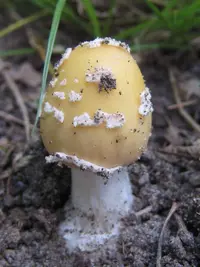
Use small flags or discreet stakes to mark where caps regularly emerge so mowing, raking, or leaf-blowing can be adjusted to avoid mechanical damage to the fruiting bodies and underground mycelium network.

Manage host roots

Because this species forms mycorrhizae with tree roots, keep host trees healthy through proper mulching and root-zone protection, avoiding soil compaction or trenching that would disrupt the shared root–fungus interface.

Limit chemical exposure

Avoid applying systemic insecticides, broad-spectrum fungicides, or heavy lawn herbicide treatments near the known mycelium zone, as these can reduce fruiting or gradually kill the fungal colony.

Document fruiting cycles

Photograph and date each flush of mushrooms over several seasons to build a local record that helps anticipate when and where fruiting will occur, which is useful when caring for Great Funnel-Veil Amanita in a managed landscape.

Common Pests and Diseases

Mycophagous springtails

These insects feed on fungal tissue, especially gills and young caps, and can distort or scar fruiting bodies. Symptoms include pitted or rough cap surfaces and small jumping insects visible in moist substrate around the base.

Solution

Limit overly wet, compact substrates and maintain good air movement around fruiting sites to keep surfaces from staying constantly saturated. For localized issues, gently remove heavily damaged fruiting bodies and top layer substrate, then rehydrate more sparingly; in container culture, sticky traps and improved drainage can reduce springtail populations without disturbing developing mushrooms.

Fungivorous fungus gnats

These insects lay eggs in moist organic substrates, and the larvae feed on developing primordia and lower stipe tissue, causing malformed or collapsing fruiting bodies. This pest is often noticed as small flies hovering around mushroom patches or emerging from culture containers.

Solution

Reduce excess moisture and avoid continually soggy substrates to make conditions less favorable for egg laying, and increase ventilation around fruiting areas. Use fine mesh covers on culture containers, apply yellow sticky cards to trap adults, and discard or replace heavily infested substrate to break the life cycle.

Mucor and Trichoderma molds

This disease complex appears as fast‑spreading white, grey, or green fuzzy growth that can overrun the intended mycelium and abort primordia. Symptoms include soft, water‑soaked patches on substrate or fruiting bodies that quickly become covered by foreign mold.

Solution

Physically remove and discard heavily contaminated sections of substrate and any affected fruiting bodies to prevent spore spread. For small, early spots, carefully cut away contaminated material, improve air exchange, and reduce surface wetness; in controlled culture, strict hygiene, tool disinfection, and avoiding overcrowded containers are key parts of Amanita velatipes care instructions.

Bacterial blotch

This disease causes greasy, yellow to brown spots and streaks on caps and upper stipes, often where free water remains on surfaces for extended periods. Symptoms include slimy, discolored patches that may progress to tissue breakdown under persistently wet conditions.

Solution

Minimize direct water contact with caps by watering the surrounding substrate instead of spraying fruiting bodies, and keep humidity high but surfaces mostly dry through steady air movement. Remove and discard badly affected mushrooms, then adjust humidity controls or venting in indoor setups to avoid prolonged surface moisture.

Slug and snail grazing

These pests feed directly on caps and stems, leaving irregular holes, shredded gill tissue, and shiny slime trails. Damage is often most severe on young mushrooms emerging from leaf litter or mulch in damp, shaded sites.

Solution

Hand‑pick slugs and snails in the evening or early morning and reduce dense surface debris that offers hiding places near fruiting areas. Physical barriers such as copper tape around small culture beds, collars around individual clusters, or rough dry mulches can reduce access, while avoiding broad‑spectrum pellets helps protect non‑target soil organisms.

Interesting Facts

Eastern North America specialist

This species is native to eastern North American forests and is especially associated with mixed hardwood stands that include oaks and hickories.

Distinctive veiled stipe

The common name great funnel-veil refers to its prominent, funnel-shaped ring and sheathing veil remnants on the stem, which help separate it from similar pale amanitas in the field.

Mycorrhizal forest partner

Amanita velatipes forms ectomycorrhizae with trees such as oak and beech, creating a mutualistic association in which the fungus improves water and nutrient uptake for the tree while receiving sugars produced by photosynthesis.

FAQs about Great Funnel-Veil Amanita

This species is considered inedible and potentially poisonous. Identification within the genus is difficult, so it must not be eaten. Consumption can cause severe gastrointestinal upset and, in worst cases, organ damage or life-threatening poisoning.

Grow Healthy Plants with Botan Care

Keep your plants happy and healthy with plant identification, disease detection, and easy care guidance.

Botan plant care app — identify plants on mobile

Explore More Plants