Decaying wood selection
Use well-rotted, insect-free hardwood pieces as the substrate, avoiding fresh-cut or chemically treated wood, since consistent decay provides the stable, low-nutrient environment this fungus needs to fruit reliably.

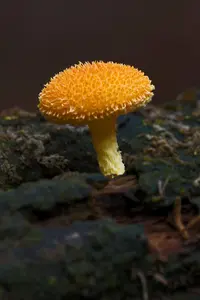
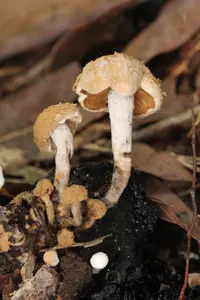
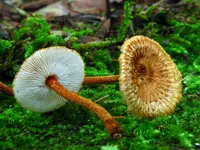
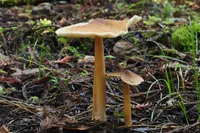
Golden-scruffy Collybia (Cyptotrama asprata) is a small wood-inhabiting fungus rather than a typical leafy plant. It forms bright yellow, shaggy-capped mushrooms on decaying wood, often in humid forests. Caps are usually 1–3 cm wide, with a rough, scaly surface and a slender stem.
This species occurs in tropical and subtropical regions worldwide, including parts of North America, often appearing after rains on fallen logs or branches. Its need for consistently damp, shaded, and decaying wood makes it difficult to maintain in typical home conditions. Those who aim to care for Golden-scruffy Collybia must understand that it behaves like a forest mushroom, not a houseplant, and depends heavily on stable moisture and the right rotting wood substrate.

Care Difficulty
Hard Care

Light Preference
Shade

Water Requirements
Keep Soil Moist

Temperature Preference
Tropical / Frost Sensitive

Hardiness Zone
Unknown

Soil Texture
Loamy, Silty, Organic-rich

Soil pH
Strongly acidic (4.5–5.5), Acidic (5.5–6.5)

Soil Drainage
Moist but well-drained

Fertilization
Minimal (feed rarely)
Scan your plant to receive care tips personalized for your specific plant
Available on iOS and Android
Cyptotrama asprata, often found as Golden-scruffy Collybia on decaying wood, prefers low to moderate forest light rather than open sun.
Cyptotrama asprata develops best on consistently moist but not waterlogged wood or woody debris.
This fungus prefers mild, humid conditions and declines in sustained cold or extreme heat.
This wood-inhabiting mushroom prefers moderately moist air rather than very dry or very steamy conditions.
This species fruits best on loose, decaying wood or an equivalent highly organic, airy substrate rather than traditional garden soil.
This fungus can be grown in containers if the substrate and moisture are controlled carefully.
Cyptotrama asprata is a saprophytic fungus that usually gains enough nutrients from decaying wood or leaf litter and seldom benefits from direct fertilization in cultivation.
Cyptotrama asprata requires no true pruning, but limited hygiene trimming can keep cultivated beds tidy and reduce disease risk.
This species is rarely grown in containers; management focuses on moving or renewing colonized wood or substrate rather than classic repotting.
Propagation of Cyptotrama asprata is specialized and usually handled by advanced growers using spore or culture techniques rather than casual home methods.
Outdoor colonies of this fungus generally need little targeted winter care where local climate matches its natural range and substrates do not freeze solid for long periods.

Plant Health Check
Not sure what's wrong with your plant? Check your plant's health inside the app.
The cap surface is densely covered with coarse, crystalline granules that give a rough, sandpapery feel and a sparkling appearance when fresh and moist, a feature used as a key identification character for this species.
Fruiting bodies often start as vivid yellow to golden when young but typically fade to pale yellow or almost whitish as they mature or dry, so the same colony can show a range of colors over time.
This species occurs widely in tropical and subtropical regions across multiple continents, usually appearing on dead wood or woody debris in warm, humid forests after rainfall.
This fungus is considered inedible. It is small, insubstantial, and not used as food. Identification can be difficult, and confusing it with other species is possible, so it should not be collected for consumption.
Keep your plants happy and healthy with plant identification, disease detection, and easy care guidance.