


Wire support training
Install a sturdy wire or mesh support early and loosely tie young shoots with soft ties, redirecting new growth horizontally to create a denser screen and prevent stems from kinking in wind.

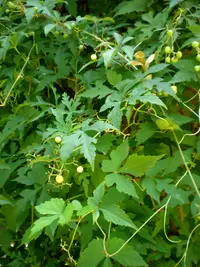
Monkshoodvine, Ampelopsis aconitifolia, is a deciduous climbing vine in the grape family, grown mainly for its finely cut, fern-like foliage. It produces slender, twining stems that can cover trellises, fences, or pergolas, giving a light, lacy effect rather than a dense screen.
In the wild it occurs in parts of northern China, typically in woodland margins and thickets. In gardens it generally prefers sun to light shade, moderate moisture, and well-drained soil.
Its main appeal is ornamental foliage and a relatively vigorous but manageable growth habit, which makes it moderately easy to grow once established. Understanding how to care for monkshoodvine focuses mostly on giving it suitable support and avoiding very dry or waterlogged conditions.

Care Difficulty
Moderate Care

Light Preference
Full Sun

Water Requirements
Moderate Water

Temperature Preference
Cold Hardy

Hardiness Zone
5–8

Soil Texture
Sandy, Loamy, Organic-rich

Soil pH
Slightly acidic (6.5–7.0), Neutral (7.0)

Soil Drainage
Well-drained

Fertilization
Minimal (feed rarely)
Scan your plant to receive care tips personalized for your specific plant
Available on iOS and Android
This deciduous climber needs consistent outdoor light to produce dense foliage and fruit.
This vine prefers evenly moist but not saturated soil once established outdoors.
This hardy climber grows best in temperate to cool-summer climates with cold winters for dormancy.
This vine grows well in typical outdoor humidity and rarely needs special moisture control.
Ampelopsis aconitifolia prefers moderately fertile, well-drained soil that does not stay waterlogged.
This species can be grown in containers if given adequate root space and stable support.
This vigorous vine benefits from modest feeding in containers or poor soils, but established in-ground plants often need little added fertilizer.
Pruning helps manage size and structure of Ampelopsis aconitifolia and keeps the vine healthy.
This vine is more often grown in the ground, so focus on careful transplanting or occasional container upsizing when rootbound.
Ampelopsis aconitifolia is commonly propagated from cuttings and also from seed where time and space allow.
This hardy, deciduous vine usually needs only minimal winter care once established in suitable climates.

Plant Health Check
Not sure what's wrong with your plant? Check your plant's health inside the app.
The leaves are deeply divided into narrow lobes that closely resemble those of monkshood (Aconitum), which is the origin of the common name monkshoodvine.
After flowering, the vine produces small, bead‑like berries that ripen to shades of blue‑black and often persist into autumn, providing visual interest and food for some birds.
This species climbs by twining stems rather than tendrils, creating a relatively light, open canopy compared with many other grape relatives, which makes it suitable where a less dense screen is desired.

Although closely related to grapes, this species is mainly valued as an ornamental climber for its delicate foliage and decorative fruit rather than for edible use, and it has been grown in temperate gardens since at least the late 19th century.
Sparse or absent flowering usually results from insufficient light, heavy nitrogen fertilization, or pruning at the wrong time, which removes flower buds. Mature age, consistent moisture, and a balanced, low-nitrogen fertilizer help restore reliable blooming.
Keep your plants happy and healthy with plant identification, disease detection, and easy care guidance.

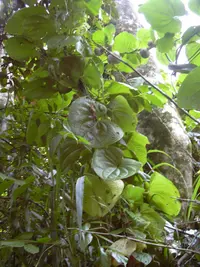
air yam
Dioscorea bulbifera
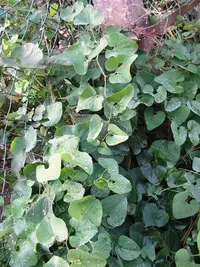
birthwort
Aristolochia clematitis
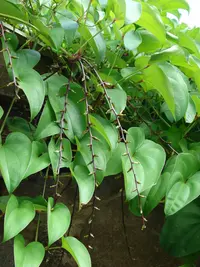
water yam
Dioscorea alata
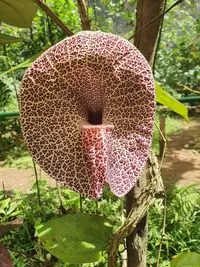
Aristolochia cordiflora
Aristolochia cordiflora
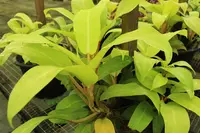
Blushing Philodendron
Philodendron erubescens 'Golden Erubescens'
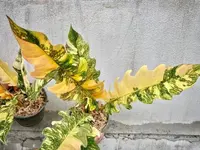
Philodendron
Philodendron 'Ring of Fire'
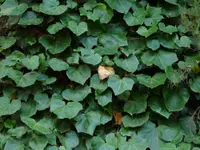
Algerian ivy
Hedera canariensis
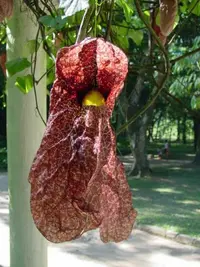
Brazilian Dutchman's Pipe
Aristolochia gigantea