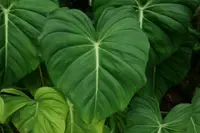
Blushing Philodendron Care (Philodendron erubescens 'Golden Erubescens')

Also known as: Red-leaf Philodendron

About Blushing Philodendron

Philodendron erubescens 'Golden Erubescens' is a tropical climbing aroid grown mainly as a decorative foliage houseplant. It is valued for its golden-green leaves, often flushed with pink or red tones on young growth and stems.

In nature, the species Philodendron erubescens comes from humid tropical forests of Central and South America, where it climbs trees in shaded understories. In homes, it usually grows as a vine that can be trained on a pole or allowed to trail.

This cultivar is considered moderately easy, provided it receives stable warmth, bright but indirect light, and evenly moist, well-drained soil. Understanding how to care for Blushing Philodendron helps maintain its color and prevent leggy, weak growth.

Main Plant Requirements

Care Difficulty

Easy Care

Light Preference

Bright Indirect Light

Water Requirements

Moderate Water

Temperature Preference

Tropical / Frost Sensitive

Hardiness Zone

10–11

Soil Texture

Loamy, Peaty, Organic-rich

Soil pH

Acidic (5.5–6.5), Slightly acidic (6.5–7.0)

Soil Drainage

Moist but well-drained

Fertilization

Light (every 4–6 weeks)

Get Personalized Care Plan

Scan your plant to receive care tips personalized for your specific plant

Available on iOS and Android

How to Care for the Blushing Philodendron

This cultivar prefers bright, indirect light that protects its leaves from scorching while supporting strong growth.

  • Provide 6–8 hours of bright, filtered light each day, such as near an east- or north-facing window or under light tree canopy when grown outside.
  • Tolerates light shade for part of the day, but Blushing Philodendron develops stronger color and denser growth when it receives gentle morning sun and shaded afternoons.
  • Avoid harsh midday or strong afternoon sun, which causes leaf scorch; in winter, move plants slightly closer to windows or supplement with grow lights to compensate for shorter days.

Watering should maintain lightly moist, airy soil without staying saturated for long periods.

  • Allow the top 2–4 cm of soil to dry before watering, using a finger test rather than a fixed schedule, and then water thoroughly so excess drains away.
  • Use a loose, well-draining mix with added perlite or bark so roots receive both moisture and air, which helps prevent root rot and yellowing lower leaves.
  • Reduce watering in cooler, darker months as growth slows; drooping, thin leaves signal underwatering, while soft stems, a sour smell, or blackened roots indicate overwatering, especially in Philodendron erubescens 'Golden Erubescens'.

Stable, warm conditions support steady growth and help prevent stress-related leaf damage.

  • Aim for 65–80°F (18–27°C) for best growth, with only brief exposure down to about 60°F (16°C) if the soil is kept on the dry side.
  • Below 55°F (13°C), tissue damage and slowed metabolism become more likely, so protect plants from cold drafts, open windows in winter, and unheated porches.
  • Tolerates short heat spikes up to about 90°F (32°C) if humidity and airflow are good, but above this range increase shade, ventilation, and check soil more often to avoid rapid drying.

This philodendron prefers moderately high humidity to keep foliage healthy and growth steady.

  • Aim for 50–70% humidity; it will survive around 40% but grows more slowly and may develop dry leaf edges.
  • Dry indoor air causes brown, crispy tips, curled margins, and slower new leaf expansion in Blushing Philodendron.
  • Raise humidity with a nearby humidifier, grouping plants, or a pebble tray, rather than misting that can encourage leaf spots.

This aroid needs a loose, airy mix that drains quickly yet holds some moisture around the roots.

  • Use a chunky mix of about 40% peat or coco coir, 30% fine bark, 20% perlite, and 10% compost for structure and nutrients.
  • Target slightly acidic to neutral pH, roughly 6.0–7.0, which supports nutrient availability without risking toxicity.
  • Ensure fast drainage by avoiding heavy garden soil or pure potting compost that compacts and suffocates roots.
  • Improve aeration with extra bark or perlite if the mix stays wet longer than 4–5 days, reducing risk of root rot for Philodendron erubescens 'Golden Erubescens'.

This species is well suited to container culture due to its manageable root system and climbing habit.

  • Choose a stable, heavier pot or add a moss pole so the vine can climb without tipping as stems elongate.
  • Select a container with slightly more width than depth to give lateral root space while keeping the mix drying evenly.
  • Opt for terracotta if the environment is humid to speed evaporation, or plastic in drier homes to slow moisture loss.

This hybrid responds well to modest, consistent feeding during active growth, supporting healthy foliage color and new shoots in Blushing Philodendron.

  • Use a balanced liquid fertilizer (around 10-10-10 or 20-20-20) at 1/4–1/2 strength every 4–6 weeks in spring and summer.
  • Alternatively, apply a slow-release, balanced granular fertilizer at the start of spring, following label rates for container plants.
  • Reduce feeding to once in late fall or stop entirely in winter, when growth slows under lower light and cooler temperatures.
  • Avoid fertilizing very dry soil; water first, then apply fertilizer to limit root burn and salt buildup.

Philodendron erubescens 'Golden Erubescens' benefits from light, periodic pruning to manage size and encourage fuller growth.

  • Plan main pruning in late winter or early spring before vigorous new growth starts.
  • Remove yellowing, dead, or damaged leaves and any weak, spindly stems using clean, sharp pruning shears.
  • Shorten overlong vines just above a node to maintain a compact, bushier shape and direct energy to strong shoots.
  • Disinfect blades with alcohol between plants to reduce disease spread and make neat, angled cuts that heal efficiently.

This philodendron grows well in containers and needs occasional repotting to refresh soil and support root health.

  • Look for roots circling the pot, emerging from drainage holes, soil drying out very fast, or slowed growth as signs to repot.
  • Repot every 2–3 years in spring, moving to a container only 2–5 cm wider with fresh, chunky, well-draining aroid mix.
  • Gently loosen circling roots and trim dead or mushy sections with clean scissors to reduce future binding and rot risk.
  • Water thoroughly after repotting, keep in bright, indirect light, and avoid heavy fertilization for 3–4 weeks while roots recover.

This cultivar is commonly propagated from stem cuttings to maintain its desirable foliage traits.

  • Take 10–15 cm stem cuttings in late spring or summer, each with at least 1–2 nodes and a healthy leaf.
  • Place cuttings in water or a moist, airy mix like perlite and peat, keeping temperatures around 70–80°F and high humidity.
  • Ensure the node is submerged or buried, but keep leaves above water or soil to prevent rotting.
  • After roots reach 3–5 cm, pot into small containers with well-draining mix and provide bright, indirect light for steady establishment.

This tropical philodendron is frost-sensitive and needs indoor-style protection in colder climates.

  • Keep plants above 55°F; prolonged exposure near 40°F can cause leaf damage and stunt growth.
  • In temperate regions, grow in containers and move indoors before nighttime temperatures drop below 60°F.
  • Indoors, place in bright, indirect light away from drafts, and water less often while growth slows.

Care Tips

Provide climbing support

Install a sturdy moss pole or coco pole early and loosely tie new vines with soft plant ties to encourage larger leaves and a more vertical, stable plant.

Rotate for even color

Turn the pot 90° every 1–2 weeks so that all sides receive similar light, which helps maintain even golden and red coloration on the foliage.

Leaf surface maintenance

Wipe leaves every 3–4 weeks with a barely damp, soft cloth to remove dust, improving light capture and making it easier to spot early signs of pests or stress when caring for Blushing Philodendron.

Selective vine pruning

Pinch or cut back only the longest, bare-stemmed sections above a node to trigger branching lower on the plant and keep the overall form compact and fuller.

Seasonal repot timing

Plan any repotting or major root work for mid-spring, when growth is starting to accelerate, so the plant can recover quickly and re-establish in fresh substrate.

Common Pests and Diseases

Spider mites

This pest thrives on philodendron foliage in warm, dry indoor air and feeds by piercing leaves, causing stippling, dulling, and fine webbing, especially on undersides. Symptoms include speckled yellowing patches that can spread quickly along vining stems.

Solution

Rinse leaves thoroughly with a strong but gentle stream of lukewarm water, including leaf undersides, then wipe with a soft cloth and repeat weekly until populations drop. Increase humidity, improve air circulation, and, if needed, apply an insecticidal soap or neem oil spray labeled for indoor use, keeping the plant out of direct sun until leaves dry.

Mealybugs

These insects hide in leaf axils and along petioles, leaving cottony white clusters and sticky honeydew on the vines and new growth. Symptoms include stunted tips, deformed young leaves, and slow decline of affected sections.

Solution

Isolate the plant, then dab visible pests with cotton swabs dipped in isopropyl alcohol and wipe affected areas carefully. Follow with regular treatments of insecticidal soap or neem oil every 7–10 days, focusing on leaf joints and undersides, and prune heavily infested vines if needed.

Scale insects

This pest appears as small, tan to brown bumps firmly attached along stems, petioles, and leaf veins, often blending with the plant’s reddish and golden tones. Symptoms include yellowing leaves, sticky residue, and a general loss of vigor on longer vines.

Solution

Gently scrape or lift off individual scales with a fingernail or soft brush, then wipe stems with a cloth lightly moistened with isopropyl alcohol. Continue with repeated applications of horticultural oil or insecticidal soap, ensuring thorough coverage of stems and midribs, and monitor new growth for reinfestation as part of ongoing Blushing Philodendron indoor care.

Bacterial leaf spot

This disease causes water-soaked, translucent or dark lesions that often start at the leaf margin, which can spread along the broad leaves of this cultivar. Symptoms include yellow halos around spots and eventual browning and collapse of affected tissue.

Solution

Remove and discard affected leaves, sterilizing pruning tools between cuts, and avoid overhead watering so foliage stays as dry as possible. Improve air movement, reduce crowding with other plants, and if spotting continues, use a copper-based bactericide according to label directions and monitor new leaves closely.

Fungal leaf blight

This disease leads to irregular brown or black patches that may expand rapidly in warm, humid, low-airflow conditions around dense philodendron foliage. Symptoms include soft, mushy leaf areas and premature leaf drop along older sections of the vine.

Solution

Cut away all visibly affected leaves and any severely damaged segments, disposing of them in the trash rather than compost. Allow the potting mix surface to dry slightly between waterings, increase airflow, and, if conditions remain humid, apply a houseplant-safe fungicide, treating both upper and lower leaf surfaces as directed.

Interesting Facts

Naturally occurring chimera

Many plants sold as this cultivar show chimeral variegation, where genetically different cell layers create stable yellow and green patterns in each leaf.

Sun-induced coloration shift

New foliage often emerges a brighter yellow and may develop greener tones as light levels decrease, because chlorophyll production increases in shaded conditions.

Compact climbing habit

Compared with many other P. erubescens selections, this cultivar tends to stay relatively compact indoors yet still produces climbing shoots that can attach to supports through adventitious roots.

FAQs about Blushing Philodendron

This cultivar performs best as a protected indoor plant or in sheltered patios in warm climates. It dislikes temperature swings, strong wind, and harsh sun. Stable indoor conditions usually provide more reliable foliage color and overall vigor.

Grow Healthy Plants with Botan Care

Keep your plants happy and healthy with plant identification, disease detection, and easy care guidance.

Botan plant care app — identify plants on mobile

Explore More Plants