Root zone mulching
Apply a 5–8 cm layer of coarse organic mulch around the root zone, keeping it 5 cm away from the trunk, to stabilize soil moisture, buffer temperature swings, and protect the shallow feeder roots from mechanical damage.

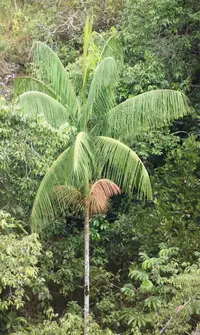
Euterpe edulis, often called Assai or juçara palm, is a slender, single-stemmed palm native to the Atlantic Forest of Brazil and nearby regions. It forms a graceful crown of arching, feather-like fronds and can reach tree-like heights in suitable climates.
In cultivation it is valued for its elegant silhouette and for producing edible palm hearts, though harvesting the main stem is usually fatal to the plant. It prefers warm, frost-free conditions, evenly moist but well-drained soil, and protection from harsh, drying winds.
Because it is sensitive to cold and low humidity, how to care for Assai palm outdoors in temperate regions often involves greenhouse or conservatory growing rather than open-ground planting.

Care Difficulty
Moderate Care

Light Preference
Partial Shade

Water Requirements
Keep Soil Moist

Temperature Preference
Tropical / Frost Sensitive

Hardiness Zone
10–12

Soil Texture
Loamy, Sandy, Organic-rich

Soil pH
Acidic (5.5–6.5), Slightly acidic (6.5–7.0)

Soil Drainage
Moist but well-drained

Fertilization
Minimal (feed rarely)
Scan your plant to receive care tips personalized for your specific plant
Available on iOS and Android
Euterpe edulis prefers bright, filtered light that mimics understory rainforest conditions.
This palm prefers consistently moist but not waterlogged soil, similar to a humid forest floor.
This species thrives in warm, frost-free climates with stable temperatures.
This palm prefers consistently moist air and reacts quickly to very dry indoor conditions.
This species prefers deep, moist, well‑drained, organic‑rich soil that does not compact.
This palm can be grown in containers for several years, especially in its juvenile stages.
Balanced feeding supports steady growth of Assai palm in cultivation, especially in containers.
Pruning Euterpe edulis focuses on hygiene rather than shaping the trunk or canopy.
Container-grown plants and young field specimens benefit from careful transplanting to maintain healthy root development.
Euterpe edulis is mainly propagated from seeds, which require warmth and patience to germinate successfully.
This palm is sensitive to frost and benefits from targeted winter protection in cooler regions.

Plant Health Check
Not sure what's wrong with your plant? Check your plant's health inside the app.
This species is one of the main traditional sources of palm heart in Brazil, and heavy extraction from wild populations has contributed to its classification as endangered in much of its native range.
The fruits are a crucial food resource for many Atlantic Forest birds and mammals, including large toucans that disperse its seeds over long distances, helping maintain forest regeneration patterns.
Euterpe edulis is native and largely restricted to the Atlantic Forest of Brazil, thriving in humid, shaded understories and serving as a structural component of these highly diverse but heavily fragmented forests.

Genetic and field studies show that the loss of large seed-dispersing birds in disturbed Atlantic Forest fragments alters the natural regeneration of Euterpe edulis, leading to shorter dispersal distances and potentially reduced genetic diversity over time.
Growth is moderate under warm, humid, frost-free conditions, typically adding 30–60 cm in height per year outdoors. In containers, growth is slower due to restricted root space and often less consistent moisture and warmth.
Keep your plants happy and healthy with plant identification, disease detection, and easy care guidance.