


Low trunk support
Place a short, sturdy stake or piece of bamboo behind the basal rosette to keep the thick petioles upright and prevent the plant from leaning as it gains size and weight.

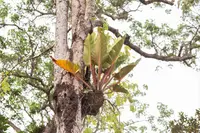
Philodendron melinonii is a tropical aroid grown mainly for its large, leathery leaves and strong architectural form. It is usually grown as a self-heading plant rather than a climber. The leaves often develop a glossy surface and can show subtle color shifts as they mature, giving the plant a bold, structured look indoors. In nature, it comes from humid tropical forests of northern South America. This background explains its preference for warm temperatures, steady moisture, and airy, organic-rich soil. With stable indoor conditions and moderate attention, how to care for Philodendron melinonii is relatively straightforward for most home growers.

Care Difficulty
Moderate Care

Light Preference
Bright Indirect Light

Water Requirements
Moderate Water

Temperature Preference
Tropical / Frost Sensitive

Hardiness Zone
10–11

Soil Texture
Loamy, Peaty, Organic-rich

Soil pH
Acidic (5.5–6.5), Slightly acidic (6.5–7.0)

Soil Drainage
Moist but well-drained

Fertilization
Light (every 4–6 weeks)
Scan your plant to receive care tips personalized for your specific plant
Available on iOS and Android
This species prefers bright, filtered light that mimics dappled tropical canopy conditions.
Watering should keep the root zone evenly moist but never saturated for long periods.
Stable, warm conditions support strong growth and reduce stress on this tropical aroid.
This species prefers moderately high, steady humidity to maintain firm, healthy foliage.
This aroid needs a loose, airy, organic-rich mix that drains quickly but does not dry out instantly.
This species is well suited to container growing due to its structured rosette form and strong central stem.
Balanced, modest feeding supports steady, leafy growth for Philodendron melinonii in containers.
Targeted pruning keeps Philodendron melinonii compact, healthy, and tidy indoors.
Repotting maintains root health and stable growth for Philodendron melinonii in containers.
Vegetative propagation is the standard method for maintaining true-to-type Philodendron melinonii plants.
Winter care for Philodendron melinonii focuses on frost avoidance and stable indoor conditions.

Plant Health Check
Not sure what's wrong with your plant? Check your plant's health inside the app.
This species is native to lowland tropical rainforests in northern South America, where it grows as a terrestrial aroid that can climb or sprawl along the forest floor rather than strictly ascending tree trunks.
It develops thick, flattened, wing-like petioles that act as supportive structures for the heavy, leathery leaves, a trait that helps stabilize the plant in its native understory habitat.
In the wild, it can tolerate more light than many understory philodendrons, sometimes growing in relatively open, bright sites compared to the deeper-shade specialists in the same genus.
Brown edges or tips usually come from low humidity, underwatering, or fertilizer salts building up in the potting mix. Increase humidity, water more evenly, flush the soil occasionally, and keep the plant away from hot or cold drafts.
Keep your plants happy and healthy with plant identification, disease detection, and easy care guidance.

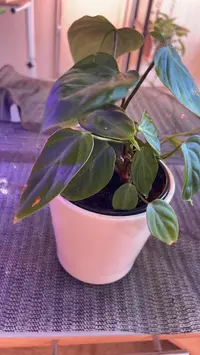
vilevine
Philodendron hederaceum var. hederaceum

Philodendron
Philodendron 'Florida Ghost'
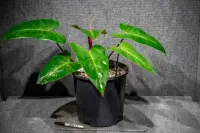 POPULAR
Blushing Philodendron
Philodendron erubescens
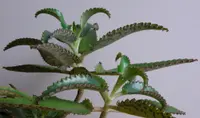 POPULAR
Mother of Thousands
Kalanchoe daigremontiana
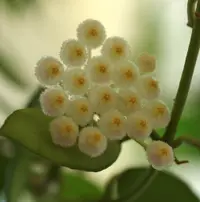
Hoya lacunosa
Hoya lacunosa
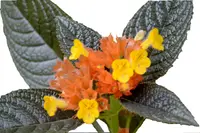
squarestem
Chrysothemis pulchella
Licorice plant
Helichrysum petiolare
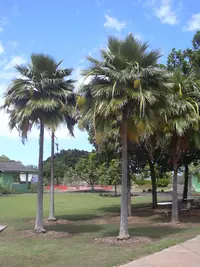
Fiji fan palm
Pritchardia thurstonii