Wind-firm training
In the first 3–5 years, allow moderate wind exposure and avoid staking too rigidly so the trunk can flex and thicken, which makes the tree more stable long-term in urban landscapes.

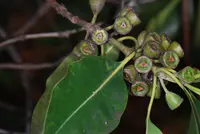
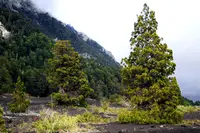
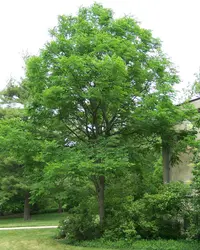
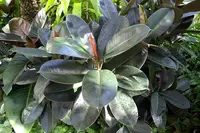
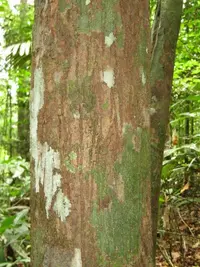
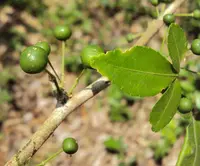
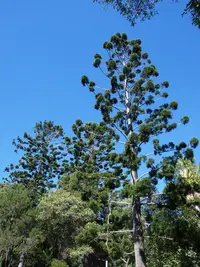
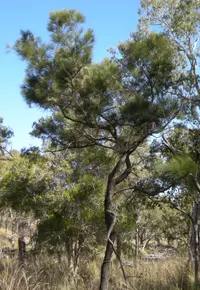
Brush box, Lophostemon confertus, is an evergreen tree valued for its dense canopy and smooth, patchy bark. It usually has glossy, oval leaves and small, creamy-white flowers. Native to eastern Australia, it is often used as a street, shade, or screening tree in warm, frost-free regions. The species is adaptable and can handle urban conditions, including some air pollution and pruning. It prefers sun, moderate moisture, and well-drained soil, which makes it relatively straightforward to care for Brush box in suitable climates.

Care Difficulty
Easy Care

Light Preference
Full Sun

Water Requirements
Moderate Water

Temperature Preference
Warm Climate

Hardiness Zone
9–11

Soil Texture
Sandy, Loamy, Clay

Soil pH
Acidic (5.5–6.5), Slightly acidic (6.5–7.0)

Soil Drainage
Well-drained

Fertilization
Minimal (feed rarely)
Scan your plant to receive care tips personalized for your specific plant
Available on iOS and Android
This sun-loving Australian tree grows best in bright, open positions with some protection from extreme afternoon heat.
This species prefers evenly moist but not saturated soil, especially during establishment.
This tree thrives in warm, frost-free to very light-frost climates and tolerates typical suburban heat.
This species handles a broad humidity range and usually does not need special humidity management outdoors or in bright, airy spaces.
Lophostemon confertus prefers moderately fertile, well-structured soil that drains freely yet holds some moisture.
This tree can be grown in containers for several years, especially in its early stages or where space is limited.
This species grows in poor soils but benefits from light, targeted feeding in cultivation.
Thoughtful pruning keeps Lophostemon confertus safe, balanced, and suited to its space.
This tree is usually grown in the ground, so management focuses on careful transplanting rather than frequent repotting.
Lophostemon confertus is usually propagated by seed or semi-hardwood cuttings, which need controlled conditions to succeed.
In mild climates this tree needs little winter attention, but extra care is important in regions with frost.

Plant Health Check
Not sure what's wrong with your plant? Check your plant's health inside the app.
This Australian rainforest tree has become a common street and hedge tree in subtropical cities because it tolerates air pollution, reflected heat from pavement, and regular pruning into tight forms.
When the leaves or young shoots are crushed, they release a noticeable cinnamon-like aroma due to volatile oils in the foliage, which helps distinguish it from many other evergreen street trees.
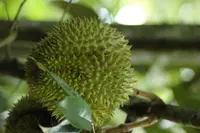
Its woody seed capsules open into several compartments packed with many very small seeds, an adaptation that allows a single tree to release large numbers of wind- and gravity-dispersed seeds after fire or branch damage.

In some Australian cities, this species has been so heavily planted along streets and in developments that it is now classed as an environmental weed in nearby natural bushland, where self-sown seedlings can outcompete local native understorey plants.
This species is generally fast-growing in suitable climates, often adding 30–90 cm of height per year when young. Growth slows as it matures, especially in poor soil, restricted root space, or low moisture conditions.
Keep your plants happy and healthy with plant identification, disease detection, and easy care guidance.