Root zone mulching
Apply a 5–8 cm layer of coarse, low-fines mulch (pine bark or wood chips) around the drip line, keeping it 5 cm away from the trunk to stabilize soil moisture, protect fine roots, and reduce weed competition.

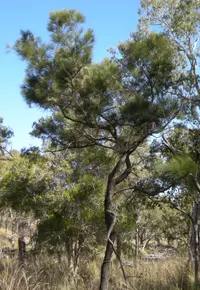
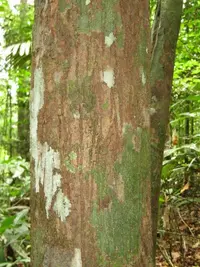
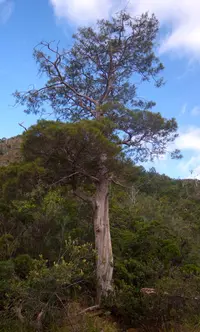
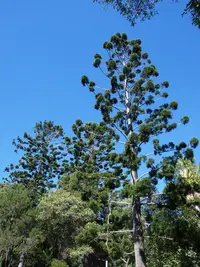
Forest-oak (Allocasuarina torulosa) is an Australian native tree, often grown as a feature plant or windbreak. It has fine, needle-like branchlets that give a soft, feathery look, while the true leaves are reduced to tiny scales along the stems.
In nature it occurs in eastern Australia on rocky slopes and well-drained soils, often in open forests. It tolerates wind, poor soils, and temporary dryness, which can make it easier to establish in tough sites.
Growth is upright and slender when young, becoming more spreading with age. For gardeners exploring how to care for forest-oak, it generally prefers full sun, low to moderate moisture, and well-drained, slightly acidic soil.

Care Difficulty
Moderate Care

Light Preference
Full Sun

Water Requirements
Low Water

Temperature Preference
Warm Climate

Hardiness Zone
9–11

Soil Texture
Sandy, Loamy, Rocky

Soil pH
Acidic (5.5–6.5), Slightly acidic (6.5–7.0)

Soil Drainage
Well-drained

Fertilization
Minimal (feed rarely)
Scan your plant to receive care tips personalized for your specific plant
Available on iOS and Android
Allocasuarina torulosa prefers bright outdoor conditions with consistent sun exposure for dense, healthy growth.
This species prefers well-drained soil and benefits from deep but infrequent watering once established.
This tree is adapted to warm, mild climates and tolerates a moderate range of outdoor temperatures.
Allocasuarina torulosa handles a wide humidity range and usually does not need special adjustment indoors or outdoors.
Allocasuarina torulosa prefers lean, sharply drained mineral soils that do not stay wet after rain or watering.
This species can be grown in containers for several years, especially in its early stages.
Allocasuarina torulosa grows on poor soils but responds to light, careful feeding in containers or managed landscapes.
Pruning Allocasuarina torulosa is mainly for structure, safety, and removing problem growth.
This species is usually planted in the ground; container-grown forest-oak or young trees need thoughtful transplanting to avoid stress.
Allocasuarina torulosa is most commonly propagated from seed, which suits its natural biology better than cuttings.
In mild to warm climates Allocasuarina torulosa is largely low-maintenance over winter but needs attention in colder regions.

Plant Health Check
Not sure what's wrong with your plant? Check your plant's health inside the app.
This species is commonly called forest oak or rose sheoak and is native to eastern Australia, where it naturally occurs on coastal ranges and foothills, often on poor, sandy or rocky soils.
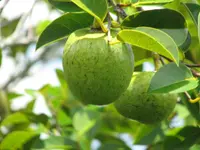
Although it is not a true conifer, it produces woody cone-like structures that are actually clusters of modified bracts enclosing the seeds, which are an important food source for several native parrot species.
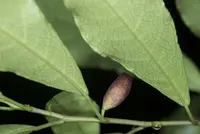
What look like pine needles are actually reduced branchlets with tiny scale leaves arranged in whorls, an adaptation that reduces water loss and allows the tree to cope with dry, exposed sites.

This species is often used in ecological restoration in eastern Australia because its roots host nitrogen-fixing actinorhizal bacteria (Frankia), allowing the tree to improve nutrient-poor soils and facilitate the establishment of other native plants.
This species is moderately fast-growing in suitable conditions, often adding 30–80 cm of height per year when young. Growth slows as it matures. Rate depends on soil depth, drainage, available water, and temperature.
Keep your plants happy and healthy with plant identification, disease detection, and easy care guidance.