African Spiral Flag Care (Costus lucanusianus)

African Spiral Flag

About African Spiral Flag

African spiral flag, Costus lucanusianus, is a tropical perennial from West and Central Africa, valued for its lush foliage and striking, spiraled stems. It typically forms upright clumps with broad, green leaves arranged around cane-like shoots, creating a bold, architectural look indoors or in warm outdoor gardens.

In its native habitat, it grows in warm, humid forest understories, which explains its preference for bright, filtered light and consistently moist, rich soil. With stable warmth, good humidity, and protection from strong sun, many growers find it moderately easy to care for African Spiral Flag.

Its showy flowers and attractive spiral growth habit make it a good choice for collectors who enjoy tropical plants with an exotic appearance but manageable day-to-day needs.

Main Plant Requirements

Care Difficulty

Moderate Care

Light Preference

Partial Shade

Water Requirements

Keep Soil Moist

Temperature Preference

Tropical / Frost Sensitive

Hardiness Zone

10–12

Soil Texture

Loamy, Silty, Organic-rich

Soil pH

Acidic (5.5–6.5), Slightly acidic (6.5–7.0)

Soil Drainage

Moist but well-drained

Fertilization

Moderate (every 2–4 weeks)

Get Personalized Care Plan

Scan your plant to receive care tips personalized for your specific plant

Available on iOS and Android

How to Care for the African Spiral Flag

This shade-loving tropical understory plant prefers soft, filtered light rather than direct sun.

  • Provide 2–4 hours of gentle morning sun with bright, dappled or filtered light the rest of the day for African Spiral Flag.
  • Site outdoors in partial shade under trees, shade cloth, or on an east-facing side; avoid harsh midday and afternoon sun to prevent leaf scorch.
  • In summer, reduce exposure if leaves yellow or crisp at edges; in darker seasons, move slightly closer to light to prevent stretching.

This species prefers consistently moist, airy soil without long dry spells or waterlogging.

  • Water when the top 2–3 cm of soil feels barely dry, aiming to keep the root zone evenly moist during active growth.
  • Use loose, organic-rich soil with good drainage; persistent wetness, sour smell, or mushy stems signal overwatering and root stress.
  • Allow the surface to dry a bit more in cooler months; curling, thin leaves suggest underwatering, while yellowing, soft leaves suggest excess moisture for Costus lucanusianus.

This tropical species grows best in warm, stable temperatures and is sensitive to cold and frost.

  • Aim for 70–85°F (21–29°C) during the growing season for strong stem and leaf development.
  • Protect the plant if temperatures drop near 55°F (13°C); below about 50°F (10°C) growth stalls and tissue damage can occur.
  • Avoid frost entirely and shelter from hot, dry winds when above 90°F (32°C), as extreme heat with low humidity can scorch foliage.

This species prefers high, stable humidity to maintain healthy foliage and new shoots.

  • Aim for 60–80% humidity; use a room humidifier or humidity tray near African Spiral Flag in dry homes.
  • Leaves curling, brown edges, or stalled new growth indicate humidity stress, especially in heated or air-conditioned rooms.
  • Group plants together away from drafts or vents to create a more humid microclimate around the foliage.

Costus lucanusianus grows best in a loose, organic-rich, evenly moist but free-draining substrate.

  • Use a mix of roughly 50% peat or coco coir, 30% compost, and 20% perlite or fine bark to create a light, moisture-retentive structure.
  • Ensure water drains through the pot within seconds; soggy, heavy mixes increase risk of rhizome rot and fungal problems.
  • Slightly acidic to neutral pH around 6.0–7.0 supports nutrient uptake and limits micronutrient lockout.
  • Incorporate chunky particles like fine bark or pumice to improve aeration around the rhizomes and prevent compaction over time.

This species is well suited to container growing when the pot supports its rhizomatous, upright habit.

  • Choose a wide, stable pot to support tall, leafy stems and prevent tipping in wind or when the soil is moist.
  • Select slightly moisture-retentive materials like glazed ceramic or plastic to keep the root zone evenly damp without frequent watering.
  • Use a deep enough container so rhizomes sit a few cm below the surface with space for horizontal spread, avoiding crowding against pot walls.

This tropical rhizome responds well to modest, consistent feeding during its warm growing season.

  • Use a balanced liquid fertilizer (around 10-10-10 or 20-20-20) diluted to 1/4–1/2 strength for African Spiral Flag in active growth.
  • Apply every 3–4 weeks during spring and summer on moist soil, never on dry roots.
  • Reduce feeding to 1 light application in fall, then stop in winter dormancy or when growth slows markedly.
  • In containers, alternate liquid feed with a thin topdress of fine compost or use a mild slow-release product at label rates.

Pruning Costus lucanusianus focuses on removing old canes and keeping clumps tidy and vigorous.

  • Carry out main pruning at the end of winter or very early spring before strong new shoots elongate.
  • Cut dead, damaged, or leafless canes back to the base using clean, sharp pruners or snips.
  • Thin out a few of the oldest, most crowded stems to improve air flow and light within the clump.
  • Remove spent flowering stems at the base to direct energy into new shoots and maintain a neat shape.

Rhizome growth gradually fills containers, so periodic repotting keeps this species healthy and actively growing.

  • Check for roots circling the pot, water running straight through, or slowed growth as signals to move Costus lucanusianus up one container size.
  • Plan repotting for late spring to early summer, when temperatures are warm and new shoots are emerging.
  • Expect to repot every 2–3 years, using a free-draining, organic-rich mix and a pot with good drainage holes.
  • Gently loosen the root ball, trim rotten roots, replant at the same depth, then water thoroughly and keep shaded for 3–5 days to limit stress.

This species is commonly multiplied by stem cuttings and division of its rhizomes during warm weather.

  • Take 10–15 cm stem sections with at least 2 nodes in late spring or summer, when canes are firm and actively growing.
  • Lay cuttings horizontally or plant upright with 1 node buried in a sterile, moist, well-drained medium, then keep at 70–80°F with high humidity.
  • Divide rhizomes from mature clumps in late spring, giving each piece at least 1–2 healthy shoots or buds.
  • Provide bright, indirect light and consistently moist, not waterlogged, substrate until new roots and shoots are clearly visible.

This tropical species is frost tender and needs protection wherever temperatures approach freezing.

  • In USDA zones colder than 10, grow in containers and move indoors before temperatures drop below 50°F.
  • Indoors, give bright, indirect light and slightly reduced watering, allowing the top of the mix to dry lightly between waterings.
  • In very mild climates, leave clumps in the ground but mulch the root zone with 5–8 cm of organic material to buffer cool nights.
  • Remove or trim back frost-damaged foliage in late winter, once the risk of hard frost has passed.

Care Tips

Support arching stems

Install a low, discreet hoop or ring stake around the clump so the soft, arching canes rest on it instead of kinking or snapping at the base as they lengthen and flower.

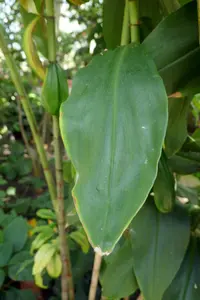
Encourage fuller clumps

Pinch or cut back the youngest shoot tips in early warm season to trigger side shoots from the lower nodes, which creates a denser, more compact clump over the next few months.

Use wide, shallow pots

Choose a pot that is wider than it is deep to match the plant’s spreading rhizomes and divide and repot every 2–3 years before the rhizomes circle and crowd, which helps maintain vigorous new growth.

Monitor leaf axils

Regularly inspect and gently rinse the tight spaces where leaves wrap around the stem, since these moist leaf axils can trap debris and harbor early mealybug or scale infestations.

Rotate with the season

Turn the container 90° every 2–3 weeks and shift it slightly closer to or farther from the window with seasonal light changes to keep canes growing upright rather than leaning strongly in one direction when growing African Spiral Flag.

Common Pests and Diseases

Spider mites

This pest thrives in warm, dry indoor air and can cause stippled, pale leaves and fine webbing on foliage and stems.

Solution

Rinse leaves thoroughly with lukewarm water, including the undersides, then increase humidity around the plant and isolate it; for heavier infestations, repeat washing and apply a horticultural soap or neem oil spray every 5–7 days until no new damage appears.

Mealybugs

These insects hide in leaf axils and along young stems, sucking sap and leaving behind white, cottony clusters and sticky honeydew.

Solution

Remove visible clusters with a cotton swab dipped in isopropyl alcohol, then shower the plant to dislodge remaining insects and follow up with a horticultural soap or neem oil spray at weekly intervals until the plant is clean.

Soft scale

This pest appears as small, rounded or oval bumps on stems and leaf midribs and causes yellowing, slowed growth, and sticky honeydew deposits.

Solution

Gently scrape or wipe off scale bodies with a cloth or soft brush, prune heavily infested stems, and treat remaining areas with repeated applications of horticultural oil, ensuring thorough coverage of stems and leaf veins.

Leaf spot

This disease produces brown to dark purple spotting on leaves, sometimes with yellow halos, especially under consistently wet foliage and poor air movement.

Solution

Remove and discard affected leaves, improve spacing and airflow, avoid wetting the foliage when watering, and if spotting continues, use a copper-based fungicide labeled for ornamental foliage plants according to the package directions.

Bacterial stem rot

Symptoms include water-soaked, soft, and sometimes foul-smelling areas at the base of stems, leading to collapse of entire shoots in overly wet, warm conditions.

Solution

Cut out and discard all affected stems back to firm, healthy tissue, improve drainage and reduce watering frequency, keep the lower stem area drier and better ventilated, and propagate only from firm, unblemished stems to prevent spread.

Interesting Facts

Spiraled ladder leaves

The leafy stems form a distinct spiral arrangement, creating a ladder-like look that helps maximize light capture on the shaded forest floor of West and Central Africa.

Flag-like floral bracts

Its bright, flag-shaped bracts hold small flowers that can be visited by both bees and sunbirds, reflecting its adaptation to a humid, biodiversity-rich understory.

Moist forest specialist

This species naturally grows along streambanks and in lowland rainforest edges, where consistently warm temperatures and high air humidity support its lush growth.

Botan icon

Did you know?

In parts of its native range, the striking spiral stems and showy bracts have led to its use as an ornamental cut stem in local markets, even though the plant itself remains uncommon in global horticulture.

FAQs about African Spiral Flag

Lack of blooms often comes from insufficient plant maturity, too little warmth, or nutrient imbalance. Ensure steady growing conditions, avoid heavy pruning of new shoots, and use a balanced, low-phosphorus fertilizer to support natural flowering cycles.

Grow Healthy Plants with Botan Care

Keep your plants happy and healthy with plant identification, disease detection, and easy care guidance.

Botan plant care app — identify plants on mobile

Explore More Plants