araca-boi Care (Eugenia stipitata)

araca-boi

About araca-boi

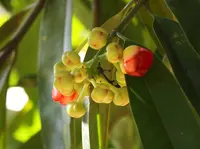
Araca-boi, Eugenia stipitata, is a small tropical fruit tree from the Amazon region, especially common in Brazil and neighboring countries. It belongs to the myrtle family and is grown for its aromatic, sour yellow fruits used in juices and preserves.

The plant has a bushy to small-tree habit with glossy green leaves and white flowers along the branches. In suitable warm climates it can be grown in the ground or in large containers.

This species prefers consistently warm temperatures, high humidity, and evenly moist, well-drained soil, so it is less suited to very dry or cold areas. Those conditions guide how to care for araca-boi in home gardens or protected spaces.

Main Plant Requirements

Care Difficulty

Moderate Care

Light Preference

Partial Sun

Water Requirements

Keep Soil Moist

Temperature Preference

Tropical / Frost Sensitive

Hardiness Zone

11–12

Soil Texture

Loamy, Sandy, Organic-rich

Soil pH

Acidic (5.5–6.5), Slightly acidic (6.5–7.0)

Soil Drainage

Moist but well-drained

Fertilization

Minimal (feed rarely)

Get Personalized Care Plan

Scan your plant to receive care tips personalized for your specific plant

Available on iOS and Android

How to Care for the araca-boi

Eugenia stipitata prefers bright, warm conditions similar to its native lowland tropics.

  • Provide 4–6 hours of gentle morning sun with bright, filtered light the rest of the day; young araca-boi plants benefit from light shade cloth in exposed sites.
  • Allow light partial shade, especially from strong midday and afternoon sun, to prevent leaf scorch and yellowing of upper foliage.
  • If growth is sparse or leaves are small and pale, increase light exposure gradually over 1–2 weeks, avoiding sudden moves into full midday sun.

Eugenia stipitata grows best in evenly moist, well‑drained soil without long dry spells or standing water.

  • Water when the top 3–5 cm of soil feels dry, aiming for deep soaking rather than frequent light sprinkles so roots grow downward.
  • Use rich, well‑draining soil or a loamy bed; persistent puddling, sour smell, or black, mushy roots indicate overwatering and poor drainage.
  • In cooler months reduce watering volume and frequency; wilting, curling new leaves, or very dry, shrinking soil signals the need to water soon.

This tropical fruit tree needs consistently warm temperatures to maintain active growth and fruiting.

  • Aim for 70–86°F (21–30°C) for strongest growth; flowering and fruit set tend to be better at the lower to middle part of this range.
  • Protect the plant whenever temperatures approach 40°F (4°C); foliage and young wood can be damaged near this point and it is not frost tolerant.
  • Short hot spells up to about 95°F (35°C) are tolerated if soil moisture is stable and roots are mulched to limit overheating and water loss.

This species prefers moderately humid air but adapts if extremes are avoided.

  • Aim for 50–70% humidity to reduce leaf edge browning and support steady growth in araca-boi.
  • It tolerates brief dips to 40%, but prolonged dry air can cause curled, crispy leaf margins and slower growth.
  • Increase humidity with a nearby humidifier, grouped plants, or a wide pebble tray beneath the pot without letting roots sit in water.

Eugenia stipitata prefers deep, moist, well-aerated soil that drains freely but does not dry out rapidly.

  • Use a loamy mix with 40–60% composted organic matter, plus coarse sand or perlite for structure and aeration.
  • Aim for slightly acidic to neutral pH around 5.5–7.0, avoiding strongly alkaline substrates that lock up micronutrients.
  • Combine screened compost, pine bark fines, and coarse perlite in roughly equal parts for a stable, moisture-retentive yet free-draining mix.
  • Avoid compacted, heavy clay or pure sand; both restrict roots, either by waterlogging and low oxygen or by rapid drying and nutrient loss.

This species is suitable for container growing when the pot is sized and stabilized for its woody, upright growth.

  • Choose a deep, heavy container that resists tipping as the plant develops a taller canopy and denser branching.
  • Ensure several unobstructed drainage holes so water exits within seconds of watering, preventing chronic saturation of the fine feeder roots.
  • Select thicker-walled clay or composite pots if outdoor, as they moderate root-zone temperature and reduce stress during hot spells.

This tropical fruit tree grows in modest soils but benefits from light, balanced feeding in containers or poor ground.

  • Use a balanced NPK fertilizer (such as 10-10-10) or well-rotted compost during the main growing season.
  • Feed every 4–6 weeks from spring to late summer, then stop or greatly reduce in fall and winter.
  • Apply liquids at 1/2 strength on moist soil to limit root burn and salt buildup.
  • For araca-boi in large pots, consider a slow-release granular fertilizer mixed into the top 2–3 cm of soil.

Thoughtful pruning keeps Eugenia stipitata compact, productive, and easier to manage.

  • Carry out main pruning in late winter or very early spring before strong new growth starts.
  • Remove dead, diseased, crossing, or inward-growing branches to improve airflow and light penetration.
  • Shorten overly long shoots to maintain a rounded canopy and encourage branching and fruiting wood.
  • Use clean, sharp bypass pruners for stems and disinfect blades between cuts on diseased material.

This species is often grown in-ground, but container plants and young trees benefit from occasional transplanting.

  • Look for roots circling the pot, reduced vigor, or quick drying soil as signs it needs a larger container or planting site.
  • Plan transplanting or repotting for late spring to early summer, once nights stay reliably above 55°F.
  • Move up 1–2 pot sizes or into a well-drained, slightly acidic planting hole, keeping the root ball intact.
  • Water thoroughly after planting, shade for several days, and maintain even moisture to reduce root stress and transplant shock.

New Eugenia stipitata plants are most often raised from seed, with semi-hardwood cuttings as an option for clonal material.

  • Sow fresh seeds in warm conditions around 75–85°F, just beneath the surface of a sterile, well-drained mix.
  • Keep the seed tray evenly moist, not waterlogged, and provide bright, indirect light for several weeks to months.
  • Take semi-hardwood cuttings in late spring or summer, treating the base with rooting hormone for better success.
  • Place cuttings in a humid, covered environment with bottom heat and excellent drainage until roots form.

This tropical species has low frost tolerance and needs protection in regions with cool or cold winters.

  • Avoid exposure below 40°F and prevent any frost on foliage and young stems.
  • Mulch the root zone with 5–8 cm of organic material, keeping mulch slightly away from the trunk.
  • Move container plants indoors or into a heated greenhouse before the first expected frost date.
  • In bright indoor sites, reduce watering, maintain 60–75°F, and avoid cold drafts around the plant.

Care Tips

Windbreak protection

In open sites, install a simple windbreak (shade cloth or mesh fencing) on the windward side so young plants keep their leaves and flowers instead of dropping them under strong, drying winds.


Fruit load management

Once the plant begins fruiting, thin crowded clusters so only 1–2 fruits develop per inflorescence, which reduces branch breakage and improves individual fruit size and quality.

Structured formative pruning

During the first 2–3 years, selectively tip back only overly vigorous upright shoots to encourage a low, open framework of 3–5 main branches that can support heavy crops later without snapping.

Mulch for root cooling

Maintain a 5–8 cm layer of coarse organic mulch in a 60–90 cm radius around the trunk, keeping it a few cm away from the bark, to keep roots cool, suppress weeds, and buffer irregular rainfall.

Integrated pest scouting

Use a hand lens every 1–2 weeks to check the underside of leaves and young shoots for scale insects and mites, and remove light infestations by wiping with a damp cloth or pruning out affected twigs before caring for araca-boi requires chemical controls.

Common Pests and Diseases

Myrtaceae rust

This disease causes yellow to orange powdery pustules on young leaves, shoots, and sometimes fruits, leading to leaf distortion and premature drop. Symptoms include reduced growth and weakened plants when infections are heavy.

Solution

Remove and destroy heavily infected leaves or shoots to lower spore levels, and avoid overhead watering to keep foliage dry. Improve spacing and airflow, and in humid climates consider rotating preventive copper-based fungicide sprays during peak wet periods if rust appears regularly.

Anthracnose

This disease produces dark, sunken spots on young leaves, shoots, and sometimes fruits, often with a yellow halo and dieback of tender growth. Symptoms include deformation of new flushes and reduced fruit quality.

Solution

Prune out and discard affected twigs and leaves, disinfecting tools between cuts, and keep fallen debris away from the base of the plant. Increase light and airflow, avoid wetting foliage, and in persistent cases use a targeted fungicide labeled for anthracnose on fruit trees following local guidelines.

Fruit fly infestation

These insects lay eggs in developing araca-boi fruits, causing internal feeding, premature fruit drop, and soft, rotting patches from larvae tunneling inside. Symptoms include small sting marks on the fruit surface and maggots in ripening fruit.

Solution

Collect and destroy infested and fallen fruits promptly to break the life cycle, and use fruit fly traps or bait stations placed around the canopy. In outdoor plantings, bag individual fruits or clusters with fine mesh sleeves once they reach near-full size to physically prevent egg laying.

Scale insects

This pest appears as small, fixed bumps on stems and leaf undersides, often accompanied by sticky honeydew and sooty mold on foliage. Symptoms include yellowing leaves, weakened growth, and reduced flowering and fruiting if populations are high.

Solution

Wipe or gently scrub affected areas with a cloth or soft brush dipped in water with a little mild soap, repeating weekly until numbers drop. For larger plants, use horticultural oil sprays to smother scales, making sure to coat stems and leaf undersides and avoid spraying during high heat or intense sun.

Leaf spot complex

This disease group causes small brown to dark spots on leaves that may merge into larger lesions, sometimes leading to partial leaf drop on stressed plants. Symptoms include more severe spotting in prolonged warm, wet conditions or in dense, shaded canopies.

Solution

Remove and dispose of heavily spotted leaves, keep the canopy thinned so new growth dries quickly, and avoid frequent overhead irrigation. If leaf spots recur each wet season, a preventive fungicide program with products labeled for Myrtaceae trees may be used, focusing on new growth flushes and following label directions carefully.

Interesting Facts

Highly aromatic pulp

The fruit of this species has a very strong, acid-sweet aroma and flavor, often described by researchers as resembling a mix of guava and pineapple, which makes it valuable for juices and processed beverages rather than for eating fresh.

Lowland Amazon native

This plant is naturally distributed in the western Amazon, especially in Peru and Brazil, where it grows in lowland, humid tropical forests and is often cultivated near small communities for its fruits.

Exceptional vitamin C content

Analyses of the fruit pulp show a very high vitamin C content, which can exceed that of many commonly consumed citrus fruits, making it of interest for use in functional foods and nutrition research.

Botan icon

Did you know?

Breeding and selection programs in parts of the western Amazon have focused on this species to reduce fruit acidity and increase pulp yield, turning a once largely wild and locally used fruit into a more standardized crop for regional markets and juice production.

FAQs about araca-boi

The fruit is edible and widely used fresh or processed into juices, jams, and desserts. It has very acidic, aromatic pulp rich in vitamin C. The peel is usually discarded, and the large seeds are not eaten.

Grow Healthy Plants with Botan Care

Keep your plants happy and healthy with plant identification, disease detection, and easy care guidance.

Botan plant care app — identify plants on mobile

Explore More Plants