Australian Umbrella Tree Care (Heptapleurum actinophyllum)

Also known as: Octopus Tree, umbrella tree, Australian Cabbage Tree
Australian Umbrella Tree

About Australian Umbrella Tree

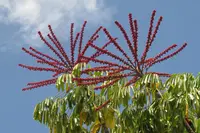
The Australian umbrella tree, Heptapleurum actinophyllum, is a fast-growing evergreen tree often grown indoors as a bold, tropical-looking houseplant. It forms multiple trunks and large, glossy leaf clusters that radiate like the ribs of an umbrella. In nature it occurs in rainforests of northeastern Australia and nearby regions, where it can reach substantial heights and spread aggressively. Its rapid growth, tolerance of indoor conditions, and ability to cope with some neglect make it relatively easy to manage in homes and offices. For anyone learning how to care for Australian Umbrella Tree, its main needs are bright, indirect light, moderate watering, and a free-draining potting mix.

Main Plant Requirements

Care Difficulty

Moderate Care

Light Preference

Bright Indirect Light

Water Requirements

Moderate Water

Temperature Preference

Tropical / Frost Sensitive

Hardiness Zone

10–12

Soil Texture

Loamy, Sandy, Organic-rich

Soil pH

Acidic (5.5–6.5), Slightly acidic (6.5–7.0)

Soil Drainage

Moist but well-drained

Fertilization

Light (every 4–6 weeks)

Get Personalized Care Plan

Scan your plant to receive care tips personalized for your specific plant

Available on iOS and Android

How to Care for the Australian Umbrella Tree

Heptapleurum actinophyllum needs bright, indirect light to grow densely and maintain healthy foliage.

  • Provide 4–6 hours of bright, filtered light each day, such as near an east or bright north-facing window or under light tree shade outdoors.
  • Tolerates partial shade, but growth becomes sparser and internodes lengthen if light stays low for many weeks.
  • Avoid harsh midday and late-afternoon sun, which can scorch leaf edges; increase light gradually in spring and use sheer curtains or dappled shade to diffuse direct rays.

Heptapleurum actinophyllum prefers evenly moist, well-drained soil that dries slightly between waterings.

  • Water when the top 3–5 cm of soil feel dry, using enough water so it runs through drainage holes or drains freely from the root zone.
  • Reduce watering in cooler months when growth slows, but never allow the entire root ball to dry rock-hard.
  • Yellowing, soft leaves and a sour smell indicate overwatering or poor drainage, while dull, drooping, crispy leaves and very light soil signal underwatering.

This species grows best in warm, stable temperatures typical of subtropical and warm-temperate climates.

  • Aim for 65–80°F (18–27°C) for steady growth, with slightly cooler nights improving resilience and moderating water use.
  • Protect from temperatures below 45°F (7°C); brief dips to 40°F (4°C) may be survived but can cause leaf drop and stress.
  • Tolerates short heat spells up to 90–95°F (32–35°C) if soil moisture is consistent and humidity is moderate, but avoid hot, drying winds and reflective heat surfaces.

This species prefers moderately humid air but usually adapts to typical indoor conditions.

  • Aim for 40–60% humidity to reduce leaf edge browning and support steady growth in Australian Umbrella Tree.
  • Tolerates short periods of drier air, but persistent humidity below 35% may cause crispy tips and increased leaf drop.
  • Increase humidity by grouping plants, placing the pot on a pebble tray with water below the base, or using a small room humidifier.

Heptapleurum actinophyllum grows best in loose, airy, organic-rich substrate that drains quickly.

  • Use a mix of roughly 2 parts all-purpose potting mix, 1 part perlite, and 1 part fine bark to provide both moisture retention and strong aeration.
  • Aim for slightly acidic to neutral pH around 6.0–7.0, avoiding very alkaline media that can reduce nutrient availability and cause leaf chlorosis.
  • Ensure fast drainage by choosing pots with ample holes and avoiding saucers that stay filled with water around the root zone.
  • Do not use heavy garden soil or mixes with a high clay fraction, which compact easily and increase risk of root rot in container culture.

This species is well suited to container growing due to its adaptable root system and upright, woody structure.

  • Choose a wide, heavy container to counterbalance its top-heavy canopy and reduce the risk of tipping in light wind or high-traffic areas.
  • Select thick-walled terracotta or similar porous material if extra moisture loss is needed in humid homes to prevent persistently wet roots.
  • Maintain a clear gap between the root ball surface and the rim of the pot so water can be applied evenly without spilling over one side.

This fast-growing Australian Umbrella Tree responds well to moderate, measured feeding during the warm growing season.

  • Use a balanced water-soluble fertilizer (for example 10-10-10 or 20-20-20) diluted to 1/2 strength every 4–6 weeks in spring and summer.
  • Alternatively, apply a slow-release balanced fertilizer in early spring, following label rates for container trees.
  • Avoid feeding in late fall and winter when growth slows, to prevent weak, leggy shoots.
  • Flush the pot with plain water every few months to reduce fertilizer salt buildup around the roots.

Targeted pruning keeps Heptapleurum actinophyllum compact, safe in height, and encourages fuller branching.

  • Carry out main pruning in late winter or early spring before vigorous new growth starts.
  • Remove dead, damaged, crossing, or very congested stems first, cutting back to a healthy node.
  • Shorten overly tall or sparse stems to encourage side shoots and a bushier canopy.
  • Use clean, sharp bypass pruners, making angled cuts and avoiding removal of more than 25–30% of foliage at once.

Container-grown plants benefit from occasional repotting to support their rapid root growth and canopy size.

  • Check for roots circling the pot, growing through drainage holes, or noticeably slowed top growth as signs it needs a larger container.
  • Plan to repot every 2–3 years in spring, moving up only 1–2 in in pot diameter to avoid waterlogged soil.
  • Gently loosen circling roots, trim any rotten sections, and set the plant at the same soil level in fresh, well-drained potting mix.
  • Water thoroughly after repotting, keep in bright indirect light, and avoid heavy fertilization for 3–4 weeks to reduce transplant stress.

New plants are commonly produced from stem cuttings, with seeds and air layering used less often in home settings.

  • Take semi-ripe stem cuttings in late spring or early summer, each with 2–3 nodes and several healthy leaves.
  • Remove lower leaves, dip the cut end in rooting hormone, and insert into a moist, sterile, free-draining propagation mix.
  • Maintain high humidity, gentle bottom warmth around 70–75°F, and bright, indirect light until roots develop.
  • Sow fresh seed on the surface of warm, moist mix, keeping it consistently damp and lightly covered for even germination.

This tropical species is frost-tender and needs protection wherever winter temperatures drop near or below freezing.

  • Grow outdoor specimens only in mild climates, generally USDA zones 10–11, where frost is rare and brief.
  • Move container plants indoors before nights reach 40°F, placing them in bright, indirect light away from drafts.
  • In mild outdoor climates, apply a 5–8 cm mulch layer over the root zone, keeping mulch slightly away from the trunk.

Care Tips

Rotate For Symmetry

Turn the pot 90° every 2–3 weeks so the canopy develops evenly and stems do not lean permanently toward the light, which reduces the risk of the plant becoming top-heavy and unstable.

Early Cane Support

As the plant gains height, insert a sturdy stake or moss pole near the main stem and loosely tie the canes with soft ties to prevent snapping or leaning, especially after repotting or transport.

Controlled Height Management

If the plant is approaching the ceiling, cut the main stems back by 1/3 in late spring and select 2–3 strong new shoots to keep, removing weak side shoots so energy goes into a stable, compact framework.

Root Zone Monitoring

Check the drainage holes every few months for circling roots, and if thick roots are visible or pushing through, plan a repot or root pruning session at the start of the warm season to prevent the plant from becoming root-bound and stressed.

Prevent Scale Infestations

Inspect leaf undersides and stems monthly for sticky residue or small dome-shaped bumps, and at the first sign of scale insects wipe affected areas with a cloth dipped in diluted insecticidal soap, repeating weekly until new growth is clean; this is a key part of caring for Australian Umbrella Tree over the long term.

Common Pests and Diseases

Scale insects

This pest attaches firmly to stems and leaf undersides, sucking sap and causing yellowing, sticky honeydew, and sooty mold growth. Infestations often start on the main trunk and older woody branches of mature umbrellas.

Solution

Physically scrape or wipe off adults with a cotton pad dipped in 70% isopropyl alcohol, then wash foliage with lukewarm soapy water and rinse well. For recurring problems, use repeated applications of horticultural oil or insecticidal soap every 7–10 days and improve light and air circulation to support plant recovery.

Spider mites

These insects are actually tiny arachnids that thrive on Heptapleurum foliage in warm, dry indoor air, causing fine stippling, dull leaves, and delicate webbing between leaflets. Symptoms include premature leaf drop if the infestation is heavy and prolonged.

Solution

Shower the plant thoroughly, focusing on leaf undersides, then spray with insecticidal soap or neem oil and repeat weekly until no new damage appears. Raising humidity to 50–60%, avoiding hot drafts, and regularly rinsing foliage helps prevent mite outbreaks during Australian Umbrella Tree indoor care.

Mealybugs

This pest appears as white, cottony clusters in leaf axils, along stems, and on new growth, weakening the plant by sucking sap. Honeydew and distorted young leaves are common in dense indoor groupings or low-airflow corners.

Solution

Remove visible clusters with a cotton swab dipped in 70% isopropyl alcohol, then wash the plant with mild soapy water and rinse. Inspect weekly and treat remaining insects with insecticidal soap or neem oil, isolating the plant from others until no new mealybugs are seen.

Bacterial leaf spot

This disease causes water-soaked, translucent spots on leaflets that enlarge, turn brown, and may develop yellow halos. Symptoms include rapid spread in warm, humid, poorly ventilated rooms or where foliage is often wetted.

Solution

Remove and discard all affected leaves, sterilizing pruning tools between cuts, and keep foliage dry by watering at the soil level only. Improve air movement, reduce crowding, and avoid overhead misting; in severe indoor cases, disposal of badly affected plants is often the most reliable way to protect nearby specimens.

Anthracnose

This disease produces irregular tan to dark brown lesions along leaflet edges and tips, sometimes leading to blighted sections and premature leaf drop. Symptoms include more severe damage under low light with consistently high humidity or repeated leaf wetting.

Solution

Prune and discard infected leaves and any dead twigs, then reduce humidity around the canopy and avoid splashing water onto foliage. Provide brighter indirect light, ensure good airflow, and if the plant is grown in a greenhouse, apply a suitable copper-based fungicide according to label directions to limit further spread.

Interesting Facts

Native rainforest pioneer

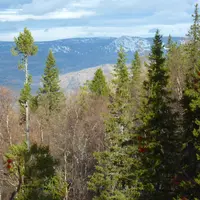
This species is native to tropical rainforests of northeastern Queensland, Australia, where it often behaves as a pioneer tree, quickly colonizing canopy gaps created by storms or tree falls.

Bird-dispersed umbrella clusters

Its radiating leaflets and dense clusters of small red fruits attract birds, which feed on the fleshy fruits and disperse the seeds across long distances.

Invasive in some regions

Outside its native range, especially in parts of Hawaii and Florida, it has escaped cultivation, naturalized in the wild, and is considered invasive due to its rapid growth and prolific seeding.

Botan icon

Did you know?

In its native habitat this species can develop into a substantial rainforest tree over 10 m tall, forming large umbrella-like crowns that significantly contribute to mid-canopy structure and provide shaded microhabitats for epiphytes and understory organisms.

FAQs about Australian Umbrella Tree

Yellowing leaves usually come from overwatering, poor drainage, or natural aging of older foliage. Check that the pot drains freely, let the top soil layer dry between waterings, and remove only fully yellow, dry leaves.

Grow Healthy Plants with Botan Care

Keep your plants happy and healthy with plant identification, disease detection, and easy care guidance.

Botan plant care app — identify plants on mobile

Explore More Plants