Root flare check
When planting or inspecting established trees, ensure the root flare sits just above soil level and gently remove excess soil or mulch from the trunk base to reduce rot and girdling root risk when growing silver maple.


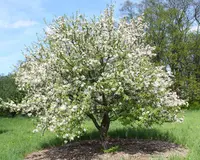
Silver maple, Acer saccharinum, is a fast-growing deciduous tree in the soapberry family, valued for its light, deeply cut leaves and spreading crown. It often develops a broad, vase-shaped form and can reach substantial height, making it common in parks, large yards, and along waterways.
This species is native to eastern and central North America, where it naturally occurs in floodplains, riverbanks, and moist lowlands. It adapts to a range of soils but prefers moist conditions and full sun, which helps explain both its rapid growth and somewhat brittle wood. Understanding how to care for silver maple starts with giving it enough space, suitable light, and consistently moist, but not waterlogged, soil.

Care Difficulty
Easy Care

Light Preference
Full Sun

Water Requirements
Moderate Water

Temperature Preference
Cold Hardy

Hardiness Zone
3–9

Soil Texture
Sandy, Loamy, Clay

Soil pH
Acidic (5.5–6.5), Slightly acidic (6.5–7.0)

Soil Drainage
Moist but well-drained

Fertilization
Minimal (feed rarely)
Scan your plant to receive care tips personalized for your specific plant
Available on iOS and Android
This fast-growing deciduous tree needs ample outdoor light to develop a strong crown and stable structure.
This large tree prefers consistently moist, not saturated, soil, especially during establishment.
This hardy species tolerates a wide climate range but grows best in temperate conditions with cold winters.
Acer saccharinum handles a wide humidity range and usually does not need special humidity management outdoors.
Acer saccharinum prefers deep, moist, loamy soil with ample organic matter for strong root and canopy development.
This species is generally not suitable for long-term container growing due to its eventual large size and vigorous root system.
Mature Acer saccharinum trees in the ground usually need little or no fertilizer if soil is reasonably fertile.
Pruning Acer saccharinum is useful for structural safety and to manage its naturally fast, spreading growth.
Silver maple is usually grown in the ground, so care focuses on correct transplanting of young trees.
Propagation of Acer saccharinum for home growers is usually done from seed rather than cuttings.
Acer saccharinum is a cold-hardy deciduous tree that normally needs minimal winter care in its suitable climate.

Plant Health Check
Not sure what's wrong with your plant? Check your plant's health inside the app.
Silver maple naturally establishes along riverbanks and floodplains in eastern North America, where its rapid growth and tolerance of periodic flooding help stabilize soils and create early forest cover after disturbance.
The species gets its common name from the pale, almost white underside of its deeply lobed leaves, which makes the canopy appear silvery when wind moves the foliage.
Despite its size, silver maple has relatively weak, brittle wood and shallow roots, which makes large, mature trees prone to limb breakage in storms and heavy snow.

Silver maple is among the earliest native maples to flower in late winter to very early spring in much of its range, providing one of the first significant pollen and nectar sources for bees emerging from winter dormancy.
This species is considered very fast-growing, often adding 45–90 cm in height per year under good conditions. Growth is quicker in deep, moist, well-drained soils and slows in compacted, dry, or nutrient-poor sites.
Keep your plants happy and healthy with plant identification, disease detection, and easy care guidance.