African locust bean Care (Parkia filicoidea)

African locust bean

About African locust bean

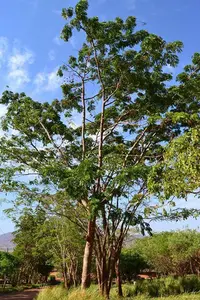
African locust bean (Parkia filicoidea) is a large, deciduous legume tree valued for its shade, pods, and seeds. It typically develops a broad, rounded crown with fine, feathery foliage. The tree is native to tropical Africa, where it grows in savannas, open woodlands, and farmland edges. It is adapted to seasonal dry periods and generally tolerates poor, well-drained soils. Growth can be slow to moderate in cultivation, and it needs warmth and space to reach its full size. For anyone learning how to care for African locust bean, it is helpful to know that this species prefers full sun, moderate moisture, and protection from prolonged cold.


Main Plant Requirements

Care Difficulty

Moderate Care

Light Preference

Full Sun

Water Requirements

Moderate Water

Temperature Preference

Tropical / Frost Sensitive

Hardiness Zone

11–12

Soil Texture

Sandy, Loamy, Organic-rich

Soil pH

Acidic (5.5–6.5), Slightly acidic (6.5–7.0)

Soil Drainage

Well-drained

Fertilization

Minimal (feed rarely)

Get Personalized Care Plan

Scan your plant to receive care tips personalized for your specific plant

Available on iOS and Android

How to Care for the African locust bean

This sun-loving tree needs strong light to build a dense canopy and flower well.

  • Provide 6–8 hours of direct sun daily; full sun is ideal once established, especially in open, warm climates where African locust bean is commonly grown.
  • Young trees tolerate light or partial shade, but growth slows with less than 4–5 hours of direct sun and can become sparse or weak-wooded.
  • In very hot, dry regions, protect from harsh late-afternoon sun during the first 2–3 years to reduce leaf scorch and water stress.

This drought-tolerant tree prefers deep, infrequent watering that encourages strong root development.

  • In the ground, water thoroughly when the top 5–8 cm of soil is dry, aiming for a slow soak that moistens 30–40 cm deep, then allow the soil to dry again.
  • Reduce watering in cool or rainy seasons; overwatering shows as yellowing leaves and soft, darkening roots, while underwatering causes leaf drop and twig dieback.
  • Ensure sharply draining soil, ideally sandy or loamy; Parkia filicoidea struggles in compacted or waterlogged ground where puddles persist for more than a few hours.

This tropical tree performs best in warm, frost-free climates with stable temperatures.

  • Optimal growth occurs around 70–90°F (21–32°C), with good canopy development and flowering when warmth is consistent and soil is not waterlogged.
  • It tolerates short heat spikes up to about 100°F (38°C) if soil moisture is adequate and roots are mulched to limit evaporation and root-zone overheating.
  • Avoid exposure below 40°F (4°C); light frost can burn foliage, and repeated or hard frosts near 32°F (0°C) may kill young trees or damage branches.

This species prefers moderately humid air but usually tolerates typical household levels.

  • Aim for 40–60% humidity, which suits most homes and supports steady foliage and shoot growth.
  • Leaves may curl, brown at the tips, or drop prematurely in very dry air, especially near heating or strong air-conditioning.
  • Increase humidity for African locust bean by grouping plants, using a nearby humidifier, or placing pots on a pebble tray above, not in, water.

This tree prefers deep, well-drained, moderately fertile soil with ample organic matter.

  • Use a loose, loamy mix combining roughly 50% composted organic material, 30% coarse sand, and 20% perlite or fine bark for aeration.
  • Ensure water drains freely within a few seconds from the container or planting hole to avoid waterlogging and root dieback.
  • Target a slightly acidic to neutral pH around 6.0–7.0; avoid very alkaline or saline soils that reduce nutrient uptake.
  • For Parkia filicoidea planted in heavy or compacted ground, incorporate coarse sand and organic matter into the top 30–40 cm to improve structure and oxygen around roots.

This species can be grown in containers while young, though long-term cultivation in pots is challenging due to its eventual size.

  • Choose a deep, wide, and heavy container that resists tipping as the woody trunk and canopy gain height and weight.
  • Use a potting mix that stays slightly moist but drains rapidly so the woody taproot zone never sits in stagnant water.
  • Select thick-walled clay or concrete containers in windy sites to limit overheating of the root zone and provide extra stability.

Parkia filicoidea benefits from light, targeted feeding in containers or poor soils rather than heavy fertilization.

  • Use a balanced NPK granular or slow-release fertilizer at half strength at the start of the warm growing season.
  • In mid-season, supplement with a light top-dressing of well-rotted compost to support steady growth.
  • Feed container-grown young trees every 6–8 weeks in the growing season, skipping feeding if growth looks strong.
  • Stop fertilizing in fall and winter to avoid forcing soft, cold-sensitive growth on African locust bean.

Parkia filicoidea responds well to light structural pruning to maintain safe, healthy growth.

  • Carry out main pruning in late dry season or late winter, before vigorous new growth begins.
  • Remove dead, diseased, crossing, or storm-damaged branches using clean, sharp loppers or a pruning saw.
  • Thin crowded interior branches to improve light penetration and airflow, encouraging a stronger canopy structure.
  • Limit cuts to smaller branches where possible to reduce wound size and long-term decay risk.

This species is usually grown in the ground, so focus on careful transplanting of young trees rather than frequent repotting.

  • Transplant when roots circle the container, drainage is poor, or growth slows despite good care.
  • Plan moves for late spring or early summer, once danger of frost has passed and soil is warming.
  • For container seedlings, shift to a pot 1–2 sizes larger every 1–2 years until planted out.
  • Water deeply before and after transplanting, keep the root ball intact, and shade temporarily to limit transplant shock.

Parkia filicoidea is most commonly propagated from seed, which requires some preparation for reliable germination.

  • Collect fresh, mature seeds and store them dry and cool until sowing time.
  • Scarify hard seed coats by nicking with a file or brief hot-water soaking to speed water absorption.
  • Sow in late spring in a free-draining, sterile mix, keeping temperatures around 75–85°F and moisture even.
  • Provide bright, indirect light and good air movement; transplant seedlings once roots fill the starter cell or pot.

This tropical species has low frost tolerance and needs protection in regions with cool or freezing winters.

  • In frost-prone climates, grow in large containers and move indoors or into a heated greenhouse before temperatures drop below 40°F.
  • For young trees in mild climates, apply a 5–8 cm mulch layer over the root zone, keeping it away from the trunk.
  • Use breathable frost cloth around small outdoor trees during brief cold events to reduce leaf and stem damage.

Care Tips

Early root training

In the first 1–2 years, use deep, narrow containers or planting holes and avoid circling roots, gently teasing and spreading any coils so the plant develops a strong taproot and stable anchoring for future height and wind resistance.

Wind-hardening young trees

From the seedling stage, gradually expose plants to increasing wind by moving containers or reducing shelter, which encourages thicker stems and stronger branching that better tolerate storms in exposed sites.

Rhizobium inoculation

At planting, dust seeds or young roots with a compatible Rhizobium inoculant so the tree forms effective nitrogen-fixing nodules, especially in previously unfarmed or very sandy soils with low native microbial activity.

Seasonal canopy shaping

During the first 3–4 years, selectively remove steep, competing leaders and favor 3–5 well-spaced scaffold branches to build a broad, balanced canopy that maximizes light penetration and pod production later on.

Mulch and drip zone

Maintain a 5–10 cm ring of coarse organic mulch over the root zone, together with a simple drip or soaker hose loop, to stabilize soil moisture and temperature while keeping mulch pulled back 5–8 cm from the trunk to prevent rot when growing African locust bean outdoors.

Common Pests and Diseases

Pod borers

This pest targets the developing seed pods, where larvae feed on seeds and internal pod tissues, reducing seed yield and quality. Symptoms include small entry holes, frass, and premature pod drying or distortion.

Solution

Collect and destroy infested pods before larvae complete development to reduce future populations, and avoid leaving harvested pods on the ground where moths can emerge. For valuable seed trees, use light traps to monitor moth activity and, if needed, apply a targeted biological insecticide containing Bacillus thuringiensis (Bt) to young pods in the evening, following label directions carefully.

Bruchid beetles

These insects infest stored and sometimes field pods, with larvae boring into seeds and leaving round exit holes and powdery frass. Damage lowers seed viability and can compromise food or livestock feed use of the seeds.

Solution

Dry pods thoroughly after harvest, shell and sort seeds, and discard any with holes or visible damage. Store clean seeds in airtight containers or sealed bags, preferably refrigerated or in cool, dry conditions, and use deep freezing for several days where possible to kill any internal larvae and eggs.

Stem borers

These insects tunnel into young stems and branches, causing localized dieback, cracking, and sometimes branch breakage. Symptoms include frass at tunnel openings and wilting or sudden death of affected shoots.

Solution

Prune and destroy infested branches as soon as boring damage is observed, cutting back to healthy wood and disinfecting pruning tools between cuts. Keep trees vigorous through appropriate watering and mulching so that they can compartmentalize damage, and in heavier infestations use pheromone or light traps to reduce adult borer populations around seed orchards or plantations.

Powdery mildew

This disease produces white, powdery fungal growth on young leaves and sometimes pods, leading to leaf yellowing, distortion, and reduced growth. Symptoms include a superficial coating that can be wiped off initially but may return and spread in dry, warm conditions with poor air circulation.

Solution

Improve air movement by avoiding overcrowding and pruning dense inner branches, and avoid overhead irrigation that keeps foliage damp for long periods. Remove and destroy heavily infected leaves, and if disease is persistent, apply a sulfur-based or potassium bicarbonate fungicide labeled for trees, treating new flushes of growth early according to product directions.

Leaf spot

This disease causes brown to dark purple spots on leaflets, often with a yellow halo and occasional early leaf drop during extended humid or rainy periods. Symptoms include scattered lesions that may merge, reducing the photosynthetic area and stressing young trees.

Solution

Rake and destroy fallen leaves to lower the level of fungal spores around the tree, and avoid wetting foliage when irrigating. In sites with repeated severe outbreaks, apply a copper-based fungicide at the beginning of the rainy season, repeating as directed, and prioritize good spacing and pruning to maintain an open, well-ventilated canopy as part of long-term Parkia filicoidea plant care.

Interesting Facts

Ant–tree mutualism

The swollen stem bases and branches often house ant colonies that defend the tree from some herbivores while using its nectar and sheltered cavities, a classic example of ant–plant mutualism in African savannas.

Nocturnal bat pollination

Its large, hanging, brush-like flower heads open mainly at night and produce strong scents and abundant nectar that attract fruit bats, which act as the primary pollinators as they move between trees.

Nitrogen-fixing legume

As a leguminous tree, it forms root nodules with symbiotic bacteria that convert atmospheric nitrogen into plant-available forms, helping to improve soil fertility in West and Central African woodland ecosystems.

Botan icon

Did you know?

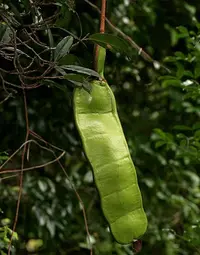
The flattened, woody pods of this species can remain intact and persist on the tree for many months, slowly splitting to release seeds that are important dry-season food for both wildlife and local communities in parts of West Africa.

FAQs about African locust bean

Growth is relatively fast under warm, frost-free conditions. Young trees often add 60–120 cm per year in height once established, slowing as they mature. Poor soil fertility, drought, or cool temperatures can significantly reduce this rate.

Grow Healthy Plants with Botan Care

Keep your plants happy and healthy with plant identification, disease detection, and easy care guidance.

Botan plant care app — identify plants on mobile

Explore More Plants