bigtooth aspen Care (Populus grandidentata)

Also known as: largetooth aspen
bigtooth aspen

About bigtooth aspen

Bigtooth aspen (Populus grandidentata) is a fast-growing deciduous tree native to eastern and midwestern North America. It forms light, open stands and often appears after disturbance such as logging or fire.

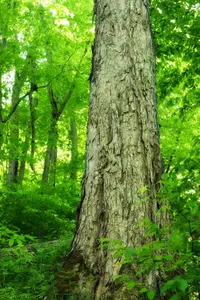
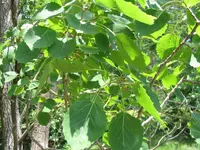
The tree has pale gray bark, roundish leaves with large teeth along the edges, and leaves that flutter in the wind. It usually grows in mixed forests with birch, maple, and other poplars.

Bigtooth aspen prefers full sun, cool to moderate climates, and well-drained, moderately moist soils. These traits make it relatively easy to establish but shorter-lived than many hardwoods, which is useful to know when planning how to care for bigtooth aspen.

Main Plant Requirements

Care Difficulty

Moderate Care

Light Preference

Full Sun

Water Requirements

Moderate Water

Temperature Preference

Cold Hardy

Hardiness Zone

3–7

Soil Texture

Sandy, Loamy, Silty

Soil pH

Acidic (5.5–6.5), Slightly acidic (6.5–7.0)

Soil Drainage

Moist but well-drained

Fertilization

Minimal (feed rarely)

Get Personalized Care Plan

Scan your plant to receive care tips personalized for your specific plant

Available on iOS and Android

How to Care for the bigtooth aspen

Populus grandidentata develops best in open, bright sites with strong, direct sun exposure.

  • Provide full sun for 6–8 hours per day; bigtooth aspen tolerates light, dappled shade but crowns become thinner and taller in lower light.
  • Choose sites with morning and midday sun; intense, reflected afternoon sun on dry, shallow soils can increase leaf scorch risk during drought.
  • In young trees, limit dense shade from buildings or taller trees; gradual canopy opening over several seasons reduces sudden sun shock to inner leaves.

This species prefers evenly moist, well‑drained soil and reacts quickly to both drought and prolonged saturation.

  • Allow the upper 5–8 cm of soil to dry slightly between rains or irrigation, then soak the root zone deeply rather than using light, frequent watering.
  • During hot, dry periods, monitor leaves in the afternoon; drooping, curling, or dull foliage signals the need for a thorough watering if soil is dry.
  • Avoid standing water or heavy clay without drainage; yellowing leaves, dieback at twig tips, or fungal growth at the base suggest overwatering stress in Populus grandidentata.

This cold-hardy tree handles wide outdoor temperature swings, with strong tolerance of freezing winters.

  • Optimal growing-season temperatures are 60–80°F (16–27°C), where shoot growth and leaf expansion are most efficient.
  • Mature trees tolerate winter lows near -40°F (-40°C); young trees benefit from mulched roots to reduce freeze–thaw stress in exposed sites.
  • Heat tolerance is moderate; extended periods above 90°F (32°C) combined with drought increase leaf scorch, so maintain soil moisture and avoid root disturbance during heat waves.

This species tolerates a wide humidity range and rarely needs special humidity management outdoors.

Populus grandidentata prefers loose, well-drained mineral soil that still retains some moisture.

  • Use a loamy or sandy-loam soil with moderate organic matter to balance moisture retention and drainage.
  • Aim for slightly acidic to neutral pH around 5.5–7.0, avoiding strongly alkaline conditions that limit nutrient availability.
  • In planting areas with heavy clay, incorporate coarse sand and compost into the top 20–30 cm to improve aeration and drainage.
  • Avoid compacted, waterlogged, or shallow soils over hardpan, which promote root rot and poor anchoring.

This tree is generally unsuitable for long-term container growing due to its vigorous root system and mature size.

This native tree usually grows well in average soil, so bigtooth aspen needs only modest fertilization in managed landscapes.

  • Apply a balanced slow-release fertilizer (such as 10-10-10) in early spring if growth or leaf color is poor.
  • Use a light rate, at about half the label recommendation, to avoid excessive, weak growth.
  • On young trees, repeat once in midsummer if soil is very poor; mature trees often need no feeding.
  • Stop feeding in late summer to allow wood to harden before winter dormancy.

Pruning Populus grandidentata focuses on safety, structure, and removal of weak wood rather than shaping.

  • Plan main pruning for late winter to very early spring, before bud break, when the tree is dormant.
  • Remove dead, diseased, crossing, or storm-damaged branches with clean, sharp bypass pruners or a pruning saw.
  • Thin crowded interior branches to improve air flow and light penetration, which supports stronger structure.
  • Avoid heavy topping cuts; keep pruning cuts just outside the branch collar to promote proper healing.

This species is rarely kept long-term in containers; management focuses on transplanting young trees from nursery pots into the landscape.

  • Transplant when roots circle the pot, growth slows, or the tree becomes unstable in its container.
  • Choose early spring or early fall for transplanting to reduce heat stress and support root establishment.
  • Dig a wide planting hole, loosen circling roots gently, and set the tree at the same soil depth as in the pot.
  • Water deeply after planting, then keep soil evenly moist for the first growing season to limit transplant shock.

Propagation of Populus grandidentata is commonly done for restoration or forestry purposes using both vegetative and seed methods.

  • Take dormant hardwood cuttings in late winter, 15–25 cm long, and place in moist, well-drained sand or perlite.
  • Maintain cool, bright conditions and consistent moisture to encourage rooting along the buried stem nodes.
  • Collect ripe seeds in late spring, then sow immediately on a moist, fine seedbed because seeds lose viability quickly.
  • Keep seed trays lightly moist and exposed to bright light; seedlings grow fast and should be transplanted while small.

This cold-hardy native tree needs little winter care once established in the ground in typical temperate climates.

  • Young trees benefit from 5–8 cm of mulch over the root zone, kept a few cm away from the trunk.
  • In very exposed sites, use a breathable trunk wrap on first- and second-year trees to reduce sunscald and frost cracking.
  • Container-grown specimens, if any, should be moved into an unheated garage or sheltered spot to prevent root freeze-thaw cycles.

Care Tips

Encourage strong leader

In the first 3–5 years, select one dominant central stem and remove competing upright shoots during late winter to build a stable main trunk and reduce future storm damage.

Windfirm root development

On exposed sites, avoid staking unless absolutely necessary and, if used, remove stakes within 1–2 years so the tree flexes in the wind and develops a deeper, more secure root system.

Manage root suckers

Inspect the surrounding soil 2–3 times a year and cut off root suckers at ground level with clean, sharp tools to prevent unwanted thickets and to direct resources to the main tree.

Prevent trunk sunscald

In open sites or after thinning nearby trees, wrap the lower trunk with a breathable, light-colored tree wrap from late fall to early spring to reduce bark cracking from freeze–thaw cycles.

Plan for short lifespan

Because bigtooth aspen is relatively short-lived and prone to internal decay after mid-age, plan long-term planting schemes with younger replacements or companion species already established nearby when caring for bigtooth aspen.

Common Pests and Diseases

Forest tent caterpillar

This pest is a defoliating caterpillar that can strip leaves in late spring, stressing trees and slowing growth. Symptoms include thinning foliage, abundant webbing, and clusters of larvae on trunks and branches.

Solution

Monitor foliage in spring and remove egg masses and small larval colonies by pruning or scraping when accessible. For significant infestations, use a labeled Bacillus thuringiensis (Bt) product on young larvae and encourage natural predators by avoiding broad-spectrum insecticides nearby.

Gypsy moth

This pest feeds heavily on leaves and can cause severe, repeated defoliation in some regions, making trees more vulnerable to other stresses. Symptoms include chewed leaves, visible caterpillars on trunks, and frass (droppings) beneath the canopy.

Solution

Inspect bark and nearby surfaces for egg masses in fall and winter, then scrape and destroy them. During outbreaks, apply Bt to young caterpillars when leaves first expand and use burlap bands on trunks to trap larvae for manual removal, following local regulations and guidance.

Aspen leaf miner

These insects are small larvae that tunnel inside leaves, creating pale, blistered, or serpentine patterns between the leaf surfaces. This pest usually causes cosmetic damage but can reduce vigor when infestations are heavy over several years.

Solution

Rake and dispose of fallen leaves in autumn to reduce overwintering stages. In landscape settings, keep the tree well watered during dry spells and avoid high-nitrogen fertilization, which can favor outbreaks; systemic insecticides are rarely needed for home-scale growing bigtooth aspen unless advised by a local arborist.

Hypoxylon canker

This disease is a fungal infection that enters through wounds or stressed tissue, leading to cankers, bark death, and branch dieback. Symptoms include sunken or cracked areas on bark, gray to tan fungal crusts, and progressive decline of affected limbs.

Solution

Prune out infected branches well below visible cankers during dry weather and dispose of prunings away from the site. Reduce stress by avoiding trunk injury, preventing soil compaction around roots, and providing supplemental water during prolonged drought; severely affected trees often need removal for safety.

Leaf spot and rust

These diseases are caused by several fungi that infect foliage, producing small dark spots, yellowing, and sometimes orange or rust-colored pustules on leaves. Symptoms include premature leaf drop, especially in wet, cool weather.

Solution

Remove and discard fallen leaves at the end of the season to lower fungal spore levels. Improve air circulation by spacing trees and selective pruning, and where disease is severe year after year, consult a local arborist about timed fungicide sprays at bud break and early leaf expansion.

Interesting Facts

Toothed trembling leaves

Bigtooth aspen has round to oval leaves with large, irregular teeth and a flattened leaf stalk that makes the foliage tremble distinctly in light wind, more coarsely than the closely related quaking aspen.

Pioneer of poor soils

This species colonizes recently disturbed, sandy, or rocky sites in northeastern North America, forming even‑aged stands that prepare the soil and shade conditions for more shade‑tolerant tree species that follow in succession.

Wildlife food and shelter

Its buds, twigs, and bark are an important winter food source for deer, rabbits, and hares, while the soft, fast‑decaying wood provides nesting and foraging habitat for woodpeckers and many cavity‑nesting birds.

Botan icon

Did you know?

Bigtooth aspen often forms extensive clonal colonies connected by a shared root system, so what appears to be many separate trees can actually be a single genetic individual spreading over a large area.

FAQs about bigtooth aspen

This species is usually classed as fast-growing, especially in youth. Height increases of 30–90 cm per year are common in suitable conditions, slowing as the tree matures and begins allocating more energy to structural wood.

Grow Healthy Plants with Botan Care

Keep your plants happy and healthy with plant identification, disease detection, and easy care guidance.

Botan plant care app — identify plants on mobile

Explore More Plants