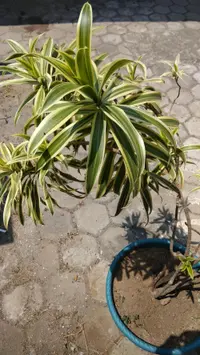
Devil's Ivy Care (Epipremnum pinnatum 'Cebu Blue')

Also known as: Golden Pothos, Centipede Tonga-vine, Hunter's Robe, Taro Vine, Pothos, Ivy-arum

About Devil's Ivy

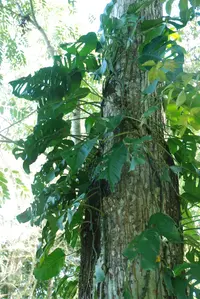
Epipremnum pinnatum 'Cebu Blue' is a tropical climbing vine grown mainly as an indoor foliage plant. It is valued for its narrow, silvery blue-green leaves and trailing habit. In the wild, it occurs in parts of Southeast Asia, where it climbs tree trunks and branches in warm, humid forests. Indoors, it usually stays compact but can form long cascading stems or climb a support. This plant is considered easy to grow because it tolerates a range of indoor conditions and recovers fairly well from minor neglect. Understanding how to care for Devil's Ivy starts with knowing it prefers bright, indirect light, evenly moist but not waterlogged soil, and good drainage.

Main Plant Requirements

Care Difficulty

Easy Care

Light Preference

Bright Indirect Light

Water Requirements

Moderate Water

Temperature Preference

Tropical / Frost Sensitive

Hardiness Zone

11–12

Soil Texture

Loamy, Peaty, Organic-rich

Soil pH

Acidic (5.5–6.5), Slightly acidic (6.5–7.0)

Soil Drainage

Moist but well-drained

Fertilization

Light (every 4–6 weeks)

Get Personalized Care Plan

Scan your plant to receive care tips personalized for your specific plant

Available on iOS and Android

How to Care for the Devil's Ivy

Epipremnum pinnatum 'Cebu Blue' grows best in bright, indirect light that mimics dappled tropical shade.

  • Provide 6–8 hours of bright, filtered light daily, such as near an east window with morning sun or under sheer curtains on a south window.
  • Tolerates light shade for part of the day, but in very low light stems stretch, growth slows, and leaves stay smaller and less silvery.
  • Avoid harsh midday and afternoon sun, especially behind glass, which can scorch leaves; move slightly back or diffuse light in summer, when sun is strongest.

This plant prefers evenly moist but not saturated soil, with slight drying between waterings.

  • Water when the top 2–4 cm of soil feels dry, using enough water to moisten the full root zone, then let excess drain away fully.
  • In spring and summer, expect to water more often as growth and evaporation increase; in fall and winter, extend the interval as growth slows.
  • Watch for overwatering signs like yellowing, soft leaves and a sour soil smell, and underwatering signs such as curling, limp leaves and dry, shrinking soil away from the pot.

Stable, warm conditions support compact growth and healthy foliage color.

  • Aim for 65–80°F (18–27°C) for active growth; short exposures up to about 85°F (29°C) are tolerated if humidity and soil moisture are not extremely low.
  • Avoid temperatures below 55°F (13°C); leaf damage and slowed growth often appear between 45–50°F (7–10°C), especially with cold drafts or wet soil.
  • Protect from frost at all times, and in heatwaves above 85–90°F (29–32°C) increase shade and ventilation to limit stress and leaf scorch risk for this form of Devil's Ivy.

This aroid prefers moderately humid air but usually adapts to typical home conditions.

  • Aim for 50–70% humidity for best foliage color and steady growth.
  • It tolerates 35–40% indoor humidity, but leaf tips may brown and edges curl when air stays very dry.
  • Increase humidity with a nearby pebble tray, grouped plants, or a small room humidifier rather than misting, which raises humidity only briefly.

This species grows best in a loose, airy, organic-rich mix that drains quickly.

  • Use a base of peat or coco coir with added perlite and fine orchid bark to keep the mix both moisture-retentive and free-draining.
  • Aim for slightly acidic to neutral pH, roughly 6.0–7.0, which supports nutrient availability for Epipremnum pinnatum 'Cebu Blue'.
  • Ensure visible air pockets in the mix; bark and chunky perlite improve aeration and limit the risk of root suffocation.
  • Avoid dense garden soil, heavy compost-only mixes, or pots that stay wet longer than 3–4 days after watering, as this promotes root rot.

This climber is very suitable for container growing.

  • Choose a pot only 2–3 in wider than the root mass so the mix does not stay wet for long periods.
  • Use a heavier or wider container when adding a moss pole or trellis to prevent tipping as vines gain length and weight.
  • Select a pot material that matches your watering style, such as porous terracotta to dry faster or plastic to retain moisture longer.

Epipremnum pinnatum 'Cebu Blue' grows well with light, consistent feeding during the active season.

  • Use a balanced liquid fertilizer (for example 10-10-10 or 20-20-20) diluted to 1/4–1/2 strength for caring for Devil's Ivy types.
  • Feed every 4–6 weeks in spring and summer when growth is active.
  • Reduce feeding to 1 light application in fall and stop in winter to avoid weak, leggy growth.
  • Organic options like diluted liquid compost or a mild slow-release fertilizer at the start of spring also work well.

Pruning helps keep Epipremnum pinnatum 'Cebu Blue' compact, tidy, and well-shaped.

  • Trim in spring or early summer, when recovery is fastest.
  • Use clean, sharp scissors or pruners to remove yellowing, dead, or damaged leaves and stems.
  • Shorten excessively long or tangled vines just above a node to encourage fuller, bushier growth.
  • Thin crowded stems slightly to improve light penetration and air movement around the foliage.

This vine prefers modestly snug pots but benefits from periodic repotting to refresh the root zone.

  • Check for roots circling the pot, growing through drainage holes, or slowed growth as signs it needs repotting.
  • Plan to move to a container 2–5 cm wider every 2–3 years, ideally in spring when growth resumes.
  • Gently loosen circling roots, trim any rotten portions, and set the plant in fresh, airy mix at the same depth.
  • Water thoroughly after repotting, then keep slightly drier for 3–5 days to limit root stress and encourage recovery.

New Epipremnum pinnatum 'Cebu Blue' plants are commonly produced from stem cuttings.

  • Take 8–12 cm stem cuttings in spring or early summer, each with at least 1–2 leaves and a node.
  • Root cuttings in water or a moist, well-drained mix at 70–80°F with bright, indirect light.
  • Keep humidity moderate to high and avoid waterlogging, which can cause rot.
  • Once roots reach 3–5 cm, pot into small containers and maintain gentle, consistent moisture.

This tropical vine is frost-sensitive and needs mild indoor conditions through winter in most climates.

  • Keep indoor temperatures around 60–75°F and avoid cold drafts or sudden temperature drops.
  • If grown outdoors in containers, move plants indoors before temperatures fall below 55°F.
  • Provide bright, indirect light and reduce watering frequency as growth slows.
  • Avoid placing the plant against cold window glass; allow slight air space to protect foliage.

Care Tips

Provide climbing support

Install a sturdy moss pole or rough wooden trellis and gently tie vines with soft plant ties so the plant can climb and produce larger, more fenestrated leaves over time.

Encourage stronger roots

When repotting, lightly roughen the root ball surface and plant a bit deeper on a support, which stimulates new root growth into fresh mix and anchors the vine for better long-term stability.

Rotate and redirect vines

Turn the pot 1/4 turn every 2–3 weeks and periodically reposition or retie vines so growth remains balanced, prevents leaning, and maximizes light exposure across the plant.

Inspect aerial roots

Monitor aerial roots along the stems and press them gently toward a moist moss pole or support, as good contact allows the plant to attach firmly and improves water and nutrient uptake from the substrate.

Quarantine and scout pests

Always isolate new plants for 10–14 days and check the undersides of leaves and stem nodes with a hand lens so spider mites, mealybugs, or scale are detected early, which is a key step in caring for Devil's Ivy in mixed collections.

Common Pests and Diseases

Spider mites

This pest often appears on plants grown in warm, dry indoor air, causing tiny pale speckles on leaves and fine webbing on leaf undersides and nodes.

Solution

Increase humidity around the plant, then rinse foliage thoroughly in the sink or shower, focusing on leaf undersides, and repeat weekly until no new damage appears; for heavier infestations, use a neem oil or insecticidal soap spray labeled for indoor ornamentals and isolate the plant from others during treatment.

Mealybugs

These insects form white, cotton-like clusters in leaf axils, along stems, and at nodes, causing sticky honeydew and distorted new growth.

Solution

Remove visible insects with a cotton swab dipped in 70% isopropyl alcohol, then wash the plant with lukewarm water; follow with repeated applications of insecticidal soap or horticultural oil every 7–10 days until no new clusters appear, and check nearby plants for early signs.

Scale insects

This pest shows up as small, oval, tan to brown bumps on stems and leaf undersides, feeding on sap and often leading to yellowing leaves and honeydew deposits.

Solution

Gently scrape or rub off individual scales with a fingernail or cloth, then treat remaining insects with horticultural oil or insecticidal soap, making sure to wet stems and leaf undersides; repeat treatments over several weeks, and prune heavily infested stems if needed.

Bacterial leaf spot

This disease causes water-soaked, translucent patches that turn brown with yellow halos, often starting on older leaves or in crowded, humid conditions.

Solution

Promptly remove and discard affected leaves, avoid wetting the foliage when watering, and improve airflow by spacing plants and lightly thinning dense vines; keep leaves dry, sterilize cutting tools, and if symptoms continue to spread, consider discarding severely affected plants to protect others.

Southern blight

This disease, caused by soilborne fungi, produces sudden wilting, brown lower stems, and white fungal growth with small tan sclerotia at the soil line, especially in warm, overly moist potting mixes.

Solution

Dispose of severely affected plants and all surrounding potting mix, disinfect or replace the container, and repot into a fresh, well-draining mix; avoid overwatering, keep the crown just above the soil surface, and avoid reusing contaminated soil around other aroids to reduce future risk while focusing on consistent Epipremnum pinnatum 'Cebu Blue' plant care practices.

Interesting Facts

Distinct juvenile leaf phase

In typical indoor conditions this plant often remains in its juvenile form, with narrow, metallic blue-green leaves that lack the deep splits and holes seen in mature Epipremnum pinnatum growing outdoors in tropical climates.

Metallic blue foliage

The leaves can show a subtle silvery or bluish metallic sheen, especially under bright indirect light, due to the way the leaf surface scatters and reflects light rather than any true blue pigment.

Slow climbing habit

Compared with many other Epipremnum forms, this cultivar tends to climb and enlarge its leaves more slowly indoors, and often needs a stable vertical support over time to encourage any shift toward larger, more fenestrated foliage.

FAQs about Devil's Ivy

Brown, crispy edges usually come from low humidity, underwatering, or excess fertilizer salts. Check soil moisture, flush the pot occasionally with plain water, and keep the plant away from heating vents or strong drafts.

Grow Healthy Plants with Botan Care

Keep your plants happy and healthy with plant identification, disease detection, and easy care guidance.

Botan plant care app — identify plants on mobile

Explore More Plants