bull thistle Care (Cirsium vulgare)

Also known as: Spear Thistle, common thistle, Scotch Thistle, Canada Thistle, Black Thistle, Scotch or Spear Thistle
bull thistle

About bull thistle

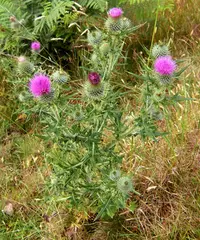
Bull thistle, Cirsium vulgare, is a biennial herb in the aster family, known for its spiny leaves and tall, upright stems topped with purple flower heads. It typically forms a large rosette in the first year, then sends up flowering stems in the second year that can dominate open ground.

The plant is native to Europe and Asia but is now widespread in North America, especially in disturbed soils, pastures, and roadsides. It grows easily and can become invasive, as each plant produces many wind-dispersed seeds.

Bull thistle favors full sun, moderate moisture, and well-drained soils. Gardeners who choose to care for bull thistle often grow it for pollinator value rather than as an ornamental feature.

Main Plant Requirements

Care Difficulty

Easy Care

Light Preference

Full Sun

Water Requirements

Low Water

Temperature Preference

Cold Hardy

Hardiness Zone

3–9

Soil Texture

Sandy, Loamy, Rocky

Soil pH

Slightly acidic (6.5–7.0), Neutral (7.0)

Soil Drainage

Well-drained

Fertilization

Minimal (feed rarely)

Get Personalized Care Plan

Scan your plant to receive care tips personalized for your specific plant

Available on iOS and Android

How to Care for the bull thistle

This species thrives in open, bright sites and is naturally adapted to full sun in fields and roadsides.

  • Provide 6–10 hours of direct sun daily; full exposure is ideal for compact growth and abundant flowering in bull thistle.
  • It tolerates light partial shade, especially with strong morning sun and light afternoon shade, but stems may elongate and flowering can decrease.
  • In hot summers, avoid highly reflective spots that intensify afternoon sun, which can scorch leaves and dry soil too fast, especially in shallow or sandy sites.

This plant is drought-tolerant once established and prefers soil that dries between waterings.

  • In the ground, water only when the top 5–7 cm of soil are dry and new leaves begin to lose slight turgor, then soak deeply and allow to drain.
  • Choose sharply drained soil or slopes to prevent standing water, as Cirsium vulgare is prone to root problems in compacted, waterlogged ground.
  • During cool or rainy seasons, additional watering is rarely needed; in hot, dry periods, watch for dull, drooping foliage as a cue to water rather than following a fixed schedule.

This hardy species tolerates a wide temperature range typical of temperate climates.

  • Optimal growth occurs around 60–75°F (16–24°C), with strong vegetative growth in cool spring and early summer conditions.
  • Mature plants survive down to about 5–10°F (-15 to -12°C) under typical winter conditions, dying back aboveground but resprouting from the crown where biennial.
  • Heat tolerance extends to about 90–95°F (32–35°C) if soil is not waterlogged; prolonged extreme heat with dry winds can cause leaf scorch and reduced flowering.

This species tolerates a wide humidity range and usually needs no special humidity control in typical outdoor conditions.

This species favors lean, well-drained ground and copes well with relatively poor sites.

  • Use a sandy or sandy-loam mix with modest organic matter to mimic its naturally open, dry habitats.
  • Ensure rapid drainage by blending mineral components such as coarse sand or fine gravel at 30–50% of the mix.
  • Keep pH slightly acidic to neutral, around 6.0–7.5, avoiding strongly acidic or waterlogged soils.
  • Limit rich compost or manure to a thin topdressing only, since overly fertile, moist substrates encourage weak, floppy growth.

This species can be grown in containers outdoors, but it is rarely ideal except for controlled or temporary cultivation.

  • Choose a wide, heavy container to prevent tipping, as the tall, spiny stems become top-heavy in wind.
  • Use a very fast-draining mix and elevate the pot on feet so runoff clears quickly after rain or irrigation.
  • Place the container where accidental contact is unlikely, since the spines project beyond the pot edge at maturity.

Cirsium vulgare usually thrives in poor soils and needs little to no fertilization.

Pruning Cirsium vulgare focuses on safety, appearance, and limiting unwanted spread.

  • Cut back flower heads just after blooming to reduce self-seeding and control spread.
  • Remove dead, diseased, or broken stems at ground level using sharp pruners and gloves.
  • Thin crowded shoots to improve air flow and reduce fungal problems around the plant.
  • Dispose of seed heads in the trash, not compost, to avoid unintentional reseeding.

Transplanting bull thistle is uncommon, as it is usually treated as a wild or weedy plant.

  • If transplanting, do it in early spring or early fall when temperatures are mild.
  • Select only small, young plants; older taproots transplant poorly and suffer high stress.
  • Dig deeply to capture as much of the taproot as possible, keeping soil loosely around it.
  • Water thoroughly after transplanting and keep soil lightly moist until new growth appears.

Propagation of Cirsium vulgare is almost always by seed and occurs very readily in the landscape.

  • Collect dry seed heads at the end of summer before they disperse on the wind.
  • Sow seeds on the soil surface or barely covered; they need light and consistent moisture.
  • Late summer or fall sowing outdoors allows natural cold exposure that improves germination.
  • Label and contain sowing areas carefully to avoid unwanted spread into surrounding beds.

Mature Cirsium vulgare is cold hardy in most temperate climates and needs no special winter care.

Care Tips

Manage Self-Seeding

Deadhead spent flower heads before they fully dry and fluff out if you want to limit spread, placing removed heads directly into a bag so seeds cannot disperse on the wind.

Deep Taproot Handling

When removing or transplanting young plants, use a narrow spade or soil knife to follow the taproot straight down, since snapping it near the crown often leads to regrowth from remaining root pieces.

Protective Gear Use

Always handle plants with thick leather or nitrile-coated gloves and long sleeves, and use tongs or a garden fork to move cut stems to reduce injury from the dense spines.

Safe Disposal Practices

Bag seed heads and flowering stems in heavy-duty trash bags and leave them in the sun to dry out completely before municipal waste pickup, avoiding composting to prevent accidental reseeding when growing bull thistle near other plantings.

Habitat Strip Planning

If intentionally maintaining a patch for wildlife, confine it to a defined strip or bed bordered by regularly mown turf or a tilled strip, which creates a clear edge and limits uncontrolled spread into adjacent areas.

Everything About bull thistle

Common Pests and Diseases

Thistle aphids

This pest forms dense colonies on stems, leaf undersides, and flower buds, sucking sap and causing curling, yellowing, and sticky honeydew deposits. Symptoms include distorted growth and sooty mold developing on the honeydew.

Solution

Prune and discard heavily infested shoots, then hose plants with a strong stream of water to dislodge remaining aphids. If needed, apply insecticidal soap or a light horticultural oil, making sure to cover leaf undersides, and encourage natural predators such as lady beetles by avoiding broad-spectrum insecticides.

Thistle head weevil

This pest lays eggs in developing flower heads, where the larvae feed on the seed tissue and can deform or destroy seed production. Symptoms include distorted, brown, or prematurely drying flower heads with internal tunneling.

Solution

Cut and bag infested flower heads before seeds mature and dispose of them in the trash to reduce future populations. For larger stands or when planning how to take care of bull thistle in pastures, integrated control often relies on biological control releases and preventing seed set through timely mowing or hand cutting before flowering.

Rust

This disease causes yellowish spots on upper leaf surfaces with orange to brown powdery pustules on the undersides. Severe infections can lead to premature leaf drop and reduced vigor.

Solution

Remove and destroy affected leaves as soon as symptoms appear and avoid overhead watering to keep foliage dry. Improve air circulation around plants and, in severe or recurring cases, consider an appropriate fungicide labeled for rust on ornamental or pasture species, following label directions carefully.

Powdery mildew

This disease appears as white to gray powdery patches on leaves and stems, often starting on lower or shaded parts of the plant. Symptoms include reduced vigor, leaf distortion, and premature leaf senescence in heavy infections.

Solution

Increase sun exposure and airflow where possible and avoid crowding stands of plants. Remove heavily infected foliage and, if needed, use a labeled sulfur or potassium bicarbonate-based fungicide, applying at the first sign of disease to limit spread.

Leaf spots

This disease group produces small brown to dark purple lesions on leaves that may merge into larger dead areas, especially in humid conditions. Symptoms include thinning foliage and reduced photosynthesis, which can weaken plants over time.

Solution

Collect and destroy fallen and infected leaves to reduce the source of spores, and water at soil level rather than wetting foliage. If leaf spots are persistent and severe, a copper-based fungicide or other labeled product can be applied preventively during warm, wet periods, combined with improved spacing and airflow.

Interesting Facts

Biennial life cycle

Bull thistle usually lives for 2 years, forming only a spiny leaf rosette in the first year and then sending up a tall flowering stem, setting seed, and dying in the second year.

Specialized pollinator support

Its large, nectar-rich purple flower heads attract a wide range of pollinators, including bumblebees, native solitary bees, hoverflies, and butterflies, which can be important in degraded or disturbed habitats.

Seed dispersal strategy

Each flower head produces many small seeds attached to a tuft of fine hairs called a pappus, which acts like a parachute and allows wind dispersal over considerable distances.

Botan icon

Did you know?

In several regions, bull thistle is officially listed as a noxious or invasive weed, and its presence and control are regulated by local or state laws due to its ability to dominate disturbed grasslands and pastures.

FAQs about bull thistle

This species spreads readily by wind-dispersed seed and can form dense patches in open ground or neglected areas. Removing flower heads before seeds mature and limiting bare soil are key to controlling spread when growing bull thistle.

Grow Healthy Plants with Botan Care

Keep your plants happy and healthy with plant identification, disease detection, and easy care guidance.

Botan plant care app — identify plants on mobile

Explore More Plants