Aeschynanthus acuminatus Care

Aeschynanthus acuminatus

About Aeschynanthus acuminatus

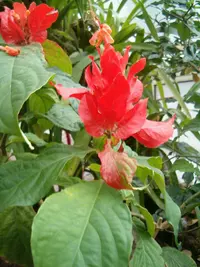
Aeschynanthus acuminatus is an epiphytic tropical vine in the gesneriad family, often grown as a trailing houseplant. It produces narrow, pointed leaves and tubular flowers that emerge in clusters, giving a refined, decorative look in hanging baskets. In nature it grows on trees in humid forests of Southeast Asia, where it enjoys bright shade, good air movement, and consistent moisture. Its need for stable warmth and humidity makes it slightly more demanding than basic beginner plants, but still manageable indoors with some attention. Understanding how to care for Aeschynanthus acuminatus helps prevent leaf drop, weak stems, and poor flowering, especially in dry or low-light rooms.

Main Plant Requirements

Care Difficulty

Moderate Care

Light Preference

Bright Indirect Light

Water Requirements

Moderate Water

Temperature Preference

Tropical / Frost Sensitive

Hardiness Zone

11–12

Soil Texture

Loamy, Peaty, Organic-rich

Soil pH

Acidic (5.5–6.5), Slightly acidic (6.5–7.0)

Soil Drainage

Moist but well-drained

Fertilization

Light (every 4–6 weeks)

Get Personalized Care Plan

Scan your plant to receive care tips personalized for your specific plant

Available on iOS and Android

How to Care for the Aeschynanthus acuminatus

This species prefers bright, indirect light that mimics dappled forest shade.

  • Provide 6–8 hours of bright, filtered light each day, such as near an east or bright north window, or under light tree shade outdoors.
  • Tolerates partial shade, but flowering may decline if light drops much below 4–5 hours of bright, indirect exposure daily.
  • Protect Aeschynanthus acuminatus from strong midday or afternoon sun, which can scorch leaves; increase light slightly in winter if days are very short.

Watering should keep the root zone lightly moist but never saturated.

  • Allow the top 2–3 cm of soil to dry before watering again; use this touch test rather than a fixed schedule.
  • Use a free-draining mix and let excess water run out completely to avoid root rot, yellowing leaves, and mushy stems from chronic overwatering.
  • In spring and summer, expect to water more often, while in cooler or low-light months intervals lengthen; slight leaf wrinkling signals mild underwatering.

Stable, warm conditions support steady growth and flowering.

  • Aim for 65–80°F (18–27°C) during active growth, which suits typical home or mild outdoor shade conditions.
  • Avoid temperatures below 55°F (13°C); prolonged exposure near this level can slow growth, while light frost will damage foliage and stems.
  • Short spikes up to 85°F (29°C) are tolerated if humidity is moderate and soil does not dry out completely, but sustained heat above this can cause stress.

This species prefers moderately humid air and reacts quickly to very dry conditions indoors.

  • Aim for 50–70% humidity, as lower than 40% often leads to browning leaf tips and slower growth.
  • Tolerates brief dry air, but persistent forced-air heating or air conditioning can cause leaf edge crisping and bud drop.
  • Increase humidity with a nearby humidifier, grouped plants, or a pebble tray under the pot, rather than misting foliage directly.

This epiphytic vine needs a loose, airy potting mix that drains rapidly yet retains some moisture around the roots.

  • Use a mix of roughly 40% peat- or coco-based potting mix, 30% fine orchid bark, and 30% perlite for structure and aeration.
  • Ensure the mix is free-draining so water runs through within seconds, preventing stagnant conditions that promote root rot.
  • Aim for slightly acidic to neutral pH, around 5.8–6.8, which supports nutrient availability and stable growth.
  • Avoid dense garden soil, heavy clay, or peat-only mixes that compact, exclude air, and stay wet for long periods, especially for Aeschynanthus acuminatus.

This species is very suitable for container growing, including hanging baskets.

  • Choose a broad, shallow pot to accommodate fibrous surface roots and allow cascading stems to drape over the rim.
  • Select a stable, weighted container or hanging basket so top growth does not tip or swing excessively as vines lengthen.
  • Use non-porous materials like glazed ceramic or plastic if the mix dries quickly, and porous terracotta only where drying speed needs to be increased.

Consistent but moderate feeding supports compact growth and flowering in Aeschynanthus acuminatus grown in containers.

  • Use a balanced liquid fertilizer (around 10-10-10 or 20-20-20) diluted to 1/4–1/2 strength for active plants.
  • Feed every 2–4 weeks during spring and summer when growth and flowering are strongest.
  • Reduce feeding to once every 6–8 weeks in fall and stop in winter dormancy under low light.
  • Avoid compost-heavy mixes; instead, use a light potting medium and occasionally apply slow-release pellets at the start of spring.

Thoughtful pruning keeps Aeschynanthus acuminatus dense, tidy, and flowering well.

  • Carry out shaping and size control after main flowering, usually in late spring or early summer.
  • Remove dead, damaged, or weak stems back to healthy tissue to reduce disease risk.
  • Tip-trim overly long or leggy shoots to encourage branching and fuller hanging growth.
  • Use clean, sharp scissors or pruners, cutting just above a node to guide new shoots.

Container-grown plants benefit from periodic repotting to maintain root health and stable moisture.

  • Check for roots circling the pot, pushing through drainage holes, or for slow, weak growth as signs to repot.
  • Plan repotting in spring, every 2–3 years, moving to a container only 2–5 cm wider than the old one.
  • Use a loose, well-drained mix and gently tease circling roots without tearing thick root sections.
  • Water thoroughly after repotting, keep in bright but indirect light, and avoid heavy feeding for 2–3 weeks to limit stress.

New plants are most often produced from stem cuttings, which reflect standard Aeschynanthus acuminatus plant care practices.

  • Take 7–10 cm non-flowering stem cuttings in late spring or early summer.
  • Remove lower leaves and insert nodes into a light, well-drained medium such as perlite and peat or coco coir.
  • Maintain warm conditions around 70–80°F with high humidity and bright, indirect light for rooting.
  • Optionally dip cut ends in rooting hormone and keep the medium just moist, not wet, to prevent rot.

This tropical species is frost-sensitive and needs sheltered winter conditions in most temperate climates.

  • Maintain indoor or greenhouse temperatures above 55°F, ideally 60–70°F in winter.
  • Move outdoor containers indoors before night temperatures approach 50°F.
  • Keep soil slightly drier than in summer, allowing the top layer to dry between waterings.
  • Avoid cold drafts and sudden temperature swings that can cause leaf drop or stem damage.

Care Tips

Encourage Bushy Growth

Pinch back 1–2 cm of soft shoot tips in spring and early summer to promote branching and denser trailing stems rather than long, sparse vines.

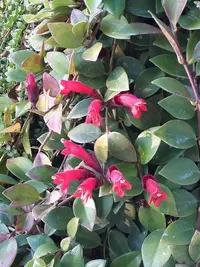
Rotate For Even Vines

Rotate the pot 90° every 1–2 weeks so that all sides receive similar light exposure, which keeps the plant symmetrical and prevents bare, shaded sections.

Support Hanging Stems

Use lightweight hooks or soft ties to guide longer stems along a hoop, trellis, or hanging rail so that flower clusters are more visible and stems are less likely to break under their own weight.

Seasonal Rest Period

From late fall to mid-winter, avoid repotting or heavy pruning and keep conditions slightly cooler and drier to provide a mild rest phase that supports reliable bud formation for the next flowering cycle.

Inspect Flower Bases

During active bloom, regularly check the bases of flowers and leaf axils for early signs of mealybugs or aphids, wiping them off with a cotton swab dipped in 70% isopropyl alcohol to maintain healthy growth when caring for Aeschynanthus acuminatus.

Common Pests and Diseases

Mealybugs

This pest feeds on tender stems and leaf nodes, often hiding in tight crevices along the trailing shoots. Symptoms include white cottony clusters, sticky honeydew, and distorted new growth.

Solution

Isolate the plant, then dab visible insects with cotton swabs dipped in 70% isopropyl alcohol and rinse the foliage with lukewarm water. For ongoing Aeschynanthus acuminatus care, repeat alcohol spot treatments weekly and use a light insecticidal soap spray, ensuring good airflow so foliage dries quickly.

Spider mites

These insects thrive in warm, dry indoor air and commonly attack the undersides of leaves, especially on plants with trailing, dense foliage. Symptoms include fine webbing, speckled leaves, and a dull, greyish appearance.

Solution

Increase humidity around the plant, then hose or shower leaves thoroughly to remove mites and webbing. Follow with a targeted miticidal or insecticidal soap spray on both leaf surfaces every 5–7 days for several cycles, keeping the plant out of direct harsh sun during treatment.

Leaf spot (fungal)

This disease affects leaves and sometimes stems, especially in conditions of high humidity with poor air circulation. Symptoms include small water-soaked spots that turn brown or black, sometimes with yellow halos, and may lead to premature leaf drop.

Solution

Remove and discard affected leaves, then improve airflow and avoid water sitting on foliage by watering at the soil level. If spotting continues, apply a labeled copper-based or other ornamental-safe fungicide, and space plants so leaves dry quickly after any moisture exposure.

Botrytis blight

This disease appears in cool, humid conditions and often starts on aging flowers or damaged tissue. Symptoms include soft, brown, mushy spots on flowers and leaves, covered by grey fuzzy mold, leading to wilting of affected parts.

Solution

Promptly remove faded flowers and any infected tissue, and ensure the plant has good air circulation away from overcrowded groupings. Reduce overhead misting, keep humidity moderate rather than saturated, and use a suitable ornamental fungicide if new lesions continue to appear.

Interesting Facts

Himalayan lithophyte specialist

This species naturally grows as a lithophyte, rooting into mossy rock faces along montane streams in the eastern Himalaya and adjoining regions, rather than primarily in tree canopies like many other lipstick vines.

Cooler mountain climate preference

In the wild it is associated with mid‑ to high‑elevation habitats that offer cooler, humid conditions compared with many lowland tropical gesneriads, reflecting its adaptation to montane Asian forests.

Elongated tubular corolla

The red, narrowly tubular flowers are strongly elongated and slightly curved, a floral shape interpreted as an adaptation to bird pollination by nectar‑feeding sunbirds in its native range.

FAQs about Aeschynanthus acuminatus

Lack of blooms usually relates to insufficient light, too much nitrogen fertilizer, or no slight cool, dry rest between bloom cycles. Provide bright conditions, moderate feeding, and avoid repotting too often to maintain flowering.

Grow Healthy Plants with Botan Care

Keep your plants happy and healthy with plant identification, disease detection, and easy care guidance.

Botan plant care app — identify plants on mobile

Explore More Plants