Maxillaria egertoniana Care

Maxillaria egertoniana

About Maxillaria egertoniana

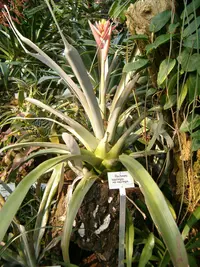
Maxillaria egertoniana is a small to medium-sized epiphytic orchid that typically grows on trees in humid forests of Central and South America. It forms clumps of slender pseudobulbs with narrow leaves and produces distinctive, often richly colored flowers with a somewhat waxy texture.

In cultivation, it prefers stable, mild conditions and consistent moisture around the roots, which reflects its natural cloud-forest habitat. Light to moderate shade, good air movement, and a free-draining orchid medium are important when learning how to care for Maxillaria egertoniana.

This species is moderately challenging for beginners because it dislikes extremes in temperature, dryness, or stagnant, soggy media. With careful attention to its environmental needs, it can be a rewarding and reliable bloomer under indoor or greenhouse conditions.

Main Plant Requirements

Care Difficulty

Hard Care

Light Preference

Partial Shade

Water Requirements

Keep Soil Moist

Temperature Preference

Tropical / Frost Sensitive

Hardiness Zone

12–13

Soil Texture

Peaty, Organic-rich, Sandy

Soil pH

Acidic (5.5–6.5)

Soil Drainage

Moist but well-drained

Fertilization

Moderate (every 2–4 weeks)

Get Personalized Care Plan

Scan your plant to receive care tips personalized for your specific plant

Available on iOS and Android

How to Care for the Maxillaria egertoniana

This orchid prefers bright, gentle light that mimics a lightly shaded forest canopy.

  • Provide 8–10 hours of bright, filtered light daily, such as dappled sun under shade cloth or beneath open tree cover.
  • Allow soft morning sun but protect Maxillaria egertoniana from strong midday and afternoon sun to avoid leaf scorch and yellowing.
  • In winter, increase light exposure by reducing shading or moving closer to a bright window, but avoid direct midday rays through glass.

This species prefers evenly moist conditions without staying saturated for long periods.

  • Water when the top 2–3 cm of the medium feels just barely dry, using free-draining orchid mix so excess water exits quickly.
  • Reduce watering in cooler months, letting the medium approach dryness, and increase frequency in warm, active growth when roots are plump and silvery.
  • Watch for overwatering signs such as black, mushy roots and sour smell, and underwatering signs such as shriveled pseudobulbs and wrinkled leaves.

This orchid grows best in intermediate temperatures with mild drops at night.

  • Aim for daytime temperatures around 70–80°F (21–27°C) and nighttime 60–65°F (16–18°C) to support steady growth and flowering.
  • Protect the plant from temperatures below 50°F (10°C), as prolonged exposure near this minimum can damage leaves and roots.
  • During hot spells above 85°F (29°C), increase air movement and humidity while shading slightly to prevent heat stress and leaf scorch.

This orchid prefers consistently moist air and reacts quickly to dry indoor conditions.

  • Aim for 60–80% humidity, using a room humidifier or orchid case in dry homes.
  • Tolerates brief dips to 40–50%, but buds may blast and leaf tips brown if kept drier.
  • Watch for wrinkled pseudobulbs and dull leaves as humidity-stress signs and increase moisture by grouping plants or placing pots above, not in, water-filled pebble trays.

This species grows best in a loose, airy epiphytic mix rather than dense potting soil.

  • Use a medium-grade fir bark base with additions of sphagnum moss, perlite, and a little charcoal for structure and moisture retention.
  • Ensure very fast drainage; water must run freely through the mix and not pool around the roots.
  • Keep pH slightly acidic to neutral (pH 5.5–6.5), which suits most orchid bark-based substrates.
  • Avoid compact peat-heavy or garden soils, which collapse, suffocate roots, and promote rot in Maxillaria egertoniana.

This species is well suited to container growing when moisture and stability are managed carefully.

  • Choose a squat, wider pot to accommodate a creeping growth habit and reduce the risk of the container tipping.
  • Select plastic pots if extra moisture retention is needed, or clay pots if the growing area is naturally humid.
  • Use a pot with multiple side and bottom slits or holes to increase air movement around the bark-based root zone.

This orchid benefits from light, consistent feeding during active growth but is sensitive to excess salts.

  • Use a balanced orchid fertilizer (around 20-20-20) diluted to 1/4–1/2 strength in low-mineral water.
  • Feed Maxillaria egertoniana every 2–3 weeks in spring and summer when new growths and roots are forming.
  • Reduce fertilizing to monthly or stop entirely in fall and winter, depending on light and temperature.
  • Flush the pot with plain water every 3–4 weeks to prevent fertilizer salt buildup on the roots.

Pruning needs are minimal and focus on cleanliness rather than shaping the plant.

  • In late winter or after flowering, remove dead, yellowed, or diseased leaves with sterilized scissors or pruning snips.
  • Cut spent flower spikes at the base once they dry, avoiding damage to nearby pseudobulbs and emerging growths.
  • Thin out clearly shriveled, non-functional pseudobulbs to improve airflow and reduce pest or rot risk.
  • Light grooming maintains Maxillaria egertoniana’s clump form without significantly affecting flowering when only dead tissue is removed.

This species prefers a snug pot but benefits from periodic repotting into fresh, well-drained orchid mix.

  • Plan to repot every 2–3 years, ideally in early spring just as new root tips appear.
  • Check for crowded roots circling the pot, slow growth, or a breaking-down medium that stays wet too long.
  • Gently loosen the root mass, trim dead roots, and move into a slightly larger pot with fresh fine to medium orchid bark and some sphagnum.
  • Keep the plant shaded, slightly on the dry side, and well ventilated for 7–10 days after repotting to reduce root stress.

Propagation of this orchid is usually done by division rather than by seed in home conditions.

  • Divide mature clumps in spring when repotting, once several new growths or pseudobulbs are visible.
  • Use a sterile knife or pruning tool to separate sections with at least 3–4 healthy pseudobulbs and active roots.
  • Plant each division in fresh, airy orchid bark, keeping rhizomes slightly above the medium to avoid rot.
  • Maintain warm temperatures, bright filtered light, and moderate humidity to encourage quick establishment of new divisions.

This orchid is frost-sensitive and should be treated as a warm to intermediate grower in winter.

  • Keep temperatures above 55°F, aiming for 60–70°F indoors during the coldest months.
  • Move outdoor containers inside before nights approach 50°F, providing bright, indirect light and good airflow.
  • Allow the medium to dry slightly more between waterings in winter but do not let pseudobulbs shrivel noticeably.
  • Avoid cold drafts and window glass contact, which can chill leaves even in a heated room.

Care Tips

Mounting Technique

Mount plants on cork or hardwood bark with a thin layer of sphagnum around the roots to improve aeration and mimic the epiphytic habit, then mist or water more frequently to compensate for faster drying.

Cool-Night Drop

Provide a nightly temperature drop of about 10–15°F by placing the plant near a slightly cooler window or in a cooler room at night to support bud initiation and overall vigor.

Targeted Air Movement

Use a small oscillating fan set on low, aimed past rather than directly at the plant, to keep the leaves and pseudobulbs dry after watering and reduce fungal and bacterial problems.

Shaded Summer Relocation

In summer, move the plant to a protected outdoor spot with bright dappled shade and rain shelter for several weeks to boost growth, but bring it back indoors before nights regularly fall below 55°F.

Preventing Salt Buildup

Flush the potting medium thoroughly with low-mineral water every 4–6 weeks until water runs clear from the drainage holes to prevent fertilizer salt accumulation that can burn the fine roots when growing Maxillaria egertoniana.

Common Pests and Diseases

Scale insects

This pest is common on cultivated plants in the Maxillaria group, especially in warm, sheltered orchid houses. Symptoms include small, raised brown or tan bumps on pseudobulbs, leaves, and flower spikes, with sticky honeydew and sooty mold sometimes appearing.

Solution

Remove heavily infested areas with a cotton swab dipped in isopropyl alcohol, then rinse the plant with lukewarm water. Improve air movement around the plant, avoid overfertilizing with high nitrogen formulas, and repeat alcohol swab treatments every 7–10 days until no new scale appears; for large collections, use a systemic insecticide labeled for orchids according to the manufacturer’s directions.

Spider mites

These insects prefer the relatively fine, sometimes slightly leathery leaves of this species under dry, warm indoor conditions. This pest causes pale stippling, dull leaf surfaces, and fine webbing on the undersides of leaves and between pseudobulbs.

Solution

Increase humidity to 50–70%, rinse foliage thoroughly under a gentle shower, and wipe leaf undersides to remove mites and eggs. For ongoing issues, apply a miticide or insecticidal soap labeled for use on orchids, making sure to treat leaf undersides and repeating applications every 5–7 days for several cycles.

Soft rot (Erwinia)

This disease is favored by high humidity, warm temperatures, and stagnant air common in compact orchid collections. Symptoms include rapidly spreading, water-soaked, foul-smelling lesions on pseudobulbs and at the base of leaves, which can collapse tissues within hours to days.

Solution

Isolate the plant immediately, cut away all affected tissue with a sterile blade back to firm, healthy tissue, and dust cuts with powdered cinnamon or a bactericidal fungicide labeled for orchids. Reduce watering, increase air circulation, keep leaves dry, and avoid water sitting in leaf bases; discard the plant if rot cannot be fully removed to protect nearby orchids and support successful Maxillaria egertoniana care instructions.

Fusarium wilt

This disease can affect plants grown long term in the same pot or in poorly drained media. Symptoms include slow decline, poor new growth, leaf yellowing from the tips, and brown or purple streaking in the rhizome when cut open.

Solution

Discard severely affected plants, as systemic Fusarium is very difficult to eradicate. To prevent spread, always sterilize cutting tools between plants, avoid reusing old media, and repot into fresh, fast-draining orchid mix, ensuring good air movement around roots.

Orchid viruses

This disease group, often including Cymbidium mosaic virus or Odontoglossum ringspot virus, is occasionally found in traded Maxillaria plants. Symptoms include distorted or streaked flowers, reduced blooming, and sometimes faint mosaic or streak patterns on leaves, though some infections remain symptomless for long periods.

Solution

There is no cure, so the safest management is to destroy confirmed infected plants to prevent spread. Minimize risk by buying from reputable sources, never sharing cutting tools between plants without sterilizing, and avoiding sap contact between plants during division or repotting.

Interesting Facts

Cloud-forest specialist

This species is native to humid montane forests of Costa Rica and Panama, where it grows as an epiphyte on trees in cool, moist, high-elevation habitats with frequent mist and cloud cover.

Pseudobulbs with sheathing leaves

It forms clustered, ovoid pseudobulbs partly enclosed by leaf sheaths, an adaptation that helps store water and nutrients and supports survival during short dry spells in the canopy.

Fragrant, short-lived flowers

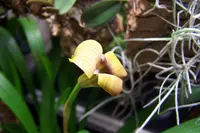
Its yellow to yellow-brown flowers with red markings are typically produced singly and are reported to be fragrant, but individual blooms are relatively short-lived compared with many larger showy orchids.

FAQs about Maxillaria egertoniana

Lack of flowers usually comes from insufficient light, inadequate temperature drop at night, or poor nutrition. Provide bright, filtered light, slightly cooler nights, and balanced orchid fertilizer. Mature pseudobulbs typically must form before reliable blooming occurs.

Grow Healthy Plants with Botan Care

Keep your plants happy and healthy with plant identification, disease detection, and easy care guidance.


Botan plant care app — identify plants on mobile

Explore More Plants