Tapered sphinx orchid Care (Liparis condylobulbon)

Tapered sphinx orchid

About Tapered sphinx orchid

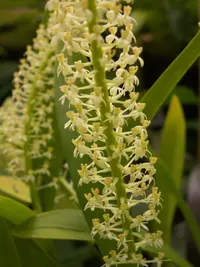
The tapered sphinx orchid, Liparis condylobulbon, is a small epiphytic orchid that usually grows on tree trunks or mossy branches in humid tropical forests. It forms clustered, tapered pseudobulbs with a few narrow leaves and delicate yellow-green flowers on slender stems.

This species is native to parts of Southeast Asia and nearby islands, where it enjoys warm, shaded, and consistently moist conditions. It is considered moderately challenging, as it reacts quickly to drying out or poor humidity.

Those who care for Tapered sphinx orchid should focus on stable warmth, gentle air movement, and evenly moist but free-draining growing media to keep roots healthy.

Main Plant Requirements

Care Difficulty

Hard Care

Light Preference

Partial Shade

Water Requirements

Keep Soil Moist

Temperature Preference

Tropical / Frost Sensitive

Hardiness Zone

11–12

Soil Texture

Peaty, Organic-rich, Loamy

Soil pH

Acidic (5.5–6.5)

Soil Drainage

Moist but well-drained

Fertilization

Light (every 4–6 weeks)

Get Personalized Care Plan

Scan your plant to receive care tips personalized for your specific plant

Available on iOS and Android

How to Care for the Tapered sphinx orchid

This orchid prefers soft, filtered light that mimics bright forest shade.

  • Provide bright, indirect light or light dappled shade, such as beneath taller plants or 30–50% shade cloth, avoiding direct midday sun.
  • Aim for 4–6 hours of gentle morning sun or bright shade; foliage should stay medium green, not pale or yellowed from excess light.
  • In summer, shift Tapered sphinx orchid to deeper shade during hot afternoons; in winter, allow slightly brighter exposure to compensate for shorter days.

Moist but airy conditions suit this species best, with no prolonged drying or waterlogging.

  • Water when the top 1–2 cm of the mix feels just barely dry, keeping the root zone evenly moist rather than wet or bone dry.
  • Use a loose, free‑draining orchid mix; excess water must drain away within a few seconds to avoid root rot and sour smell in the medium.
  • Reduce watering slightly in cooler months when growth slows, watching for wrinkling pseudobulbs as a sign of thirst and black, mushy roots as overwatering.

Stable, warm temperatures support reliable flowering and root health.

  • Optimal growth occurs at 65–80°F (18–27°C), with slightly cooler nights improving vigor and flowering.
  • Avoid temperatures below 55°F (13°C); brief dips to 50°F (10°C) may be tolerated but repeated chills increase rot risk.
  • Protect from frost and from hot, stagnant air above 86°F (30°C); increase shade and air movement during heat waves, especially around sheltered planting sites.

This orchid prefers consistently moist air to mimic its native forest habitat.

  • Aim for 60–80% humidity, using a hygrometer to monitor levels around the plant.
  • Tapered sphinx orchid tolerates brief dips to 40–50%, but leaf tips may brown and pseudobulbs shrivel in prolonged dry air.
  • Increase humidity with a pebble tray, grouping plants, or a small humidifier while keeping leaves well ventilated.

Liparis condylobulbon grows best in a loose, moisture-retentive but airy medium rather than dense garden soil.

  • Use a fine to medium orchid mix based on bark and sphagnum moss, with added perlite for aeration.
  • Ensure fast drainage so water runs through within seconds, leaving the mix damp but never waterlogged.
  • Aim for slightly acidic to neutral conditions, roughly pH 5.5–7, which suits most epiphytic orchid mixes.
  • Avoid heavy peat, clay, or compacted media that collapse around roots and restrict air movement.

This species is well suited to container culture when moisture and stability are managed carefully.

  • Choose a shallow, wide pot to spread the compact root system while avoiding deep, water-holding columns of mix.
  • Select a slightly heavier pot material, such as ceramic, to keep the relatively top-heavy foliage stable after watering.
  • Use a pot with side slits or multiple base holes to speed surplus water escape and keep the medium oxygenated.

Liparis condylobulbon benefits from light, consistent feeding during active growth but is sensitive to excess salts.

  • Use a balanced orchid fertilizer (around 20-20-20) diluted to 1⁄4–1⁄2 strength in low-mineral water.
  • Feed every 2–3 weeks during the growing season, skipping applications if roots or leaves look stressed.
  • In winter or dormancy, reduce feeding to once every 4–6 weeks or stop if growth pauses completely.
  • Flush the pot with plain water monthly to reduce salt buildup, which can burn fine roots of this Tapered sphinx orchid.

Pruning needs for Liparis condylobulbon are minimal and focus on hygiene rather than shaping.

  • Best time is after flowering finishes and spent spikes begin to dry.
  • Cut dry or yellow flower spikes at the base with clean, sharp scissors or snips.
  • Remove only dead, mushy, or clearly damaged leaves or pseudobulbs to limit disease spread.
  • Avoid heavy cutting of green tissue, as this reduces stored energy and can weaken future flowering.

This orchid prefers a stable environment and only occasional repotting when the medium breaks down or space runs out.

  • Repot every 2–3 years, or when roots circle the pot, growth slows, or the medium becomes compacted and sour-smelling.
  • Best timing is in late winter to early spring, just before new roots and shoots start.
  • Gently tease roots from the old bark mix, trimming only dead, brown, hollow roots with sterile tools.
  • Move to a slightly larger pot with fresh fine orchid bark, keep roots snug, and maintain higher humidity for 1–2 weeks to reduce stress.

Propagation of Liparis condylobulbon is usually done by careful division of mature clumps rather than from seed at home.

  • Divide in late winter or early spring when repotting and new growth points are visible.
  • Select healthy clumps with at least 3–4 pseudobulbs per division to maintain vigor.
  • Use sterile, sharp tools to separate sections, minimizing root damage and removing any rotted tissue.
  • Pot divisions into fresh, fine orchid bark, keep evenly moist and in bright, indirect light until new roots establish.

This orchid is not frost tolerant and needs mild, protected conditions during winter in temperate climates.

  • Keep temperatures around 60–70°F indoors or in a heated greenhouse through winter.
  • Maintain bright, indirect light and slightly drier medium if growth slows, without letting roots fully dry.
  • For container plants outdoors, move indoors before nights drop below 50°F to avoid chilling injury.

Care Tips

Basket mounting

Place the plant in a shallow slatted basket with a very open orchid mix so roots can creep and form small colonies, which mimics its natural habit and improves air flow around the bulbs.

Cool-night boost

Provide a gentle night temperature drop of about 5–10°F in fall and winter by moving the plant to a cooler room or near a slightly cracked window to support flowering and a clear seasonal rhythm.

Moisture zoning

Arrange the medium so that the central root zone stays evenly moist while the outer edges are slightly drier, allowing new growths to seek fresh, airy spaces without risking rot at the base.

Gentle division timing

Divide clumps only when there are at least 6–8 healthy bulbs, and do it just as new roots begin to emerge so each division re-establishes quickly with minimal setback.

Targeted pest scouting

Inspect the undersides of leaves and the base of the pseudobulbs with a flashlight every 2–3 weeks, and rinse or swab away early mealybug or scale infestations with isopropyl alcohol to keep caring for Tapered sphinx orchid low-risk and chemical-light.

Common Pests and Diseases

Spider mites

This pest often appears on stressed plants grown too dry or too warm, causing fine stippling on leaves and a dull, dusty look with occasional webbing.

Solution

Increase humidity, rinse foliage thoroughly under lukewarm water, and improve air movement; for persistent infestations, use several applications of insecticidal soap or a horticultural oil labeled for orchids, making sure to coat the undersides of leaves and the pseudobulb bases.

Scale insects

These insects attach to pseudobulbs and leaf sheaths as small, immobile bumps, drawing sap and leading to yellowing, sticky honeydew, and sooty mold growth.

Solution

Manually remove visible scale with a cotton swab dipped in isopropyl alcohol, isolate the plant, and repeat inspections weekly; in heavier cases, apply insecticidal soap or a light horticultural oil, taking care not to soak the growing medium.

Soft rot (Erwinia)

This disease causes rapidly spreading, foul-smelling wet lesions on pseudobulbs and leaf bases, often starting where water sits and air movement is poor.

Solution

Immediately cut away all affected tissue with a sterile blade, dust cuts with a dry fungicide or cinnamon, and improve ventilation while keeping water off the crown and pseudobulb bases; discard severely affected plants to protect nearby orchids and prevent spread during Liparis condylobulbon plant care.

Leaf spot fungi

Symptoms include small, water-soaked or yellow spots on leaves that enlarge, turn brown, and may develop a distinct margin when humidity stays high and foliage remains wet.

Solution

Remove and discard affected leaves, increase spacing and airflow around plants, and water early in the day so leaves dry quickly; if spotting continues, use a preventive orchid-safe fungicide according to label directions.

Interesting Facts

Miniature epiphytic habit

This orchid typically grows as a small epiphyte on mossy tree trunks and branches in lowland to lower montane forests, anchoring itself to bark rather than rooting in soil.

Distinctive tapered pseudobulbs

Its narrow, tapering pseudobulbs store water and nutrients and give rise to just 1–2 thin leaves, an adaptation that helps it cope with short dry spells in its humid forest habitat.

Slender, many-flowered spikes

The plant produces thin, arching inflorescences that can carry several small yellowish to greenish flowers, each only a few millimeters across but arranged in a loose, elegant line along the spike.

FAQs about Tapered sphinx orchid

Lack of blooms usually comes from insufficient light, too-warm nights, or no slight dry rest after growth. Provide bright, indirect light, cooler nights around 60–65°F, and reduce watering briefly after new pseudobulbs mature.

Grow Healthy Plants with Botan Care

Keep your plants happy and healthy with plant identification, disease detection, and easy care guidance.


Botan plant care app — identify plants on mobile

Explore More Plants