


Seasonal Rest Setup
Provide a cool, bright, and much drier winter rest from roughly late fall to early spring by moving the plant to a cooler room or greenhouse bench and reducing water so new growths initiate strongly in spring.

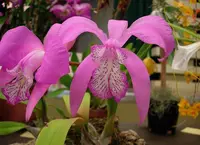
The Mayflower orchid, Laelia speciosa, is an epiphytic orchid that often grows on trees in its native highland habitats of Mexico. It forms compact pseudobulbs with a few thick leaves and produces large, showy, fragrant flowers in shades of pink to lavender. Flowers usually appear on short stems above the foliage, giving the plant a striking, upright display when in bloom. It prefers bright but filtered light, good air movement, and a fast-draining, airy orchid mix. Due to its need for a distinct cool, dry rest period, how to care for Mayflower Orchid can be moderately challenging for beginners.

Care Difficulty
Hard Care

Light Preference
Partial Sun

Water Requirements
Moderate Water

Temperature Preference
Tropical / Frost Sensitive

Hardiness Zone
11–12

Soil Texture
Sandy, Rocky, Organic-rich

Soil pH
Acidic (5.5–6.5)

Soil Drainage
Well-drained

Fertilization
Light (every 4–6 weeks)
Scan your plant to receive care tips personalized for your specific plant
Available on iOS and Android
This orchid prefers bright, filtered light with some direct sun at higher elevations.
This orchid prefers distinct wet–dry cycles rather than constantly moist conditions.
This highland orchid prefers mild days, cooler nights, and a marked temperature drop after sunset.
This orchid prefers moderate humidity and reacts quickly to very dry air.
This epiphytic orchid needs a very airy, fast-draining medium rather than standard potting soil.
This species is well suited to container culture when mounted-style conditions are simulated in a pot.
Laelia speciosa benefits from light, targeted feeding during active growth but is sensitive to excess salts.
Laelia speciosa needs only minimal pruning focused on hygiene and flower management rather than shaping.
This orchid appreciates infrequent but timely repotting to keep its airy medium fresh and roots healthy.
Laelia speciosa is usually propagated by careful division of mature clumps rather than from seed at home.
This species prefers a cool dry rest and must be shielded from freezing conditions in most climates.

Plant Health Check
Not sure what's wrong with your plant? Check your plant's health inside the app.
This species naturally grows as an epiphyte on oak trees in dry highland forests of central Mexico, often above 1,800 m, where it experiences strong light, large day–night temperature swings, and a pronounced dry season.
Laelia speciosa develops prominent, somewhat angular pseudobulbs that store water and nutrients, then produces a single, thick leaf and large spring flowers from mature growths after a relatively dry winter rest.
The large, pale to rose-lilac flowers are strongly fragrant, with a sweet scent often compared to vanilla or honey, especially during the warmer parts of the day.

In parts of central Mexico, this orchid has been traditionally used as an ornamental and symbolic plant during religious celebrations such as the Feast of the Holy Cross, where its showy spring flowers are placed on altars and crosses, reflecting its close cultural association with seasonal rituals.
Lack of flowering usually comes from insufficient light, no cool dry winter rest, or overfeeding with nitrogen. This species needs a pronounced dry, cooler period to set buds; otherwise it produces leaves and roots but few or no flowers.
Keep your plants happy and healthy with plant identification, disease detection, and easy care guidance.

Drosera neocaledonica
Drosera neocaledonica
Aloe-leafed cymbidium
Cymbidium aloifolium

Bird's Nest Snake Plant
Dracaena trifasciata 'Golden Hahnii'
Angraecum ramosum
Angraecum ramosum
Lance-leaf Caladium
Caladium 'Desert Sunset'
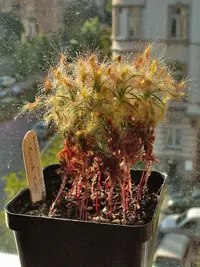
shaggy sundew
Drosera scorpioides
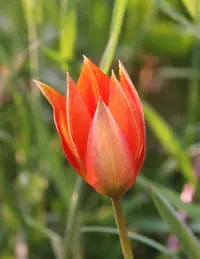
orange wild tulip
Tulipa orphanidea
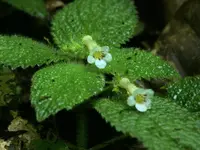
Diastema affine
Diastema affine