Basal rosette protection
Mark and lightly mulch around the basal rosettes in late fall so young plants are not damaged during winter clean-up or stepped on before stems emerge in spring.

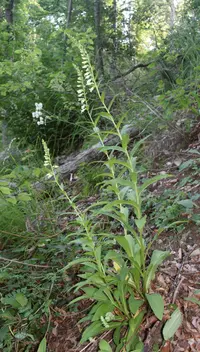
Straw foxglove (Digitalis lutea) is a short-lived perennial often grown as a biennial, valued for its tall spires of small, pale yellow tubular flowers. It forms a low rosette of narrow green leaves in its first year, then sends up flowering stems in the second year.
This species is native to parts of southern and central Europe, where it grows in open woods, grassy slopes, and light shade. It adapts well to temperate gardens and can self-seed, which helps maintain a steady presence.
Digitalis lutea prefers moderately fertile, well-drained soil with consistent moisture and light shade to partial sun. Understanding these basic needs makes it easier to care for straw foxglove in typical garden conditions.

Care Difficulty
Moderate Care

Light Preference
Partial Shade

Water Requirements
Moderate Water

Temperature Preference
Cool Climate

Hardiness Zone
4–8

Soil Texture
Sandy, Loamy, Organic-rich

Soil pH
Acidic (5.5–6.5), Slightly acidic (6.5–7.0)

Soil Drainage
Moist but well-drained

Fertilization
Minimal (feed rarely)
Scan your plant to receive care tips personalized for your specific plant
Available on iOS and Android
Digitalis lutea prefers bright, gentle light that mimics an open woodland edge.
Digitalis lutea prefers evenly moist, well-drained soil without prolonged drying or saturation.
This species is a cool- to mild-climate perennial that tolerates a range of outdoor temperatures.
Digitalis lutea tolerates a wide humidity range and rarely needs special humidity management outdoors.
Digitalis lutea prefers moist, well-drained, humus-rich soil for stable growth and flowering.
This species can be grown in containers outdoors if the pot is deep and drains efficiently.
Digitalis lutea benefits from modest feeding but performs well in reasonably fertile garden soil.
Digitalis lutea responds well to light, timely pruning that manages flowering and keeps clumps tidy.
This species is usually grown in the ground, so focus on careful transplanting rather than frequent repotting.
Digitalis lutea is most often propagated from seed, with some growers also using careful division of mature clumps.
Digitalis lutea is generally cold hardy in temperate climates and needs only minimal winter attention in the ground.

Plant Health Check
Not sure what's wrong with your plant? Check your plant's health inside the app.
This species bears narrow, tubular flowers that are a soft, pale yellow rather than the bold purples or pinks seen in many other foxgloves, giving it a more understated appearance in woodland-style plantings.
Digitalis lutea often occurs naturally on limestone and other calcium-rich substrates in southern and central Europe, showing a marked tolerance for alkaline to neutral soils compared with several other foxglove relatives.
Mature plants can form a somewhat woody crown at the base, which allows the plant to behave as a short-lived perennial or subshrub in favorable climates rather than strictly as a biennial.

In parts of its native range in Europe, Digitalis lutea has been recorded forming natural hybrid swarms with closely related foxglove species, which helps botanists study how gene flow and hybridization shape species boundaries within the genus Digitalis.
The flowers are very attractive to bees and other small pollinators, especially solitary bees. Their tubular shape provides nectar and pollen, making this species useful in wildlife-friendly borders and naturalistic plantings.
Keep your plants happy and healthy with plant identification, disease detection, and easy care guidance.