Staggered Succession Sowing
For a longer flowering window, direct-sow small patches every 3–4 weeks from late spring to mid-summer so that older plants can be cut back while younger ones are just coming into bloom.

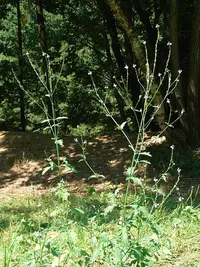
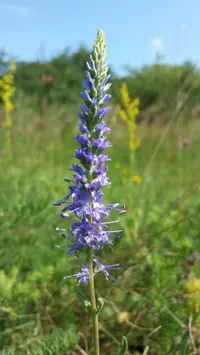
Herb of the cross, Verbena officinalis, is a perennial herb from the vervain family, commonly found in meadows, roadsides, and disturbed ground across Europe and parts of Asia and North America. It often behaves as a short-lived perennial or biennial in gardens.
The plant forms upright, slender stems with small, opposite leaves and narrow spikes of tiny pale lilac to pink flowers in summer. Its open, airy habit makes it suitable for informal borders and wildlife gardens.
Verbena officinalis is generally undemanding, provided it receives good light, moderately moist but well-drained soil, and not overly rich conditions. These traits make it relatively straightforward to care for herb of the cross in temperate climates.

Care Difficulty
Moderate Care

Light Preference
Full Sun

Water Requirements
Moderate Water

Temperature Preference
Cold Hardy

Hardiness Zone
4–8

Soil Texture
Sandy, Loamy, Organic-rich

Soil pH
Acidic (5.5–6.5), Slightly acidic (6.5–7.0)

Soil Drainage
Well-drained

Fertilization
Minimal (feed rarely)
Scan your plant to receive care tips personalized for your specific plant
Available on iOS and Android
Verbena officinalis prefers bright, open conditions to flower and stay compact.
Verbena officinalis prefers evenly moist, fast-draining soil rather than constant wetness.
Consistent moderate temperatures support strong growth and flowering for this hardy perennial.
This species tolerates a wide humidity range and rarely needs special humidity management.
This perennial prefers lean, well‑drained soil that prevents waterlogging and root issues.
This species is suitable for container growing outdoors when drainage is managed carefully.
Verbena officinalis benefits from light, consistent feeding during active growth but does not need heavy fertilization.
Pruning helps Verbena officinalis stay compact, encourages more flowering, and extends its blooming period.
This species is more often grown in beds than in pots, so care usually focuses on transplanting young plants outdoors.
Verbena officinalis is commonly propagated by seed and can also be increased by softwood cuttings.
This hardy perennial usually tolerates typical temperate winters with minimal intervention, especially in the ground.

Plant Health Check
Not sure what's wrong with your plant? Check your plant's health inside the app.
This species is native to much of Europe and western Asia, where it typically grows in open, disturbed sites such as field margins, roadsides, and waste ground rather than in dense natural forests.
Unlike many ornamental verbenas, it has small, pale lilac flowers arranged in slender spikes that still attract a wide range of pollinators, including short-tongued bees and hoverflies, especially in low-input grassland habitats.
Its tiny seeds can form a persistent soil seed bank, remaining viable in the soil and germinating when light and disturbance conditions become favorable, which helps the species reappear in repeatedly disturbed sites.

In many European archaeological and historical records, this species is one of the wild herbs most frequently associated with ritual and ceremonial use, including Roman and later European traditions that viewed it as a plant of special symbolic significance rather than a simple field weed.
Poor flowering usually comes from low light, excessive nitrogen fertiliser, or old, unpruned stems. Deadhead spent flower spikes, avoid high-nitrogen feeds, and ensure the plant is not shaded by taller vegetation to support better bloom production.
Keep your plants happy and healthy with plant identification, disease detection, and easy care guidance.