


Mounting selection
Mount this species on hardwood, cork bark, or tree-fern plaque rather than soft or rotting wood, since dense, long-lasting materials support firm rhizome attachment and reduce the risk of rot at the attachment point.

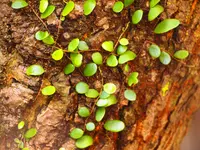
Dragon-scale fern, Pyrrosia piloselloides, is a small epiphytic fern that often grows on tree trunks, rocks, or old walls. It forms tight mats of rounded, leathery fronds that resemble tiny scales.
In nature, it occurs across tropical and subtropical Asia, where it experiences warm temperatures and filtered light under tree canopies. Its tough leaves and creeping rhizomes make it relatively resilient, but consistent humidity is important for good growth.
It prefers bright, indirect light, moderate moisture, and a very free-draining, airy substrate rather than regular potting soil. Understanding these natural conditions makes it easier to care for Dragon-Scale fern indoors or in sheltered outdoor spots.

Care Difficulty
Moderate Care

Light Preference
Partial Shade

Water Requirements
Moderate Water

Temperature Preference
Tropical / Frost Sensitive

Hardiness Zone
11–13

Soil Texture
Loamy, Rocky, Organic-rich

Soil pH
Acidic (5.5–6.5), Slightly acidic (6.5–7.0)

Soil Drainage
Moist but well-drained

Fertilization
Minimal (feed rarely)
Scan your plant to receive care tips personalized for your specific plant
Available on iOS and Android
Pyrrosia piloselloides prefers soft, filtered light similar to bright forest shade.
This fern prefers consistent light moisture but dislikes sitting in stagnant water.
This species thrives in warm, frost-free conditions typical of tropical and subtropical climates.
This epiphytic fern prefers moderate to high humidity to maintain healthy fronds and rhizomes.
This species prefers a loose, airy, epiphytic-style substrate rather than dense potting soil.
This fern adapts well to container growing when mounted-style or very shallow pots are used.
Pyrrosia piloselloides is a modest feeder, so light, consistent nutrition is sufficient for healthy frond growth.
Pyrrosia piloselloides needs only light pruning to keep fronds tidy and prevent disease buildup.
This epiphytic fern prefers to stay slightly root-bound or firmly attached to its mount, so repotting or remounting is infrequent.
Pyrrosia piloselloides is commonly propagated by division or by reattaching small rhizome pieces to new mounts.
This fern is not fully frost hardy and benefits from protective winter care in cooler climates.

Plant Health Check
Not sure what's wrong with your plant? Check your plant's health inside the app.
This species commonly grows as an epiphyte on tree trunks and branches in lowland tropical forests, anchoring to bark while taking water and nutrients from rain and debris rather than from the host tree’s tissues.
Its small, rounded to oval fronds form dense, overlapping mats with a softly velvety surface caused by short hairs, which help trap moisture and fine organic particles on bark and rock surfaces.
The species is native to a broad area from southern China through mainland Southeast Asia to Malaysia, Indonesia, and the Philippines, where it often appears on old trees, fence posts, and even building walls in humid areas.

In some parts of Southeast Asia, dense mats of this fern are informally called scaley ferns or dragon-scale ferns because the closely packed, rounded fronds resemble overlapping reptile scales on tree bark.
This species adapts to both, but performs best outdoors in warm, humid, frost-free climates where it can attach to bark or rock. Indoors it stays smaller and needs stable humidity, careful watering, and filtered light for good health.
Keep your plants happy and healthy with plant identification, disease detection, and easy care guidance.

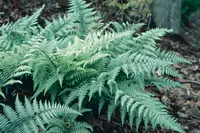
Ghost Fern
Athyrium 'Ghost'
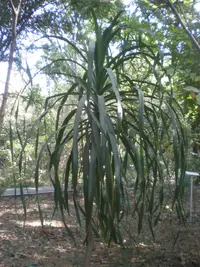
Beaucarnea goldmanii
Beaucarnea goldmanii
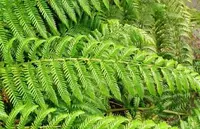
helecho marco (Delyns Santos Trinidad)
Lophosoria quadripinnata
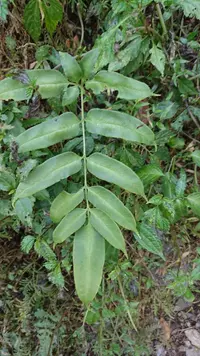
Intermediate bamboo fern
Coniogramme intermedia
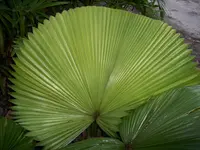
Licuala peltata
Licuala peltata
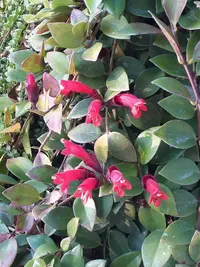
Aeschynanthus acuminatus
Aeschynanthus acuminatus
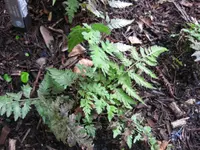
Eared Lady Fern
Athyrium otophorum
Alpinia formosana
Alpinia formosana