Yerba de Guava Care (Coccocypselum hirsutum)

Yerba de Guava

About Yerba de Guava

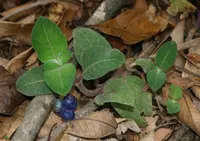
Yerba de Guava (Coccocypselum hirsutum) is a small, spreading perennial herb in the coffee family, often grown as a groundcover in warm, humid regions. It forms low, leafy mats with soft, slightly hairy foliage and small, colorful berries that add ornamental interest.

In nature it occurs in tropical and subtropical forests of the Americas, usually in shaded, moist understories. The plant prefers consistent moisture, organic-rich soil, and protection from harsh, direct sun.

Because it likes stable humidity and dislikes drying out, it can be a bit sensitive in drier homes or exposed garden spots. Understanding how to care for Yerba de Guava mainly involves providing gentle shade, even moisture, and well-draining but fertile soil.

Main Plant Requirements

Care Difficulty

Moderate Care

Light Preference

Partial Shade

Water Requirements

Keep Soil Moist

Temperature Preference

Tropical / Frost Sensitive

Hardiness Zone

10–11

Soil Texture

Loamy, Organic-rich

Soil pH

Acidic (5.5–6.5)

Soil Drainage

Moist but well-drained

Fertilization

Minimal (feed rarely)

Get Personalized Care Plan

Scan your plant to receive care tips personalized for your specific plant

Available on iOS and Android

How to Care for the Yerba de Guava

This shade-loving understory shrub thrives with soft, indirect light rather than intense direct sun.

  • Provide 3–5 hours of gentle light daily, ideally bright dappled shade under taller plants or trees; brief early morning sun is acceptable.
  • Avoid strong midday or afternoon sun, which can scorch leaves and bleach color; leaf curl and crispy edges signal excess light.
  • Yerba de Guava tolerates deep shade but becomes sparse and may flower less; in summer, increase filtered light, and in winter, avoid heavy pruning that further reduces light.

This species prefers consistently moist but not waterlogged soil, reflecting its natural forest-floor habitat.

  • Water when the top 2–3 cm of soil feels slightly dry, aiming to keep the root zone evenly damp rather than cycling between soggy and bone dry.
  • Use rich, well-drained soil with organic matter so excess water can drain while still holding moisture around the roots of Coccocypselum hirsutum.
  • Reduce watering frequency in cooler seasons; wilting and dull, drooping leaves suggest underwatering, while yellowing leaves and a sour soil smell point to overwatering.

This tropical shrub grows best in warm, stable conditions without exposure to frost or extreme heat.

  • Aim for 68–82°F (20–28°C) for active growth; consistent warmth supports dense foliage and better flowering.
  • Protect from temperatures below 50°F (10°C); light frost can damage foliage and repeated exposure near 32°F (0°C) may kill stems.
  • In hot periods above 90°F (32°C), provide extra shade and soil moisture to prevent stress, and use mulch to buffer roots from rapid temperature swings year-round.

This species prefers moderately humid air and reacts quickly to very dry conditions.

  • Aim for 50–70% humidity to mimic its native understory habitat for Yerba de Guava.
  • In prolonged air below 40%, watch for crisp leaf edges, curling, and slow new growth as signs of humidity stress.
  • Increase humidity with a nearby humidifier, grouped plants, or a wide pebble tray under (not touching) the pot.

This plant grows best in consistently moist, airy, organic-rich soil.

  • Use a loose, loamy mix with high organic matter, such as 2 parts peat or coco coir, 1 part compost, and 1 part perlite.
  • Ensure fast drainage so water passes through within seconds, yet the mix still feels slightly damp rather than soggy.
  • Keep pH slightly acidic to neutral, around 6.0–7.0, which supports nutrient uptake for Coccocypselum hirsutum.
  • Avoid compacted, heavy clay or pure sand, which either suffocates roots or dries out too quickly and destabilizes moisture.

This species adapts well to container growing when moisture and root space are managed carefully.

  • Select a pot just slightly wider than the root mass so the mix stays evenly moist without remaining saturated in unused space.
  • Choose a relatively deep container to support its fibrous root system and prevent tipping as top growth spreads outward.
  • Use a heavier material such as ceramic if the plant becomes top-heavy, to keep the container stable in outdoor breezes.

This species grows in low-nutrient forest soils and usually needs only light feeding in cultivation, even when caring for Yerba de Guava.

  • Use a balanced, dilute liquid fertilizer (such as 10-10-10) at 1/4–1/2 strength during active spring–summer growth.
  • Apply every 4–6 weeks in the growing season for container plants; in-ground plants often manage without extra feeding.
  • Incorporate a thin layer of compost or a mild slow-release fertilizer in spring instead of heavy doses.
  • Stop feeding in fall and winter to avoid weak, leggy growth when light and temperature are lower.

Coccocypselum hirsutum benefits from light, targeted pruning to maintain a compact, healthy form.

  • Carry out main pruning in late winter or early spring before vigorous new growth begins.
  • Remove dead, diseased, or damaged stems first, then thin crowded interior shoots to improve air flow.
  • Shorten excessively long or straggly stems to encourage branching and a denser habit.
  • Use clean, sharp scissors or hand pruners, making angled cuts just above a node or side branch.

This small understory shrub is more often transplanted outdoors than grown long term in containers.

  • Plan transplanting or repotting for early spring or early fall, when temperatures are mild and soil is workable.
  • Look for roots circling the pot, slow growth, or quick drying soil as signs it has outgrown the container.
  • When transplanting, move into a hole or pot just 2–5 cm wider, using loose, humus-rich, well-drained soil.
  • Handle the root ball gently, loosening only the outer roots, then water thoroughly and shade for several days to limit transplant shock.

Coccocypselum hirsutum is commonly propagated from seed or soft stem cuttings under warm, humid conditions.

  • Collect ripe berries, clean the seeds, and sow them shallowly in a moist, fine, well-drained mix in spring or early summer.
  • Maintain 70–80°F, bright indirect light, and consistently moist (not waterlogged) substrate for seed germination.
  • For cuttings, take 7–10 cm non-flowering shoots in late spring, remove lower leaves, and insert into a sterile, moist medium.
  • Cover cuttings with a clear dome or plastic to keep humidity high, venting daily to reduce fungal problems as roots form.

This tropical species is frost-sensitive and needs protection in regions with cold winters.

  • In USDA zones below 10, grow in containers and move plants indoors before temperatures drop to 40°F.
  • Provide bright, indirect light indoors and slightly drier soil, allowing the top layer to dry before watering again.
  • For in-ground plants in marginal climates, apply a 5–8 cm mulch layer around the root zone to buffer temperature swings.

Care Tips

Shallow Mulch Layer

Apply a 2–3 cm layer of fine bark or leaf mold around the root zone to keep the shallow roots cool, reduce moisture swings, and limit weed competition without burying the stems.

Gentle Ground Training

Guide the creeping stems over the soil surface with light hand placement or small wire pins so they form an even groundcover and root at nodes, creating a denser, more stable planting.

Node Propagation Technique

Press a healthy, flexible stem node onto moist soil and secure it with a U-shaped pin or bent paperclip until it roots, then cut and transplant to quickly expand your patch.

Targeted Slug Management

Use low-profile slug traps or iron phosphate pellets around the planting area in damp seasons, as the soft foliage and ground-hugging habit make this species especially vulnerable to slug feeding.

Seasonal Edge Maintenance

Lightly trim back or spade-cut the spreading edges 1–2 times per year to keep plant mats from overgrowing neighboring plants or paths while still allowing a full, lush cover when growing Yerba de Guava.

Common Pests and Diseases

Spider mites

This pest often appears on plants grown in warm, dry indoor or greenhouse conditions, causing stippled, pale foliage and fine webbing on leaf undersides. Symptoms include slowed growth and leaves that feel dry or rough to the touch.

Solution

Rinse foliage thoroughly with a strong but controlled stream of water, focusing on leaf undersides, then increase humidity and reduce heat stress where possible. For persistent infestations, apply insecticidal soap or horticultural oil every 5–7 days for several cycles, ensuring full leaf coverage but avoiding application in direct sun or high heat for effective Coccocypselum hirsutum care.

Mealybugs

These insects feed on plant sap and often hide in leaf axils and along stems, leaving white cottony clusters and sticky honeydew. Symptoms include yellowing, distorted new growth and occasional sooty mold developing on the honeydew.

Solution

Remove visible clusters with a cotton swab dipped in 70% isopropyl alcohol, then gently wash the plant with lukewarm water and mild insecticidal soap. Isolate affected plants and repeat treatments weekly until no new insects appear, inspecting tight leaf junctions closely.

Leaf spot fungi

This disease produces small water-soaked lesions that enlarge into brown or dark purple spots, sometimes with a yellow halo. Symptoms include premature leaf drop, especially on lower, denser foliage in humid shade.

Solution

Prune and discard affected leaves, improve air movement around the plant, and avoid overhead watering so foliage dries quickly. If new spots continue to appear, use a copper-based or broad-spectrum fungicide labeled for ornamental foliage, following label rates and intervals, and always treat both leaf surfaces.

Aphids

These insects cluster on tender stems and new leaves, sucking sap and causing curling, distortion and sticky honeydew deposits. Symptoms include stunted shoots and attraction of ants that farm aphids for honeydew.

Solution

Spray plants with a firm stream of water to dislodge colonies, then treat remaining insects with insecticidal soap or neem oil, covering all soft tissue. Repeat every few days until populations collapse, and manage nearby weeds that may host aphids outdoors.

Powdery mildew

This disease appears as white or gray powdery patches on upper leaf surfaces, which can cause yellowing and reduced vigor in shaded, humid sites. Symptoms include distorted young leaves and a dull, faded look to affected foliage.

Solution

Increase spacing and airflow, remove heavily infected leaves, and avoid high-nitrogen fertilization that encourages soft, susceptible growth. In persistent cases, apply a sulfur-based or potassium bicarbonate fungicide according to label directions, making sure to start treatment at the first signs of infection for best control.

Interesting Facts

Hairy leaf adaptation

This species has softly hairy leaves and stems, which likely reduce water loss and protect tissues from small herbivores and intense light in its native forest habitats.

Shade-forest groundcover

It naturally grows as a low, spreading groundcover in humid, shaded to semi-shaded tropical forests, often forming mats on the forest floor or along disturbed edges.

Bird-dispersed berries

The plant produces small, bright blue to purplish berries that attract birds, which then disperse the seeds through their droppings, helping the species colonize new patches of forest understory.

FAQs about Yerba de Guava

This species spreads by creeping stems and self-seeding, but is usually moderate rather than strongly invasive in managed gardens. In warm, moist climates it can form dense patches, so regular edging and removing unwanted seedlings helps contain it.

Grow Healthy Plants with Botan Care

Keep your plants happy and healthy with plant identification, disease detection, and easy care guidance.

Botan plant care app — identify plants on mobile

Explore More Plants