Salt spray tolerance
In coastal areas, place plants where they receive some wind protection but can still benefit from mild salt air, as Ardisia sieboldii tolerates light salt spray yet can suffer leaf burn from strong, drying seaside winds.

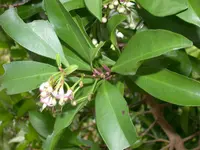
Ardisia sieboldii, commonly called Siebold Ardisia, is an evergreen shrub grown for its glossy foliage and clusters of small, bright berries. It has a compact, bushy growth habit and suits containers, bright indoor spaces, or sheltered patios in mild climates.
This species is native to East Asia, especially coastal areas of Japan and nearby regions, where it grows in warm, humid, partially shaded habitats. Its steady growth rate, tolerance of pruning, and preference for moderate light and evenly moist, well-drained soil make it manageable for many home gardeners who want to learn how to care for Siebold Ardisia.

Care Difficulty
Moderate Care

Light Preference
Partial Shade

Water Requirements
Keep Soil Moist

Temperature Preference
Tropical / Frost Sensitive

Hardiness Zone
9–11

Soil Texture
Loamy, Sandy, Organic-rich

Soil pH
Acidic (5.5–6.5), Slightly acidic (6.5–7.0)

Soil Drainage
Moist but well-drained

Fertilization
Light (every 4–6 weeks)
Scan your plant to receive care tips personalized for your specific plant
Available on iOS and Android
This shade-tolerant evergreen prefers soft, indirect light rather than intense sun.
Moist, well-drained soil suits this species best, without long periods of dryness or saturation.
This subtropical shrub prefers mild, stable temperatures without frost or extreme heat swings.
This species benefits from moderately humid air for steady growth.
Ardisia sieboldii prefers a loose, moist but sharply drained mix that resists compaction.
This shrub is well suited to container growing for patios, balconies, or sheltered entrances.
Balanced, light feeding supports steady growth and fruiting of Siebold Ardisia in containers or poor soils.
Light pruning keeps Ardisia sieboldii dense and healthy while preserving its natural form.
Container-grown plants benefit from careful repotting to maintain root health and stable growth.
New plants are most often produced from semi-ripe cuttings or seeds collected from ripe berries.
This species prefers mild, frost-free winters and needs extra attention in colder regions.

Plant Health Check
Not sure what's wrong with your plant? Check your plant's health inside the app.
This species is naturally distributed along warm coastal areas of Japan, Taiwan, and nearby regions, where it grows as an evergreen understory shrub on rocky or sandy seaside slopes exposed to salt‑laden winds.
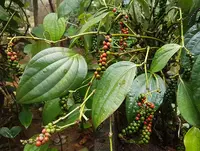
It produces dense clusters of glossy red berries that often persist on the plant through winter, providing an important visual cue for bird dispersers in its native range.
In its natural habitat, it shows notable tolerance to salt spray and maritime conditions, which is one reason it can colonize exposed coastal cliffs and seaside scrub where many other woody plants struggle.

In parts of coastal East Asia, this species is sometimes planted in traditional seaside gardens and temple grounds, valued for its long-lasting red fruit display that visually contrasts with evergreen foliage during the winter months.
This species works well indoors due to its glossy foliage and long-lasting berries. Provide bright indirect light, stable temperatures, and moderate humidity. With consistent conditions, Siebold Ardisia indoor care can be quite straightforward for most households.
Keep your plants happy and healthy with plant identification, disease detection, and easy care guidance.