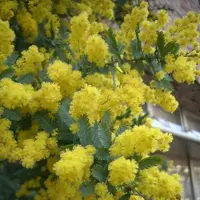
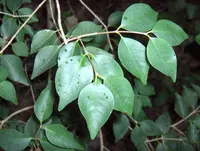
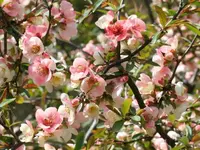
Hedge training
Start light tip-pruning once stems reach 15–20 cm to encourage dense, bushy branching, and use string lines or stakes as visual guides to keep hedge faces straight and uniform.

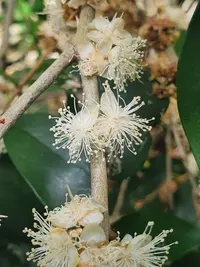
Eugenia uruguayensis is a small evergreen tree or large shrub from the myrtle family, valued for its dense foliage and fine-textured branching. It typically forms a rounded, compact crown with small, glossy green leaves and inconspicuous white flowers, sometimes followed by small berries. Native to Uruguay and nearby regions of South America, it is adapted to mild, temperate to warm conditions. The plant responds well to pruning, which makes it suitable for hedges, topiary, or container culture. It is generally considered moderate in difficulty, needing consistent moisture, well-drained soil, and good light. Understanding how to care for Eugenia uruguayensis helps keep its form neat and growth steady in garden or patio settings.

Care Difficulty
Moderate Care

Light Preference
Full Sun

Water Requirements
Moderate Water

Temperature Preference
Warm Climate

Hardiness Zone
9–11

Soil Texture
Sandy, Loamy, Organic-rich

Soil pH
Acidic (5.5–6.5), Slightly acidic (6.5–7.0)

Soil Drainage
Moist but well-drained

Fertilization
Minimal (feed rarely)
Scan your plant to receive care tips personalized for your specific plant
Available on iOS and Android
This plant performs best in bright outdoor conditions that balance sun exposure and protection.
Watering should keep the root zone evenly moist but never saturated.
Temperature control is important for stable growth and long-term health.
This species benefits from moderate humidity but tolerates typical indoor conditions.
Eugenia uruguayensis grows best in well-aerated, free-draining, moderately fertile soil.
This species is well-suited to container growing for patios, balconies, or small gardens.
Light, balanced feeding supports steady growth without making Eugenia uruguayensis overly lush or weak.
Thoughtful pruning keeps Eugenia uruguayensis dense, healthy, and well-shaped.
Container and young landscape plants benefit from careful transplanting to support long-term structure and health.
New Eugenia uruguayensis plants are usually raised from semi-hardwood cuttings or fresh seed under warm, stable conditions.
This species prefers mild winters and benefits from protection in regions with hard frost or prolonged freezing.

Plant Health Check
Not sure what's wrong with your plant? Check your plant's health inside the app.
This species is naturally restricted to riparian forests and thickets along the lower Uruguay River basin in southern Brazil and neighboring regions, making it much more geographically localized than many other Eugenia species.
It typically forms a dense, multi-stemmed shrub or small tree that can fruit while still relatively low-growing, which makes it of interest for breeding and selection in small-scale edible landscapes.
Compared with many tropical Eugenia species, it shows better tolerance of cool subtropical conditions and light frosts, reflecting its origin in temperate–subtropical transition zones of South America.
This species can be grown indoors in bright conditions, but it performs better long term outdoors or in a bright sunroom. Eugenia uruguayensis indoor care requires good light, regular pruning, and enough humidity to prevent leaf edge damage.
Keep your plants happy and healthy with plant identification, disease detection, and easy care guidance.