BotaN logo

Beaked yucca Care (Yucca rostrata)

Beaked yucca

About Beaked yucca

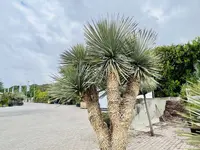
Beaked yucca (Yucca rostrata) is a slow-growing, trunk-forming desert shrub or small tree valued for its strong architectural shape. It develops a dense, rounded head of narrow, bluish-gray leaves above a sturdy woody stem.

In habitat it occurs in arid regions of northern Mexico and western Texas, where it endures intense sun, heat, and poor, rocky soils. This background makes it highly drought tolerant and generally low maintenance if drainage is excellent.

Beaked yucca prefers full sun, dry air, and lean, fast-draining soil, which simplifies long-term care for Beaked yucca in suitable climates. Its tough foliage and slow growth make it well suited to dry gardens and minimalist landscapes.

Main Plant Requirements

Care Difficulty

Easy Care

Light Preference

Full Sun

Water Requirements

Low Water

Temperature Preference

Cold Hardy

Hardiness Zone

5–10

Soil Texture

Sandy, Loamy, Rocky

Soil pH

Slightly acidic (6.5–7.0), Slightly alkaline (7.0–7.5)

Soil Drainage

Well-drained

Fertilization

Minimal (feed rarely)

Get Personalized Care Plan

Scan your plant to receive care tips personalized for your specific plant

Available on iOS and Android

How to Care for the Beaked yucca

Yucca rostrata needs strong, direct light to form a dense crown and maintain compact growth.

  • Provide full sun for 6–10 hours daily; open south- or west-facing exposures suit this desert species best.
  • It tolerates light partial shade, especially afternoon, but prolonged shade leads to lanky growth, fewer leaves, and dull color.
  • In very hot climates, young Beaked yucca benefits from light afternoon shade to reduce leaf scorch, while mature plants handle intense sun well.

This desert shrub prefers deep, infrequent watering and very fast-draining soil.

  • Water only when the top 5–8 cm of soil are completely dry; in many climates this means every 2–4 weeks in the growing season.
  • Reduce watering sharply in fall and winter, often to once every 4–8 weeks, especially in regions with natural rainfall.
  • Ensure sharply draining, gravelly soil and a raised or sloped site; yellowing, soft leaves and trunk are signs of overwatering, while crisp leaf tips suggest underwatering.

This species is highly cold-hardy yet grows best with warm, dry conditions.

  • Optimal growth occurs around 65–90°F (18–32°C), with strongest activity in warm, sunny seasons.
  • Mature plants can tolerate brief drops to about 0–10°F (-18 to -12°C) if soil is dry; younger plants are less cold-tolerant and benefit from protection.
  • It withstands dry heat up to about 100–105°F (38–41°C) if roots are established, but extended humid heat can increase rot risk, so excellent drainage is essential.

Yucca rostrata handles low household humidity well, so humidity rarely limits performance.

Yucca rostrata needs very fast-draining, mineral-heavy soil to prevent root and crown rot.

  • Use a gritty mix such as 50–70% coarse sand or small gravel blended with 30–50% cactus mix or sandy loam.
  • Aim for slightly alkaline to neutral pH around 7.0–8.0, avoiding highly acidic substrates that can increase nutrient solubility and root burn risk.
  • Increase aeration by adding pumice or perlite rather than peat, which holds excess water and compacts over time.
  • Avoid fine, clay-heavy, or organic-rich mixes that stay wet for longer than 24 hours after thorough watering.

This species is suitable for container growing when the pot is chosen to keep the tall rosette stable and roots dry.

  • Choose a wide, heavy container to counterbalance the tall, top-heavy stem and reduce tipping in wind or on balconies.
  • Select thick-walled terracotta or concrete pots in sunny positions to allow some moisture loss while keeping the root zone stable, not hot.
  • Fill the pot only two-thirds with substrate depth for younger plants so water percolates quickly and does not pool at the base of the trunk.

Yucca rostrata is adapted to poor, rocky soils and only needs light, occasional feeding in cultivation.

  • Use a low-dose, balanced slow-release fertilizer (around 10-10-10) or a thin layer of compost in spring.
  • Feed once at the start of the growing season; a second light application in midsummer is enough for Beaked yucca.
  • Dilute liquid fertilizers to 1/2–1/4 strength to avoid root burn and excessive, weak growth.
  • Stop feeding in fall and winter so the plant can remain dormant and harden growth for cold weather.

Yucca rostrata needs minimal pruning, mainly to keep the crown clean and the trunk healthy.

  • Best time is late winter to early spring before strong new growth starts.
  • Remove dead, brown, or badly damaged leaves close to the trunk using clean, sharp pruners.
  • Trim only unsightly, crowded skirts of old leaves if desired to reveal more trunk and neaten shape.
  • Avoid cutting the growing tip; removing it can disfigure the plant or slow vertical growth.

Container-grown Yucca rostrata and young landscape plants respond best to infrequent but careful repotting or transplanting.

  • Look for roots circling the pot, pushing out of drainage holes, or noticeably slowed growth as signals to move up a size.
  • Transplant or repot in late spring to early summer, about every 3–5 years for containers, using a very fast-draining gritty mix.
  • Loosen circling roots gently, trim only broken ones, and keep the root ball as intact as possible to limit stress.
  • Water lightly after planting, then allow the mix to almost dry before the next watering to encourage new root growth.

Yucca rostrata is usually propagated by seeds or offsets and requires patience and stable conditions.

  • Sow fresh seeds in spring in a gritty, well-draining mix, keeping temperatures around 70–80°F and moisture just barely even.
  • Provide bright light but no direct midday sun for seedlings, and avoid waterlogging to limit damping-off disease.
  • Remove offsets with their own roots in late spring, let cut surfaces dry for 1–2 days, then plant in a sharply draining substrate.
  • Do not overwater new plants; light, infrequent watering encourages strong root systems and reduces rot risk.

Mature Yucca rostrata is quite cold hardy but may need some winter attention in very cold or wet climates.

  • Established plants often tolerate short dips near 0°F if soil drains quickly and stays relatively dry.
  • Apply a 5–8 cm layer of gravel or coarse mulch around the root zone, keeping it away from the trunk base.
  • In prolonged wet freezes, loosely tie leaves upward or use a breathable cover to keep the crown drier.
  • Move containers to an unheated, bright shelter during severe freezes, watering sparingly to prevent root rot.

Care Tips

Wind hardening

In windy climates, avoid staking mature plants so the trunk flexes slightly, which encourages stronger tissue and better long-term storm resistance.

Crown drainage check

After heavy rain, inspect the leaf rosette and gently tip or blow out any standing water trapped in the crown to reduce the risk of fungal rot in the growing point.

Snow load management

In snowy regions, gently brush off heavy, wet snow from the leaves with a broom to prevent leaf breakage and reduce mechanical stress on the head.

Rock mulch use

Apply a 5–8 cm layer of gravel or coarse rock mulch around the base instead of organic mulch to keep the root zone dry, prevent crown splash, and mimic the plant’s native conditions for easier Yucca rostrata care.

Container stabilization

For large potted specimens, place the container in a wide, heavy outer pot or weight the base with stones to prevent toppling as the trunk elongates and the crown becomes heavier.

Common Pests and Diseases

Yucca moth larvae

This pest lives inside the crown or along the leaves, where larvae tunnel into tissues and can deform new growth. Symptoms include frass (sawdust-like droppings), small entrance holes, and distorted or collapsing leaves in the center of the rosette.

Solution

Remove and destroy affected leaves and any visible larvae, then flush the crown area with a strong stream of water to dislodge hidden insects. In outdoor plantings, reduce nighttime lighting that attracts adult moths and consider using a targeted biological insecticide containing Bacillus thuringiensis (Bt) on young foliage according to label instructions.

Scale insects

These insects attach to leaves and stems as small, hard or waxy bumps, sucking plant sap and causing yellowing, speckling, and a general loss of vigor. Sticky honeydew and sooty mold may appear on or beneath the plant.

Solution

Physically remove scales by gently rubbing with a cloth or soft brush dipped in soapy water or 70% isopropyl alcohol, working along the stiff leaves. For larger infestations, apply a horticultural oil spray labeled for yucca, covering leaf undersides and crevices, and repeat as needed while improving light and airflow to support plant recovery.

Mealybugs

These insects form white, cottony clusters in leaf bases and along the trunk, feeding on sap and weakening the plant over time. Symptoms include sticky honeydew, slow growth, and distortion of new leaves near the crown.

Solution

Inspect the leaf bases and trunk closely, then spot-treat visible clusters with cotton swabs dipped in 70% isopropyl alcohol, taking care not to soak the crown. For persistent cases, use an insecticidal soap or horticultural oil, applied thoroughly into leaf axils and repeated every 7–10 days until no new mealybugs appear.

Leaf spot

This disease causes small tan, brown, or dark spots on the stiff leaves, often with a yellow halo and sometimes a dry, papery center. Symptoms include a gradual increase in the number of spots, especially in prolonged humid or rainy periods.

Solution

Prune and discard affected leaves to reduce inoculum, cutting them cleanly at the base without damaging the trunk. Improve air circulation, keep water off the foliage, and in persistent or severe outdoor cases use a copper-based fungicide labeled for ornamental plants, following directions and treating during dry weather.

Crown rot

This disease starts in the central growing point when excess moisture remains around the crown, leading to soft, discolored tissue, foul odor, and eventual collapse of the rosette. Symptoms include wilting or yellowing of new leaves that pull away easily from the center.

Solution

At the first signs, withhold water and improve drainage by removing any mulch or soil piled against the stem and allowing the top of the root zone to dry fully. In mild cases, carefully cut out soft tissue back to firm, healthy material and dust the area with a dry fungicidal powder; in severe cases the plant is often lost, so future plantings should use very sharp drainage and avoid overhead watering to support Yucca rostrata plant care.

Interesting Facts

Native Chihuahuan specialist

This species is naturally restricted to the Chihuahuan Desert of northern Mexico and western Texas, where it grows on rocky limestone slopes and ridges, tolerating intense sun, high winds, and very low rainfall.

Structural blue foliage

Its narrow, stiff leaves are coated with a waxy cuticle that scatters light and gives the crown a blue to blue-gray color, an adaptation that reduces water loss and heat load in arid habitats.

Slow trunk formation

The plant can take many years to begin forming a visible trunk, investing first in a dense leaf crown and deep root system before gradually developing the tall, solitary stem typical of mature specimens.

Botan icon

Did you know?

In its native range, old individuals can form tall, solitary trunks crowned with a nearly spherical mass of hundreds of leaves, creating a distinctive silhouette that makes the species one of the most visually recognizable arid-land trees in the Chihuahuan Desert landscape.

FAQs about Beaked yucca

Yellowing usually comes from overwatering, poor drainage, or prolonged shade. Check that the root zone dries well between waterings, the pot or site drains freely, and the plant receives strong light. Old lower leaves yellow naturally over time.

Grow Healthy Plants with Botan Care

Keep your plants happy and healthy with plant identification, disease detection, and easy care guidance.

Botan plant care app — identify plants on mobile

Explore More Plants