Staking tall stems
Install slender stakes or a low wire grid before the flower stalks fully elongate so you can loosely tie them for support and prevent wind snap in exposed beds.

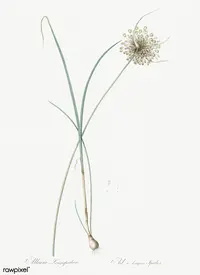
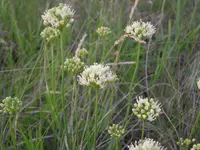
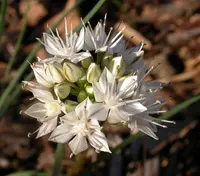
Mediterranean onion (Allium longispathum) is a bulb-forming perennial ornamental from the onion genus, valued for its tall, elegant flower stalks and narrow, grass-like leaves. It typically produces loose clusters of starry, white to pale cream flowers that rise well above the foliage, giving a light, airy look in mixed borders or gravel gardens.
This species is native to Mediterranean regions, where it grows in sunny, open, and often rocky habitats with well-drained soils. It suits gardeners who prefer low-maintenance bulbs and want to learn how to care for Mediterranean onion in a simple, reliable way.
The plant generally prefers full sun, moderately dry conditions, and soil that does not stay wet for long periods, which helps the bulbs remain healthy over time.

Care Difficulty
Easy Care

Light Preference
Full Sun

Water Requirements
Moderate Water

Temperature Preference
Cold Hardy

Hardiness Zone
5–8

Soil Texture
Sandy, Loamy, Rocky

Soil pH
Slightly acidic (6.5–7.0), Slightly alkaline (7.0–7.5)

Soil Drainage
Well-drained

Fertilization
Minimal (feed rarely)
Scan your plant to receive care tips personalized for your specific plant
Available on iOS and Android
This bulb thrives in open, bright locations with several hours of direct sun each day.
This species prefers dry to moderately moist conditions and is sensitive to prolonged wetness.
This ornamental allium is adapted to temperate climates with cool winters and mild to warm summers.
Humidity is rarely critical for Allium longispathum, which thrives in dry, open-air conditions.
Allium longispathum performs best in lean, sharply drained mineral soils that never stay waterlogged.
This species can be grown in containers if the pot is set up to drain quickly and stay relatively dry.
Allium longispathum needs modest feeding, with more focus on soil quality than frequent fertilizer applications.
Pruning needs for Allium longispathum are simple and focus on cleanliness rather than shaping.
This species is usually grown in the ground, so transplanting clumps is more common than container repotting.
Allium longispathum is commonly propagated by bulb division and, less often, from seed for larger batches of plants.
This bulb is generally cold hardy in temperate climates and needs minimal winter care when planted in well-drained soil.

Plant Health Check
Not sure what's wrong with your plant? Check your plant's health inside the app.
This species is naturally distributed in parts of the Balkans, including Albania, North Macedonia, and surrounding regions, where it grows on rocky slopes and open, sun-exposed sites with well-drained soils.
The species name longispathum refers to its unusually long spathe, the papery bract that encloses the developing flower cluster, which is more elongated than in many related ornamental onions.
It typically flowers in late spring to early summer, producing loose umbels of white to creamy-white star-shaped flowers that are attractive to bees and other pollinating insects.
Lack of flowers usually comes from insufficient sun, overcrowded bulbs, or planting too shallow or deep. Allow foliage to mature naturally after flowering, avoid excessive summer watering, and divide congested clumps every few years to restore bloom strength.
Keep your plants happy and healthy with plant identification, disease detection, and easy care guidance.