


Encourage Dense Mounding
Lightly shear back spent flower stems by 3–5 cm immediately after flowering to keep the plant compact and encourage a thicker, more floriferous mat the following season.

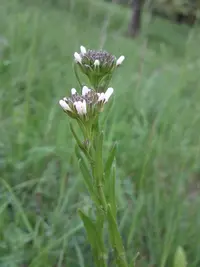
Arabis sagittata is a small, clump-forming perennial in the cabbage family, valued mainly as a rock garden and groundcover plant. It forms low mats of gray-green foliage topped with clusters of delicate white flowers in spring. Leaves are narrow and often slightly hairy, giving the plant a dry-tolerant, rugged look.
This species occurs naturally in rocky, often limestone-rich habitats in parts of Europe, where it grows in thin, well-drained soils. It generally prefers full sun, moderate moisture, and gritty soil that does not stay wet. These traits make it relatively easy to grow for gardeners who care for Arabis sagittata in sunny, well-drained spots.

Care Difficulty
Easy Care

Light Preference
Full Sun

Water Requirements
Low Water

Temperature Preference
Cold Hardy

Hardiness Zone
4–8

Soil Texture
Sandy, Loamy, Rocky

Soil pH
Slightly acidic (6.5–7.0), Slightly alkaline (7.0–7.5)

Soil Drainage
Well-drained

Fertilization
Minimal (feed rarely)
Scan your plant to receive care tips personalized for your specific plant
Available on iOS and Android
This alpine perennial thrives in bright, cool conditions with plenty of direct light.
This rock garden species prefers slightly dry, sharply drained soil and is sensitive to excess moisture.
This hardy perennial tolerates a wide temperature range but performs best in cool to mild conditions.
This alpine species tolerates typical outdoor humidity and usually does not need special humidity management.
Arabis sagittata prefers lean, sharply drained, mineral soils that mimic rocky slopes.
This species can be grown in containers if drainage is carefully managed.
This alpine perennial stays compact and flowers well with only light feeding, as Arabis sagittata is adapted to lean soils.
Pruning keeps Arabis sagittata dense, tidy, and flowering well.
This rock-garden perennial is usually grown in the ground and dislikes frequent disturbance.
Gardeners often renew Arabis sagittata by division or seeds to maintain vigorous mats.
This species is generally cold hardy in temperate climates and needs minimal winter attention once established.

Plant Health Check
Not sure what's wrong with your plant? Check your plant's health inside the app.
This species is naturally restricted to dry, often south-facing limestone and dolomite slopes in parts of central and southeastern Europe, where it is adapted to shallow, low-nutrient soils and strong sun exposure.
The specific epithet sagittata refers to the arrow-shaped basal leaves, which show a characteristic sagittate (arrowhead-like) form that helps distinguish it from related rockcress species in the field.
In its native range, it flowers relatively early in spring, providing nectar and pollen for emerging pollinating insects at a time when few other rock-dwelling herbs are in full bloom.
This species is a perennial, returning for multiple years from the same root system. Individual rosettes may be short‑lived, but the clump persists and slowly enlarges if conditions remain suitable and the crown is not waterlogged or buried.
Keep your plants happy and healthy with plant identification, disease detection, and easy care guidance.

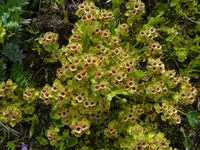
northern golden saxifrage
Chrysosplenium tetrandrum
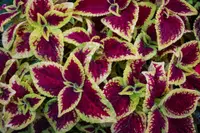
Painted Nettle
Coleus scutellarioides
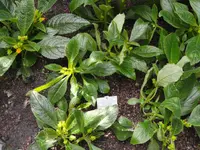
Chrysothemis friedrichsthaliana
Chrysothemis friedrichsthaliana
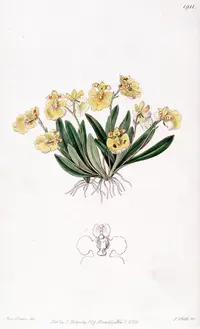
Erycina crista-galli
Erycina crista-galli
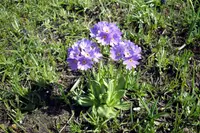
Bird's Eye Primrose
Primula algida
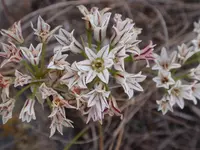
pitted onion
Allium lacunosum
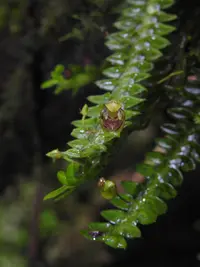
Dichaea neglecta
Dichaea neglecta
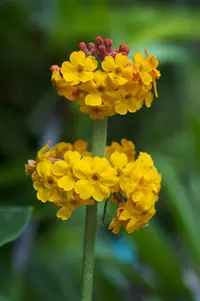
Bulley's Primrose
Primula bulleyana