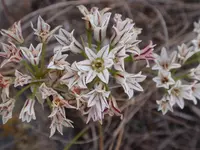
northern golden saxifrage Care (Chrysosplenium tetrandrum)

Also known as: northern golden-carpet, Golden saxifrage
northern golden saxifrage

About northern golden saxifrage

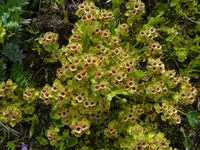
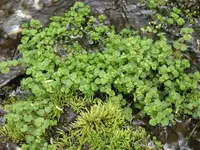
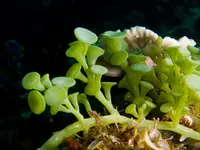
Northern golden saxifrage (Chrysosplenium tetrandrum) is a small, creeping perennial that forms low, bright green mats along cool streams and wet tundra ground. Its rounded leaves and tiny yellowish flower clusters create a soft, moss-like look rather than a showy display.

This species is native to northern regions, including Arctic and subarctic areas, where it thrives in consistently moist, shaded or semi-shaded habitats. In cultivation it prefers cool conditions, damp but not stagnant soil, and protection from strong sun.

Because it needs steady moisture and dislikes drying out, it can be more challenging in warm or dry climates. Gardeners who learn how to care for northern golden saxifrage usually succeed by mimicking its naturally cool, wet environment.


Main Plant Requirements

Care Difficulty

Moderate Care

Light Preference

Partial Shade

Water Requirements

Keep Soil Moist

Temperature Preference

Cold Hardy

Hardiness Zone

2–7

Soil Texture

Loamy, Silty, Organic-rich

Soil pH

Acidic (5.5–6.5), Slightly acidic (6.5–7.0)

Soil Drainage

Waterlogged tolerant

Fertilization

Minimal (feed rarely)

Get Personalized Care Plan

Scan your plant to receive care tips personalized for your specific plant

Available on iOS and Android

How to Care for the northern golden saxifrage

This shade-loving wetland perennial thrives in cool, low-light conditions that mimic streambanks and seepage areas.

  • Provide bright shade to full shade, such as dappled light under shrubs or trees, with no more than 1–2 hours of weak morning sun per day.
  • Avoid direct midday or afternoon sun, which can scorch leaves and dry the shallow root zone, especially during summer.
  • In open sites, use taller plants, rocks, or shade cloth to filter light; northern golden saxifrage stays denser and greener in consistently shaded positions.

This plant prefers constantly moist to wet soil, similar to its natural habitat along cold streams and seeps.

  • Keep the root zone consistently damp; soil should feel wet to the touch and never dry beyond the top 0.5–1 cm.
  • In cooler seasons, rely on natural rainfall when possible; supplement only if the surface begins to lose its sheen or foliage softens.
  • Avoid stagnant, anaerobic conditions by using humus-rich, slow-draining but not waterlogged soil; yellowing, mushy stems suggest excess water, while limp, dull leaves indicate drying.

This cold-adapted species grows best in cool climates and tolerates significant winter chill.

  • Optimal growth occurs around 45–60°F (7–16°C), especially in spring and early summer when soil stays cool and moist.
  • Plants tolerate at least 5°F (-15°C) under snow or mulch; foliage may die back, but crowns usually survive and resprout in spring.
  • Extended heat above 75°F (24°C), especially with warm nights, can stress plants; provide shade, thick organic mulch, and ample moisture during hot spells to moderate temperature swings.

This species favors cool, moist air, and humidity matters mainly when grown indoors or in dry climates.

  • Aim for 60–80% humidity, mimicking its streamside habitat, especially for northern golden saxifrage in containers or terrariums.
  • It tolerates brief dips to 40–50% but prolonged dry indoor air leads to leaf edge browning and slow growth.
  • Increase humidity with a wide pebble tray under the pot, grouped plantings, or a small humidifier rather than misting leaves.

This plant prefers consistently wet, organic, and aerated soil that never dries out.

  • Use a fine-textured, humus-rich mix such as 2 parts peat or coco coir, 1 part compost, and 1 part fine sand for structure.
  • Soil should stay saturated yet lightly aerated, similar to bog or stream-bank conditions, avoiding heavy, compacted substrates.
  • Aim for slightly acidic to neutral pH around 5.5–7.0, which supports nutrient availability and healthy root function in Chrysosplenium tetrandrum.
  • Improve drainage-aeration balance by mixing in fine sand or small grit, avoiding chunky bark or coarse perlite that dry out too fast.

This species can grow in containers if moisture is kept constant and the root zone stays cool.

  • Choose a wide, shallow pot to support its creeping habit and allow an even, permanently moist surface layer.
  • Use a thick-walled ceramic or plastic container rather than thin terracotta to slow evaporation and prevent rapid drying.
  • Stand the pot in a shallow outer tray of water to maintain saturation, but keep the pot base slightly raised to avoid stagnant anaerobic conditions.

Chrysosplenium tetrandrum is adapted to low-nutrient, moist habitats and needs only very light feeding in cultivation.

  • Use a mild, balanced liquid fertilizer (around 10-10-10) at 1/4 strength for northern golden saxifrage in spring and early summer.
  • Apply no more than every 4–6 weeks during active growth if soil is low in organic matter.
  • Rely mainly on thin layers of fine compost rather than heavy synthetic feeding.
  • Stop fertilizing in late summer so new growth can harden before winter.

Chrysosplenium tetrandrum needs only minimal pruning to keep groundcover patches healthy and tidy.

  • Best timing is after flowering in late spring or early summer, once new growth is visible.
  • Pinch or clip off dead, yellowing, or damaged foliage at the base to limit disease.
  • Thin small crowded clumps by hand to maintain airflow and an even, low mat of growth.
  • Use clean, sharp scissors or snips for larger patches to avoid tearing soft stems.

This species is usually grown as a groundcover in moist beds, so focus on gentle transplanting rather than frequent repotting.

  • Transplant in early spring or early autumn when temperatures are cool and soil stays evenly moist.
  • Lift and divide clumps every 3–4 years if centers thin out or growth becomes crowded.
  • Move plants with a wide soil plug to keep the shallow root system intact and reduce stress.
  • Water thoroughly before and after transplanting, then shade lightly for a few days to limit wilting.

Chrysosplenium tetrandrum is commonly propagated by division and sometimes from seed in cool, moist conditions.

  • Divide mature clumps in early spring or early autumn, keeping several shoots and roots in each piece.
  • Replant divisions immediately into consistently moist, humus-rich soil and water well.
  • For seed, sow fresh on the surface of a cool, shaded seed tray and do not allow drying.
  • Maintain high humidity and gentle air movement to prevent damping-off in young seedlings.

This cold-hardy groundcover usually needs little special winter care in most temperate climates.

  • Tolerates freezing temperatures and snow once established, especially in consistently moist sites.
  • Apply a thin mulch layer of leaf mold or fine compost in late autumn to buffer soil temperature.
  • Container-grown plants in very cold regions can be sunk into the ground or moved to a cold, frost-free shelter.

Care Tips

Streambank Microhabitats

When planting along an artificial stream or water feature, tuck plants into shallow crevices between stones where water can slowly seep past, which mimics natural seeps and reduces the risk of crowns sitting in stagnant water.

Summer Shading Layers

In warmer regions, interplant under light, deciduous shrubs or taller perennials so the foliage receives dappled shade in summer while still getting brighter light in early spring before the overstory fully leafs out.

Moisture-Wicking Mulch

Top-dress with a thin layer (0.5–1 cm) of fine, washed gravel or grit over the soil surface to keep the crown clean, limit algae and moss crusting, and still allow even moisture around the shallow roots.

Cool Microclimate Placement

Site plants on the north or east side of rocks, logs, or low walls so the root zone stays cooler and slightly wetter, which is especially helpful when caring for northern golden saxifrage in warmer climates.

GentlePatch Expansion

To thicken a sparse colony, lift and divide small edge sections in early spring while the soil is cool and moist, then replant divisions only a few cm apart to create a continuous, dense mat over 1–2 seasons.

Common Pests and Diseases

Leaf spot fungi

This disease causes small, water-soaked or brown lesions on the thin leaves, which can coalesce in persistently wet conditions typical of this streamside species. Symptoms include yellowing around spots and premature leaf collapse in dense clumps.

Solution

Remove and dispose of affected leaves, then thin crowded patches to improve airflow and reduce leaf wetness duration. Avoid overhead watering in cultivated settings, keep foliage drier by watering at soil level, and, only if disease is spreading, use a low-impact fungicide labeled for ornamental groundcovers according to label directions.

Rust

This disease produces orange to brown pustules on the undersides of leaves and sometimes on stems, leading to speckled yellowing and reduced vigor, especially in cool, moist sites. Symptoms include powdery spore masses that rub off on fingers or nearby foliage.

Solution

Cut and discard heavily infected leaves to reduce the spore load, and avoid splashing water between plants. Improve air circulation along the planting and, if the problem persists, apply a rust-specific fungicide appropriate for woodland perennials, following all label precautions for timing and frequency.

Slugs and snails

These pests feed on the succulent foliage, leaving irregular holes and shredded edges, particularly in shaded, damp habitats where this plant naturally grows. Symptoms include slime trails on soil and leaves, and damage appearing mainly overnight.

Solution

Hand-pick slugs and snails in the evening or early morning and remove hiding places such as boards or dense debris. Use iron phosphate slug bait around, but not directly on, the clumps, and maintain moderate groundcover density so the soil surface can dry slightly between waterings without stressing the plants.

Aphids

These insects cluster on tender stems and new growth, sucking sap and causing slight curling or distortion of the delicate leaves. Symptoms include sticky honeydew on foliage and nearby surfaces, sometimes followed by sooty mold growth on the exudate.

Solution

Rinse colonies off with a firm stream of water, taking care not to damage the soft foliage, and repeat as needed. For persistent infestations, apply insecticidal soap or a light horticultural oil labeled for herbaceous ornamentals, targeting the undersides of leaves and young shoots while avoiding applications during full sun or high heat.

Interesting Facts

Arctic stream specialist

This species naturally grows along cold Arctic and subarctic streams, seeps, and melting snow edges, where water stays near freezing for much of the growing season.

Four-stamen outlier

Unlike most members of its family that typically have 8 stamens, this species is characterized by having only 4 stamens, which is reflected in its species name tetrandrum, meaning four-stamened.

Pale green flower bracts

Its tiny flowers are surrounded by conspicuous pale green to yellowish bracts that function like petal substitutes, helping attract pollinators in low-light, mossy habitats.

Botan icon

Did you know?

This plant often forms dense, low carpets that stabilize fine, wet soils along tundra watercourses, where few other flowering plants can tolerate the combination of saturated substrates, low temperatures, and short growing seasons.

FAQs about northern golden saxifrage

This species spreads slowly to moderately by short creeping stems and self-seeding, forming low mats in consistently moist ground. It is not usually considered aggressive but can gradually fill small damp shade beds over time.

Grow Healthy Plants with Botan Care

Keep your plants happy and healthy with plant identification, disease detection, and easy care guidance.

Botan plant care app — identify plants on mobile

Explore More Plants