Musk Thistle Care (Carduus nutans)

Also known as: nodding thistle, nodding plumeless thistle
Musk Thistle

About Musk Thistle

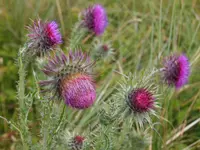
Musk thistle, Carduus nutans, is a biennial thistle known for its large, nodding purple flower heads and prominent spines. It forms a basal rosette in the first year, then sends up tall, branching flowering stems.

This species is native to parts of Europe and Asia but has become naturalized and often invasive in many temperate regions, including North America. It thrives in disturbed sites, pastures, and roadsides.

The plant is tough, drought-tolerant, and adaptable to poor, well-drained soils, but its strong spines and spreading habit make it challenging to manage. Anyone wishing to care for Musk Thistle should understand its vigorous growth and potential to self-seed heavily.

Main Plant Requirements

Care Difficulty

Easy Care

Light Preference

Full Sun

Water Requirements

Low Water

Temperature Preference

Cold Hardy

Hardiness Zone

3–8

Soil Texture

Sandy, Loamy, Clay

Soil pH

Slightly acidic (6.5–7.0), Slightly alkaline (7.0–7.5)

Soil Drainage

Well-drained

Fertilization

Minimal (feed rarely)

Get Personalized Care Plan

Scan your plant to receive care tips personalized for your specific plant

Available on iOS and Android

How to Care for the Musk Thistle

Carduus nutans thrives in open, bright conditions typical of sunny meadows and roadsides.

  • Provide full sun for 6–10 hours per day; it tolerates light afternoon shade but flowers best in unshaded sites.
  • Choose exposures with strong morning and midday sun; light filtered shade is acceptable only in hotter regions to reduce leaf scorch.
  • In areas with intense summer sun, monitor for leaf bleaching or crisping, while in too much shade plants become tall, weak, and produce fewer flower heads, affecting Musk Thistle vigor.

This thistle is drought-tolerant once established and prefers on the dry side rather than consistently moist soil.

  • Allow the top 3–5 cm of soil to dry before watering young or newly planted Carduus nutans; mature plants in the ground often only need rainfall.
  • Use well-drained, gritty or sandy soil; standing water or compacted clay greatly increases the risk of root rot and weak, floppy growth.
  • Watch for wilting and dull, drooping leaves as a sign of underwatering, while yellowing lower leaves and a sour soil smell usually indicate overwatering.

This species is adapted to temperate climates with cool winters and warm, dry summers.

  • Active growth occurs best around 60–80°F (16–27°C), with seed germination often strongest in the cooler part of this range.
  • Plants tolerate winter cold down to about 5–15°F (-15 to -9°C) once established, surviving as rosettes in many regions.
  • Heat tolerance extends to about 90–95°F (32–35°C) if soil is not waterlogged, but extended extreme heat or hard frost can reduce vigor and seed production.

Carduus nutans tolerates a wide humidity range and rarely needs special humidity management in typical outdoor conditions.

Carduus nutans grows best in mineral, well-drained soils that do not stay wet after rain or irrigation.

  • Use lean, sandy or gravelly loam with low to moderate organic matter to prevent excessive vigor and lodging.
  • Ensure fast drainage by incorporating coarse sand or fine grit so water clears the top layer within a few minutes.
  • Aim for slightly acidic to neutral pH around 6.0–7.5, avoiding strongly acidic or waterlogged sites.
  • On heavy clay sites, raise the planting area and mix in sharp sand or small gravel to improve aeration and rooting depth.

This species can be grown in containers, though it is usually better suited to open ground due to its size and spines.

  • Choose a wide, heavy container to keep the tall, top-heavy stems from tipping in wind or after rainfall.
  • Use a deep pot that allows a strong taproot to develop without circling tightly at the base.
  • Select rigid materials like thick plastic or clay that resist puncture from spiny stems and provide stable support.

Carduus nutans usually thrives on poor soils and often needs no fertilizer in the ground.

Pruning Carduus nutans is mainly done to control spread and limit reseeding.

  • Cut back flower heads just after blooming using clean hand pruners or a scythe to reduce seed production.
  • Remove dead, broken, or collapsing stems to tidy the plant and reduce disease habitat.
  • Severely cut plants to ground level before seeds mature to prevent spread while not aiming to improve ornamental shape.

Carduus nutans is seldom container grown, so care focuses on field transplanting of young plants.

  • Transplant in early spring or early fall when temperatures are mild and soil is workable.
  • Move only small, first-year rosettes, as older plants have deeper taproots that resent disturbance.
  • Dig deeply to lift the taproot with minimal damage, then replant at the same depth in well-drained soil.
  • Water thoroughly after transplanting and keep soil lightly moist for 1–2 weeks to limit transplant shock.

Carduus nutans is most often propagated by seed rather than vegetative methods.

  • Collect mature seed heads in late summer before they shatter and disperse.
  • Sow seeds in fall outdoors or in late winter under cool conditions, as light chilling improves germination.
  • Scatter seeds on the soil surface or barely cover, keeping the substrate evenly moist but not waterlogged.
  • Space seedlings widely, since each Musk Thistle forms a large rosette and tall flowering stems.

Carduus nutans is a hardy biennial and generally needs no special winter care in the ground.

Care Tips

Use Protective Sleeves

When working near plants at flowering height, wear thick gloves and use a folded piece of cardboard or a split plastic pipe as a sleeve to safely bend or cut stems without being injured by the spines.

Time Deadheading Precisely

Remove flower heads just as the first florets open, bagging and disposing of them in the trash, to prevent viable seed set while still allowing the plant to direct some resources back into root reserves.

Control With Rosette Cutting

In late fall or very early spring, slice through the crown of rosettes at soil level using a sharp spade or long-handled knife, ensuring the growing point is removed so the plant cannot bolt and flower.

Encourage Biocontrol Insects

If local regulations treat this as a noxious weed, coordinate with extension services or land managers before using insect-based controls, since some seed-feeding or stem-mining insects are managed deliberately for Carduus nutans care in pasture systems.

Create Buffer Strips

Maintain a regularly mowed or closely grazed buffer strip 1–2 m wide around infested patches so new seedlings are visible and easy to remove before they mature, which simplifies caring for Musk Thistle in larger areas.

Everything About Musk Thistle

Common Pests and Diseases

Musk thistle rosette weevil

This insect targets the basal rosettes of young plants, with larvae feeding inside the crown tissue and causing distortion or collapse of the rosette. Symptoms include stunted growth, yellowing, and a weak central growing point that may die out before bolting.

Solution

Hand-remove and destroy heavily damaged rosettes before they bolt, and mow or cut infested patches to reduce seed production. In rangeland or larger sites, integrated management that combines timely grazing or mowing with permitted biological control releases is the standard Carduus nutans care approach, but in small plantings, early removal of weakened plants is usually sufficient.

Thistle head weevil

This pest lays eggs in developing flower heads, and larvae feed within the seed head, destroying seeds and sometimes causing deformed or browning flower heads. Symptoms include heads that fail to open normally and contain frass and tunneling when cut open.

Solution

Prune and bag affected seed heads before larvae exit, then dispose of them in the trash to prevent spread. For larger stands, coordinated biological control releases are often used; on individual or ornamental plants, regular inspection of forming flower heads and early removal limits damage and self-seeding.

Cirsium aphids

These insects cluster on stems, leaf undersides, and flower buds, sucking sap and causing curling, yellowing, and sticky honeydew that can attract sooty mold. Symptoms include distorted young growth and presence of ants tending the aphids.

Solution

Dislodge colonies with a firm stream of water and pinch off heavily infested soft tips if practical. Encourage natural predators such as lady beetles, avoid excessive nitrogen fertilization that promotes soft growth, and, if needed, use an insecticidal soap spray directed to the undersides of leaves and buds.

Powdery mildew

This disease shows as white, powdery patches on leaves and sometimes stems, usually in warm days with cool, humid nights. Symptoms include reduced vigor, chlorotic spots under the white growth, and premature leaf aging.

Solution

Improve air circulation by thinning dense stands and avoiding overhead watering in the evening. Remove and dispose of badly affected leaves, and if needed treat remaining foliage with a sulfur or potassium bicarbonate fungicide labeled for ornamental or noncrop thistle, applying at the first sign of infection.

Leaf spot complex

This disease group, usually caused by various fungal pathogens, produces brown to dark spots with defined edges on leaves, sometimes with a yellow halo. Symptoms include coalescing lesions that create larger dead patches and premature leaf drop on lower leaves.

Solution

Remove and destroy heavily spotted leaves and plant debris to reduce spore sources, and avoid wetting foliage when watering. In repeatedly affected areas, increase spacing for better airflow and consider a preventive broad-spectrum fungicide labeled for ornamental thistles at the start of humid periods if the plant is being deliberately maintained rather than controlled.

Interesting Facts

Aggressive pasture invader

This species forms dense, spiny stands that can almost completely exclude grazing animals from infested areas, which is why it is listed as a noxious weed in many US states and other temperate regions.

High seed production

A single musk thistle plant can produce thousands of viable seeds, many of which are carried long distances by wind thanks to their feathery pappus, allowing rapid spread across open landscapes.

Specialist insect control

Several insects, such as the seed‑feeding weevil Rhinocyllus conicus, have been deliberately introduced in some regions as biological control agents to reduce its seed output, although these introductions have also affected some native thistles.

Botan icon

Did you know?

Musk thistle is a biennial that typically forms only a low rosette of leaves in its first year and then bolts, flowers, and dies in its second year, investing heavily in a tall flowering stem that can exceed 1.5 m and support large, nodding flower heads that give the species its common name.

FAQs about Musk Thistle

This species spreads readily by seed, especially in disturbed, overgrazed, or unmanaged areas. Each flower head can produce many viable seeds that disperse by wind. Regular deadheading and preventing seed set are essential for limiting spread.

Grow Healthy Plants with Botan Care

Keep your plants happy and healthy with plant identification, disease detection, and easy care guidance.

Botan plant care app — identify plants on mobile

Explore More Plants