wingstem Care (Verbesina alternifolia)

Also known as: Yellow Ironweed
wingstem

About wingstem

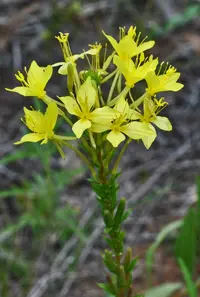
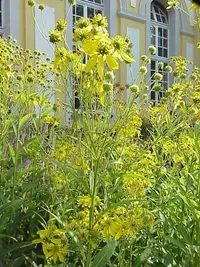
Wingstem, Verbesina alternifolia, is a tall herbaceous perennial in the aster family, valued for its late-season yellow flowers. It often forms naturalistic clumps with sturdy, sometimes leaning stems and narrow, alternate leaves.

In the wild it occurs in moist meadows, stream banks, and open woodland edges across eastern and central North America. It spreads readily by seed and can form large colonies, which makes it vigorous but sometimes too aggressive for small beds.

This species thrives in full sun to light shade with consistently moist, reasonably fertile soil. Gardeners who learn how to care for wingstem usually find it a reliable pollinator-friendly plant for informal landscapes.

Main Plant Requirements

Care Difficulty

Easy Care

Light Preference

Full Sun

Water Requirements

Regular Water

Temperature Preference

Cold Hardy

Hardiness Zone

4–9

Soil Texture

Loamy, Clay, Organic-rich

Soil pH

Acidic (5.5–6.5), Slightly acidic (6.5–7.0)

Soil Drainage

Moist but well-drained

Fertilization

Minimal (feed rarely)

Get Personalized Care Plan

Scan your plant to receive care tips personalized for your specific plant

Available on iOS and Android

How to Care for the wingstem

This tall native perennial thrives in full sun but tolerates some light shade in hot regions.

  • Aim for 6–8 hours of direct sun daily, with morning sun and light afternoon shade ideal in hotter climates to reduce leaf scorch.
  • The plant tolerates bright partial shade, but stems may grow taller and lean if it gets under 4–5 hours of direct sun.
  • In cooler seasons or northern areas, place wingstem in the sunniest exposed spot to support strong flowering and sturdy growth.

This species prefers consistently moist, not soggy, soil, especially during active growth.

  • Water when the top 3–5 cm of soil feels slightly dry, ensuring moisture penetrates at least 15–20 cm into the root zone.
  • Use soil with good drainage near the surface but some clay or organic matter deeper down to hold moisture without creating standing water.
  • Reduce supplemental watering in fall and stop once winter dormancy sets in; drooping leaves signal drought stress, while yellowing, soft stems suggest overwatering in Verbesina alternifolia.

This hardy perennial is adapted to temperate outdoor conditions with cold winters and warm summers.

  • Best growth occurs around 65–80°F (18–27°C), supporting strong stems and flowering through late spring and summer.
  • Mature plants tolerate winter lows near -20°F (-29°C) when established in the ground, dying back to roots and resprouting in spring.
  • The plant handles summer heat up to about 90–95°F (32–35°C) if soil moisture stays consistent, but prolonged extreme heat with drought can stunt growth and reduce blooms.

Humidity is not a major concern for Verbesina alternifolia, which thrives in typical outdoor air conditions.

Verbesina alternifolia prefers moderately fertile, moisture-retentive but not waterlogged soil for reliable growth.

  • Use a loamy soil with high organic matter, such as native soil improved with 25–40% compost.
  • Ensure slow to moderate drainage; the soil should stay evenly moist but not remain saturated after rain.
  • Aim for slightly acidic to neutral pH, around 6.0–7.0, which suits most garden loams.
  • Improve drainage and aeration in heavier clay by incorporating coarse sand or fine gravel along with compost into the planting area.

This tall, deep-rooted species is marginally suitable for large outdoor containers only when space or soil conditions are limiting.

  • Choose a very heavy, wide container to prevent tipping as the tall stems and flower heads catch wind.
  • Provide a soil mix richer in compost than typical potting soil to buffer rapid drying in exposed containers.
  • Position the container where wind exposure is reduced or brace it against a wall or railing to keep the tall plant stable.

This native perennial usually needs minimal feeding in average garden soil, so focus on modest support rather than heavy fertilization when caring for wingstem.

  • If growth is weak or soil is poor, apply a light layer of compost around plants in early spring.
  • Use a balanced slow-release fertilizer (for example 10-10-10) at half label rate once in spring during active growth.
  • Avoid midsummer and late-fall feeding to prevent soft growth that may lodge or suffer winter damage.
  • Always water well after applying fertilizer to reduce root burn and help nutrients move into the soil.

Pruning Verbesina alternifolia is mainly used to control height, maintain structure, and remove damaged stems.

  • Cut back dead, broken, or diseased stems at ground level in late winter or very early spring using clean hand pruners.
  • In late spring, pinch or lightly trim taller shoots to reduce flopping and encourage a fuller, bushier form.
  • Deadhead spent flower clusters in mid to late summer if fewer self-sown seedlings are desired.
  • Leave some sturdy stems standing over winter to provide wildlife habitat, then remove them before new shoots emerge.

This species is typically grown in the ground, so management focuses on transplanting young plants rather than frequent repotting.

  • Transplant in early spring or early fall so roots can establish in cool, moist conditions before heat or hard frost.
  • Move plants when they look crowded, show slower growth, or form dense clumps shading each other.
  • Dig a wide hole, keep as much root ball intact as possible, and replant at the same depth in well-drained soil.
  • Water deeply after transplanting and keep soil evenly moist for 1–2 weeks to limit transplant shock.

Verbesina alternifolia is most often propagated by seed, with division used where clumps are established and vigorous.

  • Collect ripe seeds in late summer to early fall, then sow outdoors in fall or early spring for natural cold stratification.
  • For indoor sowing, chill moist seed in the fridge for 4–6 weeks, then germinate in bright light at 65–70°F.
  • Divide mature clumps in early spring, keeping several shoots and healthy roots per division, and replant immediately in prepared soil.
  • Keep new seedlings and divisions evenly moist but not waterlogged until strong root systems develop.

This hardy perennial tolerates typical winters in most temperate regions and usually needs little special winter care.

  • In zones with severe freezes, apply a 5–8 cm layer of mulch around the root zone after the ground cools to stabilize soil temperature.
  • Allow top growth to die back naturally; standing stems can catch snow and protect crowns from temperature swings.
  • In containers, move pots to a sheltered, unheated spot where roots stay cold but do not repeatedly freeze-thaw.

Care Tips

Sturdy staking system

Install tall, rigid stakes or a wire grid early in the season and loosely tie stems in several places to prevent lodging and breakage in wind or heavy rain.

Progressive clump thinning

Every 2–3 years, remove the weakest 20–30% of stems at ground level in late spring to improve air flow, reduce foliar diseases, and keep the stand more manageable in height and width.

Deadhead for control

Shear or cut back most spent flower heads before seed set if you want to limit self-sowing, leaving only a few for wildlife and natural regeneration.

Edge barrier management

Install a 15–20 cm deep edging (metal, plastic, or deep-dug spade edge) around beds to keep rhizomes and seedlings from spreading into turf or neighboring plantings when growing wingstem in mixed borders.

Targeted wildlife planning

Place plants in the back of beds or in dedicated meadow strips so tall stems provide pollinator and bird habitat without shading out shorter ornamentals or flopping onto walkways.

Common Pests and Diseases

Aster yellows

This disease causes yellowing, distorted growth, and sometimes broom-like clusters of weak shoots on stems and flower stalks. Symptoms include stunted plants, green or deformed flower heads, and failure to set normal seed.

Solution

Remove and destroy symptomatic plants promptly to reduce sources of infection, since the disease is systemic and does not cure. Reduce populations of leafhoppers, which spread the pathogen, by mowing nearby weedy growth, encouraging natural predators, and avoiding overhead irrigation that favors their movement; in highly affected areas, avoid moving suspected infected plant material when growing wingstem in new sites.

Leaf spot

This disease produces small brown to dark spots on leaves that may merge into larger irregular blotches, sometimes with yellow halos. Symptoms include premature leaf yellowing and drop on lower foliage in humid or crowded plantings.

Solution

Remove and discard heavily spotted leaves to reduce the amount of infectious material and improve airflow by thinning dense patches. Water at soil level instead of overhead, and if needed apply a labeled copper or chlorothalonil fungicide during prolonged wet weather, following all product directions carefully.

Powdery mildew

This disease appears as white to gray powdery coating on upper leaf surfaces and sometimes on stems, often late in the season. Symptoms include dull, distorted foliage and reduced vigor, especially in shade or sites with poor air circulation.

Solution

Increase spacing and airflow around plants, avoiding overhead watering and heavy late-season nitrogen that stimulates soft growth. Remove heavily infected leaves and, where powdery mildew recurs, use a preventive sulfur or potassium bicarbonate spray labeled for ornamentals, applied at the first sign of infection.

Leafhoppers

These insects feed on plant sap and can cause pale stippling, leaf curling, and general loss of vigor. This pest is also an important vector of aster yellows on wingstem, moving the pathogen from infected to healthy plants.

Solution

Limit tall weeds and grasses near plantings to reduce leafhopper habitat and entry points. Use a strong stream of water to dislodge nymphs from stems, and where pressure is high, consider floating row covers for young plantings or targeted applications of an insecticidal soap or pyrethrin product labeled for leafhoppers, applied in the early morning or evening.

Stem rust

This disease produces orange to brown powdery pustules on stems and sometimes on leaf undersides, which can weaken plants and cause early leaf loss. Symptoms include rough or cracked stems and reduced flowering on severe infections.

Solution

Remove and destroy infected stems at the end of the season to lower spore carryover, and avoid overhead watering that keeps foliage wet for long periods. Improve air circulation in dense stands and, if rust becomes chronic, rotate wingstem with non-host species in that area for several years to disrupt the disease cycle.

Interesting Facts

Late-summer nectar magnet

This species produces abundant nectar and pollen in late summer to early fall, making it a key resource for native bees, wasps, butterflies, and beetles when many other nectar sources are fading.

Stem that stains

Crushed stems and leaves can release a yellowish sap that may lightly stain skin or fabric, which is one reason for the common name wingstem and its use as a traditional yellow dye source by some Indigenous communities.

Winged stem adaptation

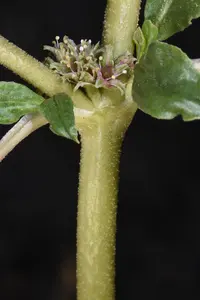
The distinctive green wings running along the stem are actually extended leaf tissue that forms ridges; these wings may help stabilize the tall stems and slightly increase photosynthetic surface area without producing full leaves.

Botan icon

Did you know?

Genetic and field studies indicate that this species can form natural hybrids with its close relative Verbesina occidentalis where their ranges overlap, creating mixed populations with intermediate traits in flower form, leaf shape, and stem wings.

FAQs about wingstem

This species spreads by both seed and short rhizomes, forming colonies over time. In rich, moist soil it can become assertive. Deadhead spent flowers, thin seedlings, and edge or divide clumps to keep it contained.

Grow Healthy Plants with Botan Care

Keep your plants happy and healthy with plant identification, disease detection, and easy care guidance.

Botan plant care app — identify plants on mobile

Explore More Plants