
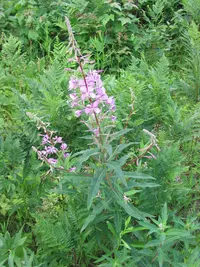


Musk Thistle Identification (Carduus nutans)

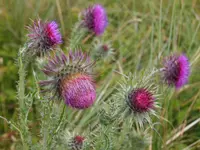
Recognize Musk Thistle by its large, nodding flower heads, usually 1-3 inches (2.5-7.5 cm) wide, carried singly on spiny, winged stems.

The leaves form a basal rosette, then alternate up the stem. Each leaf is deeply lobed, edged with sharp spines, and continues down the stem in narrow, prickly wings.

Carduus nutans Identification

Is This Musk Thistle?

Use a clear photo to confirm what plant you have.

Clear images work best. Avoid photos taken too close or too far away

Check the plant’s drooping flower heads and spiny, winged stems first.

  • Usually stands 2–6 feet (0.6–1.8 m) tall as a single stout thistle with few to several branches.
  • Flower heads are large, rounded, and nodding, about 1.5–3 inches (4–7.5 cm) across, with purple to rose-purple florets.
  • Each head sits in a spiny bract cup; the bracts are narrow and often bend outward or downward.
  • Leaves are deeply lobed, sharply spined, and run down the stem, forming continuous prickly wings.

The bent flower head plus winged, spiny stems is a strong visual combination for Carduus nutans.

Carduus nutans shows clear visual shifts from a low rosette to a tall flowering thistle.

  • Juvenile plant: Starts as a flat basal rosette with long, deeply lobed, spiny leaves; no upright stem is visible, unlike later stages.
  • Young plant: An erect, winged stem forms from the rosette, carrying alternate prickly leaves that clasp the stem and give the plant a narrower outline.
  • Flowering stage: Plants reach about 3-6 feet (0.9-1.8 m), often with branched upper stems and large nodding purple flower heads above the spiny foliage.
  • Fruiting stage: After flowering, the head dries and holds many narrow seeds topped with a pale pappus, a tuft that aids wind dispersal.

In spring, Musk thistle shows a low rosette of deeply lobed, spiny leaves with a pale midrib. From early to mid-summer, tall stems carry large, nodding purple flower heads. By late summer, the heads dry to tan seed structures, and the plant often stands as a stiff, brown, spiny stalk into fall.

Several spiny thistles can be mistaken for Musk Thistle at a glance.

bull thistle(Cirsium vulgare)

Often confused because both have large purple flower heads and winged, spiny stems. Bull thistle usually has upright heads, while Carduus nutans has nodding heads. Its leaves are rough and hairy above, not smoother and more deeply drooping.

Scotch thistle(Onopordum acanthium)

Similar from a distance because both are tall, gray-green, and heavily spined. Scotch thistle is much woollier overall, with broad white-felted wings on the stems, and its flower heads are usually held upright rather than hanging.

Carduus nutans is native to Europe and western Asia. In its native range, it occurs in open, disturbed places such as grasslands, roadsides, pastures, field margins, and waste ground. Habitat is useful for identification because this thistle is most often found in sunny, exposed sites rather than woodland or wetland settings. Seeing it in dry to moderately moist disturbed ground helps narrow it from thistles tied to shadier, marshy, or less disturbed habitats.

  • Sharp spines: Leaves, stems, and flower bracts carry stiff spines. Skin contact can cause painful punctures or scratches in humans and pets that brush against the plant.
  • Handling risk: Cut or dried plants stay prickly. Hand-pulling, mowing, or carrying stems can injure hands, legs, paws, or mouths through contact rather than ingestion.

Not Sure About the ID?

Use Botan to identify or confirm a plant from a photo when you want a quicker, more confident answer.

FAQ

The quickest field mark is the large flower head that usually nods to one side on a winged, spiny stem. Heads are often 1.5 to 3 inches (4 to 8 cm) wide with purple to pink florets.

More Plant Identification Guides

Know Your Plant Better

Identify a plant from a photo with Botan, then review plant details, care information, and common problems for that species.

Botan app identifying a plant from a photo
How to Group Plants in Landscaping: A Practical Layout Guide

8 min read · 31 Aug 2026

How to Group Plants in Landscaping: A Practical Layout Guide

Good plant grouping can mean the difference between a well-planned garden and one that looks sloppy. This guide explores layers, spacing, cluster shapes, and the plants that thrive when you group them.

Plant Care
How to Group Plants in Landscaping: A Practical Layout Guide
Best Time to Mow Lawn – A Complete Guide

5 min read · 10 Aug 2026

Best Time to Mow Lawn – A Complete Guide

Explore when to mow your lawn for its health and a pleasant green color. Find out the best time for this task during the summer heat, and follow practical tips for correctly cutting the grass, and learn common mistakes to avoid.

Plant Care
Best Time to Mow Lawn – A Complete Guide
How to Tell if a Plant Is Dead

6 min read · 19 Aug 2026

How to Tell if a Plant Is Dead

A plant can lose its leaves, stop growing, or collapse and still remain alive. A closer look at the stems, roots, bulbs, and tubers can show whether the plant still has a chance to recover.

Beginner Guides
How to Tell if a Plant Is Dead