garden bougainvillea Care (Bougainvillea × buttiana)

garden bougainvillea

About garden bougainvillea

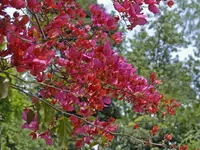
Garden bougainvillea (Bougainvillea × buttiana) is a vigorous, woody climber often grown as a shrub, hedge, or trained on trellises and walls. It is best known for its papery, colorful bracts that surround small, white tubular flowers, creating a long-lasting display in warm seasons.

This hybrid originates from South American species but is now widely cultivated in subtropical and warm temperate gardens. It has a fast growth habit, can become large, and carries sharp thorns, which can make pruning and shaping more demanding.

It prefers very bright light, lean well-drained soil, and periods on the drier side, which often confuses beginners learning how to care for garden bougainvillea.


Main Plant Requirements

Care Difficulty

Moderate Care

Light Preference

Full Sun

Water Requirements

Low Water

Temperature Preference

Tropical / Frost Sensitive

Hardiness Zone

9–11

Soil Texture

Sandy, Loamy, Rocky

Soil pH

Slightly acidic (6.5–7.0), Slightly alkaline (7.0–7.5)

Soil Drainage

Well-drained

Fertilization

Light (every 4–6 weeks)

Get Personalized Care Plan

Scan your plant to receive care tips personalized for your specific plant

Available on iOS and Android

How to Care for the garden bougainvillea

Bougainvillea × buttiana flowers best in strong, direct sun for most of the day.

  • Provide 6–8 hours of full sun daily; 8+ hours promotes heaviest flowering, while less than 4 hours leads to weak growth and sparse bracts.
  • Plant in an open, unshaded position; light morning sun with some late-afternoon shade helps in very hot climates, especially for garden bougainvillea near reflective walls.
  • In coastal or mild climates it tolerates all-day sun; in hot inland summers, protect from intense reflected heat to reduce leaf scorch and excessive drying.

Bougainvillea × buttiana prefers deep but infrequent watering in sharply drained soil.

  • Allow the top 5–7 cm of soil to dry before soaking the root zone; the soil should feel dry, not just the surface, to prevent root rot.
  • In spring and summer, water when leaves lose slight gloss and soil feels dry at finger depth; reduce frequency in fall and keep almost dry in winter dormancy.
  • Use fast-draining, gritty soil or raised beds; yellowing, soft leaves indicate overwatering, while crisp leaf edges and wilting in dry soil signal underwatering.

This plant thrives in warm, frost-free conditions and reacts quickly to cold snaps.

  • Aim for 65–85°F (18–29°C) for active growth; flowering is strongest with warm days and slightly cooler nights.
  • It tolerates brief dips to about 40°F (4°C) but suffers damage at freezing; repeated exposure below 32°F (0°C) can kill young wood.
  • Mature plants handle dry heat up to 95–100°F (35–38°C) if soil is well drained; in cooler regions, protect from cold winds and consider sheltering during winter.

This species grows best in relatively dry air and usually does not need special humidity management.

  • Aim for 30–50% humidity; typical outdoor and indoor levels in most US homes are acceptable.
  • Leaves yellowing or dropping while soil stays wet usually indicates excess humidity combined with poor air movement, not dryness.
  • Increase air circulation with spacing and a light breeze rather than misting, which can promote fungal spots on foliage.

Bougainvillea × buttiana prefers lean, sharply drained soil that dries quickly between waterings.

  • Use a sandy or gritty loam with 30–50% coarse materials such as perlite, pumice, or horticultural sand for strong aeration.
  • Target slightly acidic to neutral pH around 6.0–7.0; avoid very alkaline mixes that can lock up iron and other nutrients.
  • Add only a small amount of compost or fine bark; overly rich, peat‑heavy mixes stay wet and encourage root rot and weak, leafy growth.
  • If native soil is heavy clay, grow in raised beds or containers with free‑draining mix instead of trying to amend deeply compacted ground.

This species is well suited to container growing when the pot and setup manage its vigorous, woody root system.

  • Choose a deep, heavy container (ceramic or concrete) to anchor the plant and prevent tipping as stems become large and woody.
  • Select a pot only 2–5 cm wider than the root ball so the mix dries quickly and roots are not sitting in cool, unused substrate.
  • Raise the container on pot feet or bricks so drainage holes stay clear and excess water can escape rapidly after rain or irrigation.

Bougainvillea × buttiana responds well to modest, targeted feeding that supports flowering without encouraging soft, leafy growth.

  • Use a balanced, slow-release or controlled-release fertilizer (around 10-10-10 or similar) at the start of the warm growing season.
  • Supplement with a dilute liquid feed at 1/2 strength every 4–6 weeks while actively growing, especially for container plants.
  • Reduce or stop feeding in late fall and winter when growth slows, as garden bougainvillea enters a semi-dormant phase.
  • Avoid heavy, high-nitrogen products and always water lightly before applying fertilizer to limit root burn.

Thoughtful pruning helps Bougainvillea × buttiana maintain a strong framework and produce abundant bracts and flowers.

  • Carry out main structural pruning in late winter or very early spring before vigorous new growth starts.
  • Remove dead, damaged, rubbing, or very crowded stems with clean, sharp bypass pruners or loppers.
  • Shorten long, whippy shoots to shape the plant and direct energy into flowering spurs rather than excessive length.
  • Lightly tip-prune after each main flush of color to keep growth compact and encourage more blooms.

Container-grown plants and young landscape specimens benefit from careful repotting or transplanting to maintain healthy root systems.

  • Look for roots circling the pot, pushing through drainage holes, or noticeable slowdown in growth as signs a Bougainvillea × buttiana needs more space.
  • Plan repotting or transplanting for late spring or early summer, once nights stay reliably warm and the plant is actively growing.
  • Move up only 1 pot size in containers, using a sharply draining mix; handle the brittle roots gently and avoid breaking the root ball.
  • Water thoroughly after moving, then keep soil just slightly moist and provide some shade for 5–7 days to reduce transplant shock.

Bougainvillea × buttiana is most often propagated from stem cuttings taken during warm, active growth.

  • Use semi-hardwood cuttings 8–12 cm long from non-flowering shoots in late spring to midsummer.
  • Remove lower leaves, keeping 1–2 at the tip, and dip the cut end in a rooting hormone powder or gel.
  • Insert cuttings into a sharply draining, slightly moist medium such as 50% perlite and 50% coarse sand or bark.
  • Keep cuttings in bright, indirect light at 70–80°F with high humidity and good air movement until well rooted.

This species is frost-sensitive and needs protection wherever winter temperatures drop below about 30°F.

  • In the ground, apply a 5–8 cm layer of dry mulch around the root zone, keeping it slightly away from the main stem.
  • For light frosts, cover the canopy with frost cloth supported on stakes so it does not press on the foliage.
  • Move container plants indoors or into a bright, cool, frost-free space before the first hard freeze.

Care Tips

Encourage Heavy Bloom

Lightly root-prune container plants every 2–3 years by sliding the root ball out, shaving 1–2 in from the sides and bottom, and repotting into the same or only slightly larger pot to maintain a mildly root-bound state that promotes flowering.

Wire And Tie Training

Train long, flexible shoots along a trellis or fence using soft, UV-stable garden ties or vinyl tape, loosely looping them so stems can thicken without being girdled, which creates a stable flowering wall or arch over time.

Cold Protection Strategy

In regions with brief light frosts, grow plants in large, movable containers set on pot caddies so they can be rolled into a garage or against a warm wall and covered with frost cloth on the coldest nights.

Salt And Wind Tolerance

In coastal areas, position plants where a fence, wall, or hedge breaks the strongest salt-laden winds, and gently hose foliage with fresh water after storms to reduce salt buildup on leaves and buds.

Manage Thorny Growth

When caring for garden bougainvillea near walkways or seating, routinely shorten or redirect just the outermost thorny shoots with clean, sharp pruners to keep paths safe while preserving the main flowering framework.

Common Pests and Diseases

Bougainvillea looper

This pest is a small green or brown caterpillar that chews irregular holes in leaves and can quickly skeletonize foliage, especially on young, tender growth.

Solution

Hand-pick loopers at night using a flashlight or shake branches over a sheet to remove them, then destroy the caterpillars. Where infestations are heavier, apply Bacillus thuringiensis (Bt), a biological caterpillar control, in the evening and repeat as directed while also encouraging natural predators like birds and predatory wasps by avoiding broad-spectrum insecticides nearby.

Leaf miner

This pest creates winding, pale tunnels inside bougainvillea leaves, causing blotches, distortion, and premature leaf drop on heavily affected shoots.

Solution

Prune and dispose of leaves and small shoots with fresh mines to remove larvae before they mature, then monitor new growth closely. If damage is ongoing, use a systemic insecticide labeled for leaf miners or a spinosad-based product on young foliage, and avoid excessive nitrogen fertilization, which encourages the soft growth miners prefer.

Bougainvillea aphid

These insects cluster on tender tips and flower bracts, sucking sap and causing curling, sticky honeydew, and sometimes sooty mold on leaves and stems.

Solution

Spray infested areas with a firm stream of water to knock aphids off and repeat every few days, then follow with insecticidal soap or a light horticultural oil, coating undersides of leaves and shoot tips. Improve airflow and avoid overfertilizing with high-nitrogen products that produce very soft, aphid-prone growth.

Nematode damage

This disease-like problem is caused by microscopic root-feeding nematodes that reduce root efficiency, leading to stunted growth, poor flowering, and wilting in sandy or previously cropped soils.

Solution

Remove and discard severely affected plants and avoid replanting bougainvillea in the same spot, then improve soil organic matter with compost to support beneficial organisms that suppress nematodes. In the landscape, consider planting into large containers or raised beds with clean, high-quality potting mix where nematodes have been a chronic issue when planning how to take care of garden bougainvillea.
Canker and dieback

This disease affects woody stems that have been wounded or stressed by cold, causing sunken, discolored lesions, bark cracking, and gradual dieback from the tips inward.

Solution

Prune out affected stems well below visible damage into healthy wood, disinfecting tools between cuts with alcohol or a 1:10 bleach solution, and dispose of prunings away from other plants. Reduce future stress by avoiding hard pruning in cold weather, improving drainage, and keeping the plant in its preferred warm, bright position to help remaining tissue compartmentalize infections.

Interesting Facts

Hybrid bract colors

This hybrid often shows coppery-orange, salmon, or magenta bracts in a single plant, reflecting its mixed parentage between South American species such as Bougainvillea glabra and Bougainvillea peruviana.

Long blooming cycles

In frost-free climates, it can flower in multiple flushes across much of the year, especially after dry spells followed by watering, because flowering is closely tied to drought-induced stress.

Vigorous landscape hybrid

It was selected and spread globally as a garden ornamental for its fast growth, dense branching, and heavy bract production, making it a standard choice in many nursery trade lines focused on Bougainvillea × buttiana plant care.

Botan icon

Did you know?

Some named selections of this hybrid, such as the widely planted cultivar 'Mrs Butt', became foundational breeding material, so a number of modern bougainvillea cultivars trace their origin back to early Bougainvillea × buttiana lines developed in the early 20th century.

FAQs about garden bougainvillea

Poor flowering usually comes from excess nitrogen fertilizer, a pot that is too large, or lack of seasonal rest. Light pruning after a flush of color and slightly lean conditions generally encourage more bracts and blooms.

Grow Healthy Plants with Botan Care

Keep your plants happy and healthy with plant identification, disease detection, and easy care guidance.

Botan plant care app — identify plants on mobile

Explore More Plants