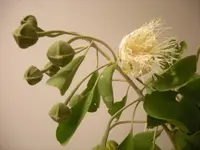
Wild Melon Care (Lagenaria sphaerica)

Wild Melon

About Wild Melon

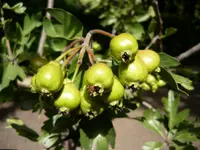
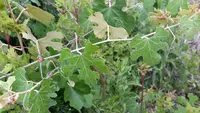
Wild melon, Lagenaria sphaerica, is a vigorous climbing vine in the gourd family, valued more for its ornamental and ecological role than for home food use. It produces rounded, melon-like fruits and soft green foliage that can quickly cover fences or trellises.

This species is native to parts of eastern and southern Africa, where it grows in woodland edges and along thickets. In cultivation it tends to be fast-growing but needs warmth and space, so it suits larger outdoor areas better than small patios.

For those who want to care for Wild Melon, it generally prefers full sun, evenly moist but well-drained soil, and support to climb.

Main Plant Requirements

Care Difficulty

Moderate Care

Light Preference

Full Sun

Water Requirements

Regular Water

Temperature Preference

Tropical / Frost Sensitive

Hardiness Zone

10–12

Soil Texture

Loamy, Sandy, Organic-rich

Soil pH

Acidic (5.5–6.5), Slightly acidic (6.5–7.0)

Soil Drainage

Moist but well-drained

Fertilization

Moderate (every 2–4 weeks)

Get Personalized Care Plan

Scan your plant to receive care tips personalized for your specific plant

Available on iOS and Android

How to Care for the Wild Melon

This vigorous climber thrives in strong light but benefits from some protection from intense midday sun.

  • Provide 6–8 hours of direct sun daily, ideally with morning sun and light afternoon shade, especially in hotter regions.
  • Allow partial shade (3–4 hours direct sun) in very hot summers; growth and flowering may slow slightly but leaves avoid scorching.
  • Avoid all-day harsh afternoon sun, which can cause leaf burn and wilting; in winter, maximize exposure by reducing shade from nearby plants or structures.

This fast-growing vine needs consistent moisture in well-drained soil to support strong vegetative growth.

  • Water when the top 3–5 cm of soil feels dry, soaking the root zone deeply rather than applying frequent light splashes.
  • Ensure soil drains freely; prolonged puddling or a sour smell indicates poor drainage and raises risk of root rot in Lagenaria sphaerica.
  • In hot, dry periods, expect to water more often and watch for dull, drooping leaves as a sign of thirst, while yellowing, soft foliage suggests overwatering.

This species prefers warm, frost-free conditions for reliable growth and flowering.

  • Aim for an active growing range of 70–86°F (21–30°C), which supports rapid vine extension and flowering.
  • Protect from cold; growth slows below 60°F (16°C), and plants can be damaged or killed by frost at 32°F (0°C) or slightly above if prolonged.
  • In hot spells above 95°F (35°C), provide mulch and additional water to limit heat stress, leaf scorch, and flower or fruit drop.

Humidity is not a critical factor for Lagenaria sphaerica, which handles typical outdoor ranges well.

Lagenaria sphaerica prefers loose, fertile, well-drained soil that supports rapid vine and root growth.

  • Use a loamy mix with high organic matter, such as garden loam blended with composted manure or garden compost.
  • Ensure fast drainage by incorporating coarse sand or fine gravel, especially in heavier native soils that tend to stay wet.
  • Aim for a slightly acidic to neutral pH around 6.0–7.0, avoiding strongly acidic or alkaline sites that limit nutrient uptake.
  • Avoid compacted, waterlogged, or heavy clay soils; improve aeration and structure with added compost and some perlite before planting.

This species can be grown in containers if the pot is large and heavy enough to support vigorous vine growth.

  • Choose a deep container of at least 40–50 cm diameter so the extensive root system can anchor and support tall climbing stems.
  • Select a heavy, stable pot material like thick plastic or clay to prevent tipping as the vine and any fruits increase weight on trellises.
  • Raise the container on pot feet or bricks so drainage holes stay clear and excess water runs off quickly, preventing waterlogged roots.

This vigorous wild cucurbit benefits from light feeding but usually grows well in moderately fertile soil.

  • Use a balanced NPK granular or slow-release fertilizer, or well-rotted compost, on established plants.
  • Apply a light dose every 4–6 weeks during the warm growing season, avoiding heavy feeding.
  • Dilute liquid fertilizers to 1/2–1/4 strength if used, and water beforehand to limit root burn.
  • Stop fertilizing Wild Melon once growth slows in late season or during winter dormancy.

Pruning helps manage the vigorous vines of Lagenaria sphaerica and supports healthy flowering.

  • Plan main pruning for late winter or early spring before new growth starts.
  • Remove dead, diseased, or damaged stems first, then thin crowded or crossing vines.
  • Shorten overly long shoots to control spread and improve light and air movement.
  • Use clean, sharp secateurs and make angled cuts just above a healthy bud or side shoot.

This species is usually grown in the ground, so care focuses on transplanting young vines rather than frequent repotting.

  • Transplant seedlings once they have 2–3 true leaves and roots fill starter cells but are not circling heavily.
  • Choose late spring after frost risk passes so soil is warm and growth resumes quickly.
  • Space plants generously and plant at the same depth, handling the root ball gently to reduce shock.
  • Water thoroughly after transplanting, provide temporary shade or wind protection, and keep soil evenly moist while roots establish.

Most Lagenaria sphaerica plants are raised from seed, since this gives strong, vigorous vines.

  • Sow fresh seeds in late spring when soil or propagator temperatures reach 70–80°F.
  • Scarify hard seed coats lightly with sandpaper and soak seeds for 12–24 hours to improve germination.
  • Use a free-draining seed mix, keep it just moist, and provide bright light once seedlings emerge.
  • For experimental layering, pin a healthy stem to moist soil until roots form, then sever and transplant.

This tender vine is highly sensitive to frost and does not survive freezing conditions outdoors.

  • In mild climates, allow vines to die back naturally after frost and remove spent growth.
  • Mulch the root zone of any remaining crowns with 5–8 cm of organic material in cooler areas.
  • Grow in large containers in cold regions and discard or resow annually rather than overwintering.

Care Tips

Early trellis training

Install a strong trellis or wire support before vines start running, then loosely tie young shoots every 20–30 cm with soft ties to keep fruit off the ground and reduce rot and pest damage.

Fruit load management

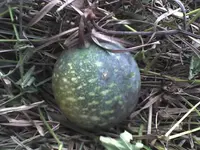
Once vines are well established, pinch off excess flowers or small fruits so that only a moderate number of gourds develop, which improves size, shell quality, and seed maturity.

Targeted pest scouting

Inspect the undersides of leaves and tender shoot tips at least once a week for beetles, caterpillars, and sap-sucking insects, and remove them by hand or spot-treat with an appropriate organic contact spray before they spread.

Soil surface management

Use a thin, clean organic mulch layer under the vine run to keep fruits clean, prevent soil splash onto leaves, and stabilize soil structure without smothering young stems.

Season-end vine ripening

Towards the end of the season, reduce new vegetative growth by pinching the vine tips and removing very late flowers so the plant directs energy into hardening and fully maturing existing gourds, which is essential for long-term storage when growing Wild Melon.

Common Pests and Diseases

Powdery mildew

This disease often appears on leaves and young stems as white, powdery patches, especially in warm, dry conditions with poor air movement.

Solution

Remove heavily infected leaves, avoid overhead watering, and increase air circulation around vines with wider spacing or trellising. Apply a sulfur or potassium bicarbonate fungicide labeled for cucurbits at first signs of infection and keep foliage dry when possible as part of general Lagenaria sphaerica care instructions.

Downy mildew

This disease causes yellow angular spots on the upper leaf surface and gray to purple fuzzy growth underneath, usually during cool, humid, or rainy periods.

Solution

Remove and discard affected leaves, water at soil level in the morning, and avoid wetting foliage. Improve airflow, rotate planting sites yearly, and use a copper-based or phosphonate fungicide when conditions favor spread or early symptoms appear.

Cucumber beetles

These insects feed on leaves, flowers, and young fruits, creating holes and ragged edges, and can also spread bacterial diseases within cucurbits.

Solution

Hand-pick beetles in small plantings, use yellow sticky traps, and cover young plants with row covers until flowering to exclude adults. Keep the area free of cucurbit weeds, and if populations are high, apply a targeted insecticide such as pyrethrin or spinosad in the evening when pollinators are less active.

Squash vine borer

This pest tunnels inside stems, causing sudden wilting of individual vines or whole sections, with sawdust-like frass visible near entry holes at the base.

Solution

Inspect stem bases regularly, and if boring is detected, slit the stem carefully with a clean knife, remove the larva, and then mound soil over the wounded section to encourage new rooting. Use row covers before egg-laying, destroy infested vines at season end, and consider pheromone traps to monitor adult moth activity.

Aphids

These insects cluster on tender shoot tips and the undersides of leaves, sucking sap and causing curling, distortion, and sticky honeydew that can lead to sooty mold growth.

Solution

Spray plants with a firm jet of water to dislodge colonies, and prune heavily infested shoots if practical. Introduce or conserve natural predators such as lady beetles, and apply insecticidal soap or neem oil thoroughly to leaf undersides, repeating as needed according to label directions.

Interesting Facts

African river-cliff climber

This species naturally grows along riverbanks and forest margins in eastern and southern Africa, where its long vines scramble over shrubs and cliffs rather than sprawling on open ground.

Specialist moth partner

Pollination is mainly carried out at night by the hawkmoth Agrius convolvuli, whose long proboscis matches the deep, narrow corolla of the flowers, forming a close flower–pollinator association.

Wild gourd relative

It belongs to the Cucurbitaceae family and produces small, hard-shelled gourds that are not the large bottle gourds used in cultivation, highlighting its status as a distinct wild species rather than a domesticated crop.

Botan icon

Did you know?

In parts of its native range, this plant often grows in association with riverine thickets that provide habitat for primates and birds, so its climbing vines and dense foliage indirectly contribute to structural complexity and shelter in these riparian ecosystems.

FAQs about Wild Melon

This species is a vigorous climbing vine that uses tendrils to attach to nearby structures, shrubs, or trees. It does not stay compact and quickly covers available support if conditions are warm and moisture is adequate.

Grow Healthy Plants with Botan Care

Keep your plants happy and healthy with plant identification, disease detection, and easy care guidance.

Botan plant care app — identify plants on mobile

Explore More Plants