Neoregelia carolinae var. tricolor Care

About Neoregelia carolinae var. tricolor

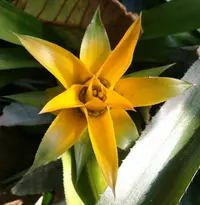
Neoregelia carolinae var. tricolor is a compact bromeliad grown mainly for its colorful foliage rather than its flowers. It forms a low rosette of strap-shaped leaves with cream, pink, and green banding around a central water-holding cup.

This species comes from the Atlantic forests of Brazil, where it often grows as an epiphyte on trees, taking moisture and nutrients from rain and debris rather than soil. It stays relatively small and slow-growing, which makes it suitable for containers and indoor displays.

Neoregelia carolinae var. tricolor responds well to bright, indirect light and moderate humidity, and it tolerates brief neglect once established. Understanding how to care for Neoregelia carolinae var. tricolor mainly involves balancing light and moisture without overwatering the roots or crown.

Main Plant Requirements

Care Difficulty

Moderate Care

Light Preference

Bright Indirect Light

Water Requirements

Moderate Water

Temperature Preference

Tropical / Frost Sensitive

Hardiness Zone

10–12

Soil Texture

Sandy, Loamy, Organic-rich

Soil pH

Acidic (5.5–6.5)

Soil Drainage

Well-drained

Fertilization

Light (every 4–6 weeks)

Get Personalized Care Plan

Scan your plant to receive care tips personalized for your specific plant

Available on iOS and Android

How to Care for the Neoregelia carolinae var. tricolor

This bromeliad prefers bright, indirect light to maintain strong color without scorching the leaves.

  • Provide 4–6 hours of bright, filtered light daily, such as dappled shade under taller plants or behind a sheer curtain indoors, to support Neoregelia carolinae var. tricolor care instructions.
  • Allow gentle morning sun in east-facing exposure, but protect from harsh midday and afternoon sun, which can bleach leaf stripes and cause dry, brown patches.
  • In summer, shift plants slightly deeper into shade if leaf tips pale or crisp; in winter, move to a brighter spot to compensate for shorter days and weaker light.

This bromeliad needs a consistently moist environment with special attention to its central cup and free-draining soil.

  • Keep the center rosette (tank) 1/2–3/4 full with clean water and flush it every 1–2 weeks to prevent salt buildup and mosquito larvae.
  • Water the potting mix only when the top 2–3 cm feels dry, letting excess drain freely; roots dislike staying in soggy conditions and may rot if waterlogged.
  • Reduce watering in cool seasons, watching for curling, wrinkling, or dull leaves as signs of underwatering, and for a sour smell or limp, dark bases as signs of overwatering.

This species thrives in warm, frost-free conditions typical of subtropical and tropical climates.

  • Aim for 65–80°F (18–27°C) for active growth, with short peaks up to 85°F (29°C) tolerated if humidity is moderate and the rosette water stays fresh and cool.
  • Protect from temperatures below 55°F (13°C); brief dips to 40–45°F (4–7°C) may be survived but can cause leaf spotting, slowed growth, and longer recovery time.
  • Avoid frost entirely, and in heat waves above 90°F (32°C) provide shade, good air movement, and avoid hot, reflective surfaces that can overheat the foliage.

This bromeliad prefers moderately humid air but adapts to typical indoor conditions if kept out of very dry spots.

  • Aim for 50–70% humidity, avoiding prolonged exposure below 40%, especially near heating or AC vents.
  • Watch for browning leaf tips, dull color, or crispy edges as signs of humidity stress or excessively dry air.
  • Increase humidity with a nearby pebble tray, grouping plants, or a small humidifier rather than misting the rosette heavily.

This plant grows best in a very airy, fast-draining mix that mimics loose, organic tree-top debris.

  • Use a bromeliad or orchid-type mix made from fine orchid bark, perlite or pumice, and a small amount of peat or coco coir.
  • Aim for a loose, chunky texture that drains in seconds yet holds light, even moisture around the roots, not a dense, compact mass.
  • Keep pH slightly acidic to neutral, around 5.5–7.0, which suits Neoregelia carolinae var. tricolor and helps nutrient uptake.
  • Avoid heavy garden soil, clay-based mixes, or potting media with a high proportion of fine peat that stays wet and reduces aeration.

This species is well suited to container growing when the pot supports its shallow roots and rosette form.

  • Choose a wide, shallow pot to support the spreading rosette and prevent tipping as the central cup fills with water.
  • Select a heavier material such as ceramic if the plant is top-heavy, to add stability against accidental knocks or wind outdoors.
  • Raise the pot slightly on feet or pot risers so drainage holes stay clear and excess water can exit quickly from the airy mix.

Light feeding supports color and growth for Neoregelia carolinae var. tricolor grown in containers or indoors.

  • Use a balanced liquid fertilizer (around 10-10-10 or 20-20-20) diluted to 1/4–1/2 strength, applied to the tank and lightly over the mix.
  • Feed every 4–6 weeks during spring–summer while the plant is actively growing and receiving bright light.
  • Avoid heavy, frequent feeding, which can stretch foliage and mute leaf colors; bromeliads are naturally light feeders.
  • In fall–winter, reduce to 1 light feeding or stop entirely, especially in low light or cooler conditions.

Pruning Neoregelia carolinae var. tricolor is minimal and mainly keeps the rosette clean and attractive.

  • Best timing is after flowering and throughout the growing season as leaves age or pups mature.
  • Remove dry, brown, or damaged leaves at the base with clean scissors or small pruning shears.
  • Cut spent flower structures once they fade to maintain appearance and reduce decay in the rosette center.
  • When a pup is large enough to remove, cutting it away also tidies the clump and manages overall shape.

Container-grown Neoregelia carolinae var. tricolor needs infrequent repotting because of its shallow root system.

  • Check for roots circling the pot, crowded pups, or slow growth despite good care as signs it needs more space.
  • Plan repotting for spring or early summer, about every 2–3 years, or when offsets fill the container.
  • Use a shallow pot with a very free-draining bromeliad or orchid-style mix to limit root stress and moisture buildup.
  • Handle roots gently, keep the central cup upright, water lightly after repotting, and maintain high humidity while it re-establishes.

Most home propagation of Neoregelia carolinae var. tricolor relies on offsets (pups) rather than seed.

  • Take pups in spring–summer once they reach about 1/3–1/2 the size of the mother rosette.
  • Cut the pup cleanly at the base with a sterile knife, keeping some root tissue attached if possible.
  • Plant pups in a small pot with airy, fast-draining mix and secure them so they do not wobble.
  • Provide bright, indirect light, warm temperatures (70–80°F), and slightly higher humidity until new growth confirms establishment.

This bromeliad is frost-sensitive and needs protection in regions with cold winters.

  • Move outdoor containers indoors before temperatures drop below 50°F, providing bright, indirect light.
  • Keep indoor temperatures around 60–75°F and avoid cold drafts near windows or doors.
  • Water sparingly in winter, keeping the central cup only lightly filled and the potting mix just barely moist.
  • In mild climates, plants grown outdoors in the ground benefit from a light mulch around the root zone during rare cold spells.

Care Tips

Tank water hygiene

Rinse out the central cup every 4–6 weeks with lukewarm, low-mineral water, then refill it, to prevent salt buildup, algae, and mosquito larvae in the leaf tank.

Offset management

Once pups reach about 1/3–1/2 the size of the mother rosette, cut them off with a sterile knife and pot them individually to maintain a compact display and extend the life of the collection.

Secure loose rosettes

If a rosette is top-heavy or recently divided, fix it in place with orchid clips, small stakes, or a shallow layer of decorative stones until new roots anchor it firmly.

Color enhancement strategy

To keep the variegation and pink tones strong, periodically rotate the pot and move it slightly closer to bright filtered light in spring and summer, watching leaves for early signs of bleaching so exposure can be reduced if necessary.

Salt and chemical control

Use rainwater, distilled, or reverse-osmosis water if possible and flush both potting mix and cup a few times a year to reduce accumulated salts and chlorine byproducts that can dull foliage and slow growth when caring for Neoregelia carolinae var. tricolor.

Common Pests and Diseases

Scale insects

This pest attaches to the leaves and leaf axils, sucking sap and causing yellowing, dull color, and sticky honeydew on the rosette. Symptoms include slow growth and loss of the bright center coloration typical for this bromeliad.

Solution

Remove visible scale with a cotton swab dipped in 70% isopropyl alcohol, then gently rinse the foliage and tank with lukewarm water. For heavier infestations, use an insecticidal soap or neem oil spray directed mainly at the leaf bases and undersides, repeating every 7–10 days while improving air movement and avoiding overfertilization that encourages soft, susceptible growth.

Mealybugs

These insects appear as white, cottony clusters in leaf axils, on roots, and around the central cup, weakening the plant by feeding on sap. Symptoms include sticky residue, distorted leaves, and increased risk of sooty mold on the foliage.

Solution

Isolate the plant and wipe or rinse away visible mealybugs, paying special attention to where leaves meet the rosette. Treat remaining insects with insecticidal soap or neem oil, repeating applications, and reduce overcrowding around the plant to increase airflow and make future infestations less likely.

Tank water rot

This disease develops when the central cup stays filled with stagnant water in low light or cool conditions, leading to soft, browning leaf bases and a foul smell from the rosette. Symptoms include collapse of inner leaves and rapid decline of the plant center while outer leaves may remain green at first.

Solution

Empty the central cup completely, trim out any soft, rotting tissue, and let the rosette dry for 1–2 days before refilling with a small amount of fresh water. Going forward, flush the tank with clean water every 1–2 weeks, avoid using cold water, and keep the plant in bright, indirect light with good air circulation to reduce bacterial growth while continuing appropriate Neoregelia carolinae var. tricolor care instructions.

Bacterial leaf spot

This disease causes water-soaked, translucent spots on leaves that may turn brown with yellow halos, often starting near the base or where water stands. Symptoms include irregular lesions that can merge, spoiling the ornamental foliage pattern.

Solution

Remove and discard affected leaves, cutting well into healthy tissue and sterilizing tools between cuts. Keep water out of the leaf axils as much as possible, increase air circulation, avoid overhead misting in cool conditions, and if spread continues, apply a labeled copper-based bactericide according to product directions.

Fungal leaf blight

This disease appears as brown or grayish patches that may develop a dry, papery texture on older leaves, especially in plants kept too wet with poor air movement. Symptoms include gradual spreading of lesions and general loss of leaf vigor and color contrast.

Solution

Prune out infected leaf sections or entire leaves and dispose of them, then adjust watering so the potting mix drains quickly and the tank water is refreshed regularly rather than constantly overflowing. Improve light and airflow around the plant and, where allowed, use a broad-spectrum fungicide labeled for ornamental foliage plants if cultural corrections alone do not stop new spots from forming.

Interesting Facts

Tank-forming leaf rosette

This bromeliad forms a tight rosette of stiff, overlapping leaves that creates a central water-holding tank, which in its native Brazilian habitat can support small aquatic invertebrates and microorganisms.

Color change at flowering

As the plant approaches flowering, the central leaves often intensify in red and pink tones, visually highlighting the inflorescence to pollinators while the striped green-cream variegation remains on the outer leaves.

Stable leaf variegation

The cream and green longitudinal striping in this variegated form is genetically fixed rather than disease-related, so healthy plants reliably pass on the tricolor pattern when propagated by offsets taken from the mother plant.

Botan icon

Did you know?

In its native Atlantic Forest habitats in Brazil, Neoregelia carolinae var. tricolor often grows as an epiphyte on tree branches, where its water-filled leaf tanks help create tiny canopy microhabitats that contribute to local biodiversity by sheltering insect larvae and other small organisms.

FAQs about Neoregelia carolinae var. tricolor

Lack of blooming often comes from insufficient light, an immature rosette, or too much nitrogen fertilizer. Provide bright, indirect light, keep the center cup filled with clean water, use low-nitrogen fertilizer, and avoid frequent repotting or disturbance.

Grow Healthy Plants with Botan Care

Keep your plants happy and healthy with plant identification, disease detection, and easy care guidance.

Botan plant care app — identify plants on mobile

Explore More Plants