Starburst Bush Care (Clerodendrum quadriloculare)

Also known as: Fire works, shooting star
Starburst Bush

About Starburst Bush

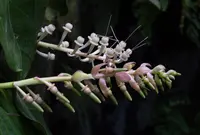
Starburst bush, Clerodendrum quadriloculare, is a tropical ornamental shrub or small tree known for its dark green to purple foliage and dramatic star-shaped flower clusters. It is native to the Philippines and nearby regions, and is often grown in warm climates as a striking landscape feature.

Plants form a dense, upright habit and can sucker from the base, which makes them vigorous and sometimes spreading. The vivid pink and white flower bursts in late winter or early spring are followed by small dark fruits that add further interest.

This species prefers bright light, warmth, and well-drained soil, and benefits from regular moisture without waterlogging. These traits make it relatively easy to care for Starburst Bush in suitable climates, though it may become invasive in some areas.

Main Plant Requirements

Care Difficulty

Moderate Care

Light Preference

Full Sun

Water Requirements

Moderate Water

Temperature Preference

Tropical / Frost Sensitive

Hardiness Zone

10–11

Soil Texture

Sandy, Loamy, Organic-rich

Soil pH

Acidic (5.5–6.5), Slightly acidic (6.5–7.0)

Soil Drainage

Moist but well-drained

Fertilization

Light (every 4–6 weeks)

Get Personalized Care Plan

Scan your plant to receive care tips personalized for your specific plant

Available on iOS and Android

How to Care for the Starburst Bush

Clerodendrum quadriloculare develops best foliage color and flowering with bright, non-scorching light.

  • Provide 4–6 hours of gentle morning sun with light afternoon shade; dappled light under high tree canopies suits Starburst Bush well.
  • Tolerates partial shade (2–4 hours sun), but flowering and leaf variegation decline in deep shade or on heavily overcast sites.
  • Avoid harsh midday sun in hot summers, which can cause leaf scorch; in areas with weak winter sun, choose the brightest, south-facing spot outdoors.

Watering should keep Clerodendrum quadriloculare evenly moist but never saturated.

  • In active growth, water when the top 3–5 cm of soil feels dry, aiming for consistently moist but not soggy soil around the root zone.
  • Ensure free-draining soil or planting on a slight mound so excess water runs off, reducing root rot risk in heavy or clay soils.
  • Reduce watering frequency in cool seasons; wilting, crisp leaf edges, and dry soil indicate underwatering, while yellowing leaves and mushy stems suggest overwatering.

This shrub prefers warm, stable conditions typical of subtropical climates.

  • Ideal growth occurs at 65–85°F (18–29°C), with strongest flushes of new foliage and flowers in the warmer end of this range.
  • Tolerates brief dips to about 40°F (4°C) but suffers damage near freezing; protect from any frost by covering or growing in a sheltered microclimate.
  • Handles short heat waves up to 95°F (35°C) if soil moisture is steady; during extreme heat, reduce reflective stress by providing light afternoon shade and mulch.

This species prefers moderately humid air and reacts quickly to prolonged dryness indoors.

  • Aim for 50–60% humidity; it will tolerate brief drops to 40% but may shed lower leaves in very dry rooms.
  • Crisping leaf edges, stalled growth, and buds failing to open indicate low humidity stress in Starburst Bush.
  • Increase humidity with a grouped plant display, a pebble tray under the pot, or a room humidifier instead of frequent misting.

Clerodendrum quadriloculare performs best in loose, fertile, well-drained soil that still holds some moisture.

  • Use a loamy, organic-rich mix such as 2 parts peat- or coco-based potting mix, 1 part compost, and 1 part perlite or coarse sand.
  • Ensure rapid drainage so water does not pool; roots are prone to rot in compacted or waterlogged conditions.
  • Target a slightly acidic to neutral pH around 6.0–7.0, which supports steady nutrient uptake and foliage color.
  • Improve aeration by incorporating chunky materials like fine bark or pumice and breaking up any dense garden soil before planting.

This shrub adapts well to container growing when given adequate root space and stability.

  • Choose a wide, heavy pot to counterbalance its tall, spreading top growth and reduce tipping in wind or on balconies.
  • Select a container depth that allows a strong, fibrous root system to develop, roughly matching or slightly exceeding the plant’s expected height in gallons.
  • Use a pot material that matches your climate, such as thicker terracotta for cooler areas or insulated plastic in hot, drying conditions to moderate moisture loss.

Clerodendrum quadriloculare responds well to moderate feeding during its active growing season.

  • Use a balanced liquid fertilizer (such as 10-10-10) at 1/2 strength every 4–6 weeks in spring and summer.
  • Alternatively, apply a slow-release granular fertilizer or a thin layer of compost at the start of spring.
  • Reduce or stop feeding in fall and winter when growth slows, especially for Starburst Bush grown in containers.
  • Always water before and after applying fertilizer to limit root burn and improve nutrient uptake.

Pruning helps Clerodendrum quadriloculare maintain a manageable size and encourages dense growth and flowering.

  • Carry out main pruning in late winter or early spring before strong new growth starts.
  • Remove all dead, damaged, or crossing stems first, then thin crowded interior branches for better light and air flow.
  • Shorten overly long shoots to shape the plant as a shrub or small tree, cutting just above outward-facing buds.
  • Use sharp, clean bypass pruners and make smooth, angled cuts to reduce disease risk and promote quick healing.

This species is often grown as a landscape shrub, but container plants benefit from periodic repotting or transplanting.

  • Plan to move containers to a slightly larger pot every 2–3 years, ideally in spring as growth resumes.
  • Look for roots circling the pot, water running straight through, or slowed growth as signs it needs more space.
  • Gently loosen circling roots, trim damaged ones, and replant in fresh, well-drained soil at the same depth.
  • Water thoroughly after repotting or transplanting, then keep evenly moist and shaded for 3–7 days to reduce stress.

Clerodendrum quadriloculare is commonly propagated from semi-hardwood cuttings and root suckers.

  • Take 10–15 cm semi-hardwood stem cuttings in late spring or early summer with 2–3 nodes each.
  • Remove lower leaves, dip the base in rooting hormone, and insert into a moist, free-draining mix such as perlite and peat.
  • Maintain high humidity and bright, indirect light at 70–80°F until roots form, usually in several weeks.
  • Alternatively, lift and divide rooted suckers, replanting them promptly and keeping soil consistently moist until established.

This tropical shrub is frost sensitive and needs protection in regions with cold winters.

  • In ground, it suits frost-free or very mild climates; prolonged temperatures below 32°F can damage foliage and stems.
  • Mulch the root zone with 5–8 cm of organic material in late fall to buffer soil temperature and moisture.
  • Move container plants indoors or into a greenhouse before the first frost, providing bright light and reduced watering.
  • After light frost damage, wait until late winter, then remove dead stems to encourage healthy regrowth.

Care Tips

Basal Shoot Management

Select 3–5 strong basal shoots to keep as permanent framework stems and remove weaker suckers at soil level during active growth to maintain a well-shaped, multi-stemmed shrub rather than a congested thicket.

Flower Spike Renewal

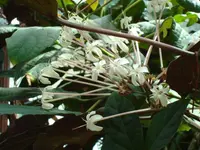
After flowering, cut back spent inflorescences to just above a healthy leaf node on semi-hard wood to encourage vigorous new shoots that will carry the next season’s blooms.

Wind and Weight Support

In windy sites or when stems are heavy with flowers, use discreet, padded stakes or a low shrub ring to support long, arching branches and reduce the risk of breakage at the base.

Container Root Control

For potted plants, root-prune and repot every 2–3 years by trimming back the outer 2–3 cm of the rootball and refreshing the potting mix, which helps control size and maintain strong top growth when growing Starburst Bush in limited space.

Winter Protection Strategy

In regions with occasional light frost, apply a 5–8 cm organic mulch over the root zone in late fall and be ready to wrap the lower stems with breathable frost cloth during cold snaps to protect buds and reduce dieback.

Common Pests and Diseases

Spider mites

This pest often appears on stressed plants grown in hot, dry conditions and feeds on leaf undersides, causing stippling, bronzing, and fine webbing on Clerodendrum quadriloculare foliage. Symptoms include dull, speckled leaves that may eventually yellow and drop.

Solution

Rinse foliage thoroughly with a firm stream of water, especially the undersides of leaves, and repeat every few days to break the life cycle. Increase humidity and airflow, remove heavily infested leaves, and if needed use insecticidal soap or a ready-to-use horticultural oil, applied carefully to all leaf surfaces according to label directions.

Scale insects

These insects attach to stems and leaf midribs as small, dome-shaped or oval bumps and suck sap, weakening the plant over time. Symptoms include sticky honeydew, sooty mold on leaves, and poor growth or sparse flowering.

Solution

Prune out heavily infested branches and physically remove visible scale with a cotton swab or soft brush dipped in rubbing alcohol. For broader infestations, wash the plant and then apply horticultural oil to thoroughly coat stems and leaf surfaces, repeating at 7–14 day intervals as needed while monitoring for new crawlers.

Aphids

These insects cluster on young shoots and flower buds, feeding on sap and distorting new growth and emerging flower clusters. Symptoms include curled or twisted leaves, stunted shoots, and sticky honeydew that can lead to sooty mold on the foliage.

Solution

Spray the plant with a strong stream of water to dislodge colonies, focusing on tender new growth and leaf undersides. Follow with insecticidal soap or a mild horticultural oil if populations remain, and encourage natural predators by limiting broad-spectrum chemical products in the surrounding garden.

Sooty mold

This disease is a fungal growth that develops on the sugary honeydew excreted by sap-feeding insects like aphids, scale, or mealybugs. Symptoms include a black, powdery coating on leaves and stems that reduces light reaching the foliage and can slow growth.

Solution

Address the underlying insect infestation first by managing aphids, scale, or other honeydew producers. Once insects are controlled, gently wash affected leaves with lukewarm water and a mild, dilute soap solution to remove the fungal coating, and thin dense growth slightly to improve light penetration and airflow.

Leaf spot

This disease causes small to medium brown, tan, or purplish spots on Clerodendrum quadriloculare leaves, often with a yellow halo and sometimes coalescing into larger dead areas. Symptoms include premature leaf drop on lower or crowded branches, especially in warm, humid conditions or when foliage stays wet for long periods.

Solution

Remove and discard affected leaves and any fallen debris around the base to reduce reinfection. Improve spacing and airflow, avoid overhead watering late in the day, and if spotting continues, use a labeled ornamental fungicide according to instructions, focusing on new growth and times of prolonged humidity.

Interesting Facts

Fireworks bloom structure

The species produces terminal clusters of long, tubular pink and white flowers that open all at once, creating a spherical, firework-like display that is highly attractive to butterflies and other pollinators.

Purple-backed foliage

Its leaves are green on the upper surface but strikingly deep purple on the underside due to high concentrations of anthocyanin pigments, which help protect the leaf tissue from excess light and ultraviolet radiation.

Invasive potential

In parts of tropical and subtropical regions such as Hawaii and some Pacific islands, this ornamental shrub has escaped cultivation, forming dense thickets and is monitored or listed as an invasive species due to its vigorous suckering and bird-dispersed seeds.

Botan icon

Did you know?

This species is one of the few ornamental shrubs in its genus that has become widely naturalized outside its native range in the Philippines, largely because its seeds are readily spread by frugivorous birds that feed on its small dark fruits and deposit them far from planted gardens.

FAQs about Starburst Bush

Lack of flowers usually comes from insufficient light, heavy pruning at the wrong time, or excess nitrogen fertilizer. Ensure strong light, avoid cutting woody stems in late summer–fall, and use a balanced or low‑nitrogen formula.

Grow Healthy Plants with Botan Care

Keep your plants happy and healthy with plant identification, disease detection, and easy care guidance.

Botan plant care app — identify plants on mobile

Explore More Plants