


Mounting technique
Attach the plant to a rough, moisture-stable mount such as cork bark or untreated hardwood using soft wire or nylon fishing line, keeping the base slightly elevated so water can drain away and the roots get good air flow.

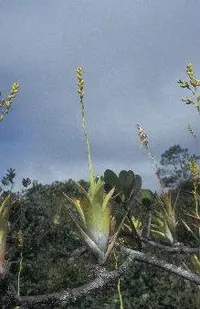
The powdery strap airplant, Catopsis berteroniana, is an epiphytic bromeliad that usually grows attached to trees rather than in soil. It forms a loose rosette of pale green, strap-like leaves often dusted with a fine, powdery coating.
In nature it occurs in warm, humid forests of the Caribbean and parts of Central and South America. It absorbs moisture and nutrients through its leaves, which makes container culture and mounting possible indoors.
This species prefers bright, filtered light, good air movement, and regular moisture on its foliage, so understanding how to care for powdery strap airplant is important for success. It is moderately easy for growers who can provide stable warmth and humidity.

Care Difficulty
Hard Care

Light Preference
Partial Sun

Water Requirements
Regular Water

Temperature Preference
Tropical / Frost Sensitive

Hardiness Zone
11–12

Soil Texture
Organic-rich, Loamy

Soil pH
Acidic (5.5–6.5)

Soil Drainage
Moist but well-drained

Fertilization
Light (every 4–6 weeks)
Scan your plant to receive care tips personalized for your specific plant
Available on iOS and Android
Catopsis berteroniana prefers bright, indirect light that mimics exposed but filtered canopy conditions.
This tank-forming bromeliad relies on both leaf-tank water and well-drained roots to stay healthy.
This species prefers consistently warm, frost-free conditions typical of lowland tropical climates.
This epiphytic bromeliad prefers consistently moist air to perform well.
This species naturally anchors to bark or rock, so any potting mix must be very open and fast-draining.
This species adapts well to container growing when stability and drainage are prioritized.
Catopsis berteroniana benefits from light, infrequent feeding that mimics low-nutrient cloud forest conditions.
Pruning needs for Catopsis berteroniana are minimal and focus on hygiene rather than shaping.
This epiphytic bromeliad is usually mounted or grown in small containers and only needs infrequent transplanting.
Catopsis berteroniana is most reliably propagated by offsets rather than by seed in home conditions.
This species is tropical and lacks frost tolerance, so winter protection is important in cool climates.

Plant Health Check
Not sure what's wrong with your plant? Check your plant's health inside the app.
Its upright rosette forms a waxy, slippery leaf funnel that collects water and organic debris, helping the plant access extra nutrients in nutrient-poor canopy habitats.
The leaf surfaces are covered with a fine, powdery wax bloom that reduces friction, making it difficult for small insects to escape once they fall into the central tank.
This species grows as an epiphyte high in humid tropical canopies, especially in Caribbean and Central American cloud forests, where it relies on frequent mists and fog rather than deep root systems for moisture.

Some ecologists consider this bromeliad functionally insectivorous because its leaf tank traps and drowns small arthropods, and associated microorganisms help break them down, allowing the plant to absorb released nutrients from the water-filled reservoir.
This bromeliad usually flowers only once at maturity, then focuses energy on producing offsets. Lack of bloom is often due to immaturity, stress from extremes of temperature or humidity, or recent disturbance such as division or repotting.
Keep your plants happy and healthy with plant identification, disease detection, and easy care guidance.

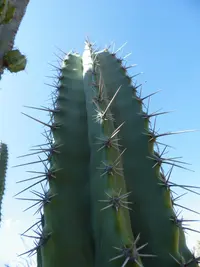
Stenocereus stellatus
Stenocereus stellatus
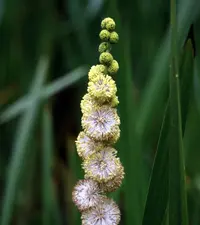
broadfruit bur-reed
Sparganium eurycarpum
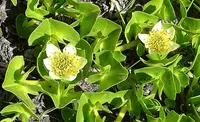
Arrow-leaved Marigold
Caltha sagittata

Butterfly pea
Clitoria ternatea
 POPULAR
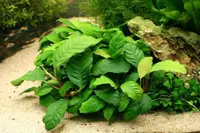
Anubias barteri
Anubias barteri
 POPULAR
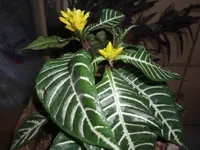
Zebra-plant
Aphelandra squarrosa
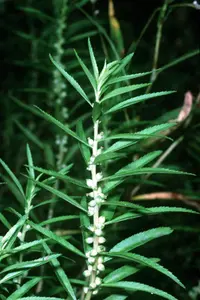
marsh mermaid weed
Proserpinaca palustris
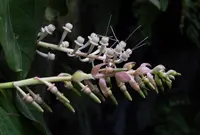
Cavendishia grandifolia
Cavendishia grandifolia