broadfruit bur-reed Care (Sparganium eurycarpum)

Also known as: big bur-reed, great bur-reed
broadfruit bur-reed

About broadfruit bur-reed

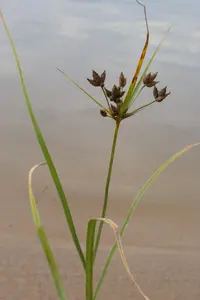
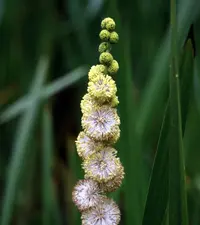
Broadfruit bur-reed, Sparganium eurycarpum, is a robust aquatic perennial commonly found in shallow freshwater wetlands, ditches, and pond margins. It forms tall clumps with upright, strap-like leaves and distinctive round, spiky seed heads held on branched stems.

This species spreads by rhizomes and seed, often creating dense stands that offer habitat and erosion control along shorelines. It is generally resilient once established but needs consistently wet conditions, so care for broadfruit bur-reed focuses on providing stable water levels and mucky or saturated soil.

Broadfruit bur-reed prefers full sun and unpolluted, slow-moving or still water. Its adaptability to different water depths makes it useful in naturalized ponds and restoration plantings.

Main Plant Requirements

Care Difficulty

Moderate Care

Light Preference

Full Sun

Water Requirements

Aquatic

Temperature Preference

Cold Hardy

Hardiness Zone

3–9

Soil Texture

Loamy, Silty, Organic-rich

Soil pH

Slightly acidic (6.5–7.0), Neutral (7.0)

Soil Drainage

Waterlogged tolerant

Fertilization

Minimal (feed rarely)

Get Personalized Care Plan

Scan your plant to receive care tips personalized for your specific plant

Available on iOS and Android

How to Care for the broadfruit bur-reed

This wetland species grows best in open, bright conditions with long daily sun exposure.

  • Provide 6–10 hours of direct sun daily; morning and mid-day sun support sturdy, upright growth of broadfruit bur-reed.
  • Accepts light partial shade, especially in late afternoon, but dense shade leads to weak, floppy stems and reduced flowering.
  • In hot summers, protect from intense late-afternoon sun in shallow water sites to reduce overheating and algae growth around the plant.

This aquatic plant prefers continuously saturated conditions rather than cycling between wet and dry.

  • Grow Sparganium eurycarpum with roots fully submerged or in saturated mucky soil; any exposed soil surface should look glossy-wet, not crusted or cracked.
  • If water levels drop, do not allow the top 5–10 cm of substrate to dry; leaves curling or browning at tips indicate underwatering stress.
  • Overly stagnant, foul-smelling water signals poor conditions; refresh or circulate water to avoid root rot and anaerobic (oxygen-poor) substrates.

This hardy wetland plant tolerates a wide temperature range, especially when its roots are underwater.

  • Active growth is strongest around 60–80°F (16–27°C), with warm, sunny months promoting taller foliage and flowering.
  • It survives winter cold to about 0°F (−18°C) when crowns are submerged or insulated by water, but exposed, shallow edges face greater freeze damage risk.
  • During heat above 90°F (32°C), maintain stable water depth; warm, shallow pools can overheat, so deeper zones help buffer temperature extremes.

This emergent aquatic species needs constantly wet conditions rather than air humidity control.

This wetland plant grows best in saturated, organic-rich substrates that stay waterlogged.

  • Use heavy clay or silty loam with high organic matter, such as decomposed leaf litter or pond soil, to anchor roots in shallow water.
  • Ensure the substrate stays submerged or at least saturated; avoid any situation where the soil fully dries, even briefly.
  • A pH of 6.0–7.5 suits Sparganium eurycarpum; avoid strongly acidic or alkaline conditions that can limit nutrient uptake.
  • Do not use coarse, fast-draining mixes with much sand, bark, or perlite, as these prevent stable, long-term waterlogging.

This species can be grown in large containers set in ponds, marsh gardens, or water features.

  • Select a wide, heavy container 30–45 cm deep to prevent tipping from tall foliage and heavy seed heads.
  • Choose solid plastic or glazed ceramic that holds water and resists cracking under constant saturation and outdoor temperature swings.
  • Position the container so its rim sits just above the water surface, keeping the substrate fully submerged but preventing rhizomes from floating loose.

This wetland species usually grows well in nutrient-rich water and soil, so broadfruit bur-reed needs minimal supplemental fertilization in managed ponds or containers.

  • If growth appears weak, use a balanced aquatic or slow-release fertilizer with roughly equal NPK, applied lightly in spring.
  • Feed at low strength, about 1⁄2–1⁄4 the label rate, to avoid algal blooms and root burn.
  • Limit applications to 1–2 times during the growing season, then stop feeding in late summer.
  • Do not fertilize during winter dormancy, when nutrient uptake is naturally low.

Pruning Sparganium eurycarpum focuses on keeping clumps tidy and preventing unwanted spread in managed water features.

  • Cut dead, damaged, or diseased foliage at the base in late winter or early spring before strong new growth starts.
  • Trim spent flowering stems after seed set if natural reseeding is not desired or if the stand is spreading too far.
  • Thin crowded shoots carefully with clean shears to maintain access to the water and reduce self-shading.
  • Use sharp, disinfected tools and remove all cut material from the water to limit decay and nutrient buildup.

In cultivation, this species is more often transplanted in ponds or bog gardens than repotted in traditional containers.

  • Plan transplanting for early spring or early fall, when water temperatures are mild and plant stress is lower.
  • Move clumps when growth slows, stands become too dense, or rhizomes crowd baskets or liners, typically every 2–3 years.
  • Lift the plant gently, retain as much of the root and rhizome system as possible, and keep roots moist throughout handling.
  • Replant at the same depth in suitable saturated soil or an aquatic basket, then keep water level stable to support recovery.

Sparganium eurycarpum is commonly propagated by division or from seed in managed wetland plantings.

  • Divide established clumps in early spring, separating rhizome sections with several healthy shoots and roots each.
  • Replant divisions immediately into saturated soil or aquatic containers, maintaining constant moisture for rapid establishment.
  • Collect ripe seeds from mature heads, then sow in shallow trays with wet, organic-rich substrate.
  • Provide cool to mild temperatures, full sun, and steady water levels to support seed germination and early growth.

This hardy aquatic plant tolerates typical temperate winters with minimal intervention once established in ponds or naturalized wetlands.

  • Rhizomes survive freezing conditions under normal pond depths in most temperate regions.
  • Allow foliage to die back naturally; trim dead stems in late winter if desired for tidiness.
  • For container-grown plants in small tubs, sink containers below the ice line or move them to a cold, frost-free space with water.

Care Tips

Secure Rhizome Containment

Plant in a buried, bottomless pond basket or lined trench to confine the rhizomes and prevent this aggressive emergent from invading liners, pipes, or nearby planting zones.

Manage Stand Density

Every 1–2 years, thin clumps during late fall or early spring by removing entire rhizome sections from crowded areas to maintain open water, improve oxygen exchange, and reduce self-shading.

Stabilize Shorelines Strategically

Place plants in staggered rows along eroding banks, with 30–60 cm spacing, to create a living barrier that slows wave action while still allowing access points for maintenance or water entry.

Control Nutrient Loading

Limit fertilizer runoff and lawn chemicals entering the water body, since excess nutrients cause overly vigorous growth that can choke channels and require more frequent mechanical removal when caring for broadfruit bur-reed.

Winter Debris Management

In cold regions, cut and remove dead stems above the waterline in late fall to reduce organic buildup, improve water quality, and lower habitat for overwintering pests and disease spores.

Common Pests and Diseases

Leaf-mining midges

This pest creates winding, pale tunnels inside submerged or emergent leaves, often causing browning and premature leaf collapse. Symptoms include thin serpentine trails that follow the leaf veins.

Solution

Remove and discard heavily mined leaves to reduce larvae numbers, and avoid leaving plant debris in slow water where pupae can overwinter. Encourage natural predators such as aquatic beetles and predatory fly larvae by maintaining diverse native vegetation around stands of broadfruit bur-reed.

Leaf spot fungi

This disease causes small brown to dark olive spots on emergent leaves that can merge into larger dead patches, especially in warm, stagnant water. Symptoms include weakened, tattered foliage later in the season.

Solution

Cut and remove heavily spotted leaves and old stems at the end of the growing season to lower fungal spore loads. Improve water movement where possible and avoid dense overcrowding of plants, which helps leaves dry more quickly and limits spread.

Stem-boring moth larvae

This pest lives inside the flowering stems or developing fruiting heads, causing wilting, stem weakening, and sometimes poor seed formation. Symptoms include small entry holes, internal galleries, and frass inside stems or heads.

Solution

Monitor inflorescences and cut out and destroy visibly damaged stems before larvae complete development. Maintaining a mix of emergent species around the stand helps support predators and parasitoids that naturally limit stem borers, which is a key aspect of Sparganium eurycarpum plant care.

Aphids

These insects cluster on young emergent shoots and flower stalks, sucking sap and causing mild distortion, sticky honeydew, and sometimes sooty mold on above-water parts. This pest is more common in nutrient-rich or slow-moving water edges.

Solution

Spray emergent portions of the plant with a strong stream of water to dislodge colonies, taking care not to erode banks. Where access allows, wipe or prune heavily infested shoots and encourage lady beetles and lacewings by avoiding broad-spectrum insecticides nearby.

Interesting Facts

Distinctive spiky fruits

This species develops round, spiky seed heads that look like green to brown burrs, each made of many tightly packed fruits adapted to float and disperse on water.

Habitat engineer role

Dense stands of this aquatic plant slow water flow, trap suspended sediments, and help stabilize shorelines in marshes, ditches, and shallow lake margins across much of North America.

Food and shelter for wildlife

Its seeds are an important food source for waterfowl such as ducks and geese, while the stiff, emergent stems provide cover and nesting structure for marsh birds and aquatic invertebrates.

Botan icon

Did you know?

Broadfruit bur-reed can photosynthesize effectively even when its lower leaves and stems are submerged, thanks to internal air spaces called aerenchyma that transport oxygen from above-water leaves down into underwater tissues and roots.

FAQs about broadfruit bur-reed

This species spreads by rhizomes and seed and can form dense colonies in shallow water. In small ponds or constructed wetlands, monitor and thin clumps regularly to prevent it from crowding out other aquatic plants.

Grow Healthy Plants with Botan Care

Keep your plants happy and healthy with plant identification, disease detection, and easy care guidance.

Botan plant care app — identify plants on mobile

Explore More Plants