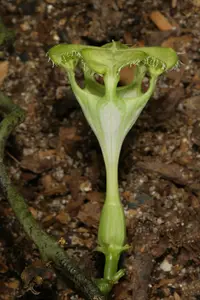
Florida dutchman's pipe Care (Aristolochia maxima)

Florida dutchman's pipe

About Florida dutchman's pipe

Florida dutchman's pipe (Aristolochia maxima) is a vigorous, woody vine known for its large, unusual pipe-shaped flowers and dense green foliage. It typically climbs over supports, fences, or trees, forming a thick screen in suitable climates.

This species is native to tropical regions of Central America and the Caribbean, where it grows in warm, humid environments. In cultivation it is often used as an ornamental vine in frost-free gardens.

Its fast growth, need for sturdy support, and preference for consistently moist but well-drained soil mean it suits gardeners who can monitor it regularly. Understanding how to care for Florida dutchman's pipe includes providing bright light, shelter from cold, and enough space for its strong climbing habit.

Main Plant Requirements

Care Difficulty

Moderate Care

Light Preference

Partial Shade

Water Requirements

Regular Water

Temperature Preference

Tropical / Frost Sensitive

Hardiness Zone

10–11

Soil Texture

Loamy, Sandy, Organic-rich

Soil pH

Acidic (5.5–6.5), Slightly acidic (6.5–7.0)

Soil Drainage

Moist but well-drained

Fertilization

Light (every 4–6 weeks)

Get Personalized Care Plan

Scan your plant to receive care tips personalized for your specific plant

Available on iOS and Android

How to Care for the Florida dutchman's pipe

This vigorous vine needs bright, warm conditions with protection from harsh midday sun.

  • Provide 4–6 hours of morning sun plus bright filtered light in the afternoon; light shade is preferred in hot climates for Florida dutchman's pipe.
  • Allow partial shade, especially under high summer sun; leaves may scorch or fade if exposed to intense sun all day, particularly on west-facing walls or fences.
  • If stems elongate with few leaves or flowers, light is too low; in late autumn and winter, increase exposure by thinning overhead shade where possible.

This twining vine prefers evenly moist but not waterlogged soil throughout the growing season.

  • Water when the top 3–5 cm of soil feel dry, applying enough to moisten the root zone, then let excess drain away to prevent root rot.
  • In spring and summer, expect to water more often during active growth and heat; in cooler or rainy periods, extend intervals and rely more on soil feel than on a fixed schedule.
  • Leaves yellowing from the bottom with soft stems suggest overwatering, while drooping, crisp leaf edges and dry, pale soil indicate Aristolochia maxima is too dry.

This tropical species grows best in consistently warm, frost-free conditions.

  • Aim for 70–85°F (21–29°C) for strong growth, with only brief exposure above 90°F (32°C); provide afternoon shade and mulch in hotter regions.
  • Protect from cold; growth slows below 60°F (16°C) and the vine can suffer damage near 40°F (4°C), especially in exposed, windy sites.
  • Aristolochia maxima is not frost tolerant; in areas with winter frost, grow it in a sheltered microclimate or be prepared for dieback and possible re-sprouting from the base.

This species prefers moderately humid air but usually copes with typical indoor levels.

  • Aim for 50–70% humidity for best growth and flowering of Florida dutchman's pipe.
  • Leaves may curl, brown at the edges, or feel crispy when air is too dry for extended periods.
  • Increase humidity with grouped plants, a nearby humidifier, or a pebble tray that allows water to evaporate without the pot sitting in water.

This vine needs evenly moist, well-drained, organic-rich soil to support rapid growth.

  • Use a loamy mix with plenty of organic matter, such as compost blended with garden soil and coarse material for structure.
  • Ensure fast drainage by adding 20–40% perlite or coarse sand so water does not stagnate around the roots.
  • Keep pH slightly acidic to neutral, around 6.0–7.0, which suits Aristolochia maxima and helps nutrient availability.
  • Avoid compacted clay, waterlogged spots, or pure sand; improve aeration by mixing in compost and coarse particles before planting.

This vine is suitable for container growing when the pot is prepared for vigorous, climbing growth.

  • Choose a wide, heavy container that resists tipping once the vine climbs a trellis or support structure.
  • Provide a deep pot to allow strong root development and reduce rapid drying of the substrate in warm weather.
  • Use a container mix that drains quickly yet holds some moisture, adjusting peat and perlite ratios to match your climate.

This vigorous vine benefits from modest, consistent feeding during the warm growing season.

  • Use a balanced liquid fertilizer (around 10-10-10) at 1/2 strength every 4–6 weeks from spring through late summer.
  • Alternatively, apply a slow-release balanced fertilizer or a thin layer of compost at the start of the growing season.
  • Pause feeding in fall and winter when growth slows, especially for Florida dutchman's pipe in cooler regions.
  • Always water before fertilizing to reduce root burn and avoid applying to very dry or stressed plants.

Pruning helps manage size and support flowering on Aristolochia maxima vines.

  • Lightly prune in late winter or early spring before strong new growth starts.
  • Remove dead, damaged, crossing, or congested stems to improve airflow and light penetration.
  • Shorten excessively long shoots to keep the vine within its support and maintain a balanced framework.
  • Use clean, sharp bypass pruners and make cuts just above a leaf node or branching point.

This fast-growing climber is usually transplanted outdoors rather than kept long term in small containers.

  • Transplant in spring when soil is warming and risk of hard frost has passed.
  • Look for circling roots, roots emerging from drainage holes, or slowed growth as signs a container plant needs more space.
  • Move into a hole or pot 1–2 sizes larger, using well-drained soil, and keep the root ball as intact as possible.
  • Water thoroughly after planting, shade for a few days if sun is intense, and keep soil evenly moist to limit transplant shock.

Aristolochia maxima is most often propagated by seeds or semi-ripe cuttings.

  • Sow fresh seeds in spring in a warm, bright spot (70–75°F) using a light, well-drained seed mix.
  • Barely cover seeds, keep the mix evenly moist, and expect germination to take several weeks.
  • For cuttings, take semi-ripe shoots in late spring or summer, 8–10 cm long, with 2–3 nodes.
  • Dip cut ends in rooting hormone, place in a humid, bright, indirect-light environment, and maintain gently moist substrate.

This species is frost-sensitive and needs protection in regions with cool or freezing winters.

  • In USDA zones below 10, grow in containers and move plants indoors or into a heated greenhouse before temperatures drop near 40°F.
  • Outdoors in mild climates, apply 5–8 cm of organic mulch around the root zone, keeping it slightly away from stems.
  • Avoid waterlogged soil in cool weather to reduce root rot risk and hold back heavy pruning until late winter or early spring.

Care Tips

Provide strong support

Install a sturdy trellis, wire fencing, or arbor at planting time so the vigorous vine can latch on early and be guided in the direction you want it to grow.

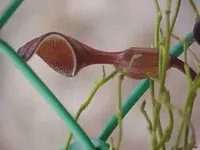
Guide young shoots

Gently tie new stems to the support with soft garden ties or strips of cloth, looping loosely to avoid constriction and checking every few months to adjust as the stems thicken.

Plan for root space

Plant in-ground with at least a 45–60 cm radius of open soil or use a large container (at least 40–50 L) so the extensive root system can develop without becoming quickly pot-bound.

Monitor tendril spread

Regularly inspect nearby shrubs, trees, and gutters and detach any wayward stems before they coil tightly, which makes them harder to remove and can damage neighboring plants or structures.

Use barrier planting

In small gardens, use root barriers or place the plant in a large container set against a trellis to enjoy growing Florida dutchman's pipe while limiting unwanted spread into surrounding beds.

Common Pests and Diseases

Aristolochia swallowtail caterpillars

These pests are the larvae of swallowtail butterflies that specialize on Aristolochia species and can defoliate vines quickly. Symptoms include large, irregular holes in leaves and rapid loss of foliage on tender shoots.

Solution

Hand-pick caterpillars from vines and relocate them away from the planting area, especially on small or young plants. For heavier pressure, use fine mesh netting over key sections of the vine or encourage natural predators such as birds by providing habitat, rather than using broad-spectrum insecticides that disrupt local butterfly populations.

Leaf miners

These insects feed between the upper and lower leaf surfaces, creating pale, winding tunnels in Aristolochia leaves. Symptoms include distorted foliage and dry, papery areas along the mines.

Solution

Prune and discard leaves showing fresh mining to remove larvae before they mature. Support new healthy growth with steady watering and nutrition, and if damage is recurring, use a targeted systemic product labeled for leaf miners on ornamental vines, following label rates carefully.

Spider mites

These pests thrive on Aristolochia foliage in hot, dry conditions, causing stippled, yellowed leaves and fine webbing on the undersides. Symptoms include dull, dusty-looking foliage that may drop prematurely if infestations are heavy.

Solution

Rinse both sides of leaves thoroughly with a strong but gentle stream of water 2–3 times per week until populations drop, then maintain higher humidity around the plant if feasible. For persistent infestations, apply insecticidal soap or horticultural oil to leaf undersides, repeating according to label directions while avoiding spraying during high heat or direct midday sun.

Powdery mildew

This disease appears as white or gray powdery patches on Aristolochia leaves, especially in warm days with cool, humid nights. Symptoms include distorted new growth and premature yellowing or dropping of heavily covered foliage.

Solution

Increase air circulation by thinning dense stems and avoid wetting foliage late in the day. Remove and discard affected leaves and, if conditions remain favorable for disease, apply a fungicide labeled for powdery mildew on ornamental vines, such as potassium bicarbonate or horticultural oil, following all label instructions.

Leaf spot

This disease causes small, water-soaked or brown spots on leaves that may enlarge, darken, and sometimes develop yellow halos. Symptoms include scattered lesions that can coalesce, leading to partial leaf blight and early leaf drop on stressed vines.

Solution

Remove and discard heavily spotted leaves and any fallen debris around the base of the plant to reduce inoculum. Improve air movement, avoid overhead irrigation, and in recurrent cases use a copper-based or other labeled ornamental fungicide at the first sign of spotting, rotating products if treatments are repeated.

Interesting Facts

Carrion-scented traps

The flowers release a faint carrion-like odor and have a pouch-like structure that temporarily traps small flies, using them as pollinators before releasing them once pollen transfer is complete.

Large, heart-shaped foliage

This species develops broad, heart-shaped leaves that can cover its twining stems densely, providing effective shade and habitat structure in tropical and subtropical forests where it naturally occurs.

Specialist butterfly host

In its native range, the vine serves as a larval host plant for certain swallowtail butterflies whose caterpillars have evolved to tolerate aristolochic acids, toxic compounds produced by the plant as a herbivore defense.

Botan icon

Did you know?

In the wild, this vigorous woody vine can climb high into forest canopies by twining around tree trunks and branches, using surrounding vegetation as a living support structure rather than relying on tendrils or adhesive roots.

FAQs about Florida dutchman's pipe

This species is a twining vine. It climbs by wrapping its flexible stems around supports such as trellises, fences, or shrubs. Without vertical support, it may scramble over the ground or nearby plants and become tangled.

Grow Healthy Plants with Botan Care

Keep your plants happy and healthy with plant identification, disease detection, and easy care guidance.

Botan plant care app — identify plants on mobile

Explore More Plants