Rotate For Symmetry
Turn the pot 90° every 1–2 weeks so the rosette develops evenly and does not lean toward the light source, which keeps the foliage compact and balanced.

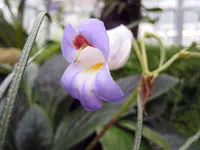
Chinese Chirita (Primulina dryas) is a compact, rosette-forming houseplant in the African violet family, valued for its neat foliage and delicate, tubular flowers. The leaves are usually textured and slightly fuzzy, creating a low mound that fits well on windowsills or under grow lights.
Primulina dryas originates from limestone-rich, shaded habitats in parts of China, where it grows on rocky slopes and cliffs. This background makes it adapted to relatively bright, indirect light, quick-draining soil, and moderate moisture. It is generally considered an easy plant for indoor growers, as long as roots are not kept soggy and light is not too harsh. Many beginners find it straightforward to learn how to care for Chinese Chirita once these basic needs are understood.

Care Difficulty
Moderate Care

Light Preference
Bright Indirect Light

Water Requirements
Moderate Water

Temperature Preference
Tropical / Frost Sensitive

Hardiness Zone
Unknown

Soil Texture
Loamy, Sandy, Organic-rich

Soil pH
Acidic (5.5–6.5), Slightly acidic (6.5–7.0)

Soil Drainage
Well-drained

Fertilization
Light (every 4–6 weeks)
Scan your plant to receive care tips personalized for your specific plant
Available on iOS and Android
Primulina dryas prefers soft, indirect light similar to that of a bright, sheltered forest ledge.
Primulina dryas prefers evenly moist but not saturated soil, with short dry periods between waterings.
This species grows best in mild, stable temperatures without frost or extreme heat.
This species prefers moderate indoor humidity and stays healthy in most home environments.
Primulina dryas grows best in a light, fast-draining, airy mix that never stays wet for long.
This species is very suitable for container growing due to its compact, shallow root system.
Primulina dryas benefits from light, consistent feeding during its active growing season.
Primulina dryas needs only light pruning to maintain a neat rosette and support healthy flowering.
This species prefers to stay slightly root-bound, so repot only when necessary.
Primulina dryas is commonly propagated by division and leaf cuttings under warm, stable conditions.
Primulina dryas is not frost hardy and needs mild, protected conditions in winter.

Plant Health Check
Not sure what's wrong with your plant? Check your plant's health inside the app.
This species is naturally restricted to limestone cliff habitats in southern China, where it grows on shaded, often vertical rock faces with very thin, alkaline soils. Its rosette form and shallow roots help it anchor in narrow rock crevices that dry out quickly between rains.
The leaves are covered with fine hairs that give a soft, silvery sheen, which helps scatter intense light and reduce water loss from the leaf surface. This leaf pubescence is an adaptation to bright but indirect light in its native cliffside habitat.
Its pale violet to bluish flowers have a short corolla tube compared with many related species, which may reflect adaptation to local pollinators in its native range. The flowers are borne on slender stalks above the leaf rosette, keeping pollen and nectar accessible while leaves stay close to the rock surface.
Lack of blooms usually comes from insufficient light, too much nitrogen fertilizer, or stress from recent repotting. Stable temperatures, moderate feeding, and bright, indirect light support flowering and are central to Primulina dryas care.
Keep your plants happy and healthy with plant identification, disease detection, and easy care guidance.